


Apollo tahririyat jamoasi tomonidan ko'rib chiqilgan
Tez javob
The Bentall procedure is an open heart operation that replaces the aortic valve, the aortic root and the first part of the aorta with a single graft that has a new valve built into it. The two coronary arteries are then re-attached to the graft. It is done for an enlarged or torn aortic root, usually when the aortic valve is also diseased. Most people stay in hospital for about a week to ten days and need two to three months to recover fully.
| Asosiy faktlar | Tafsilotlar |
|---|---|
| Bu nima | Replacement of the aortic valve, aortic root and ascending aorta with one composite valve graft |
| Asosiy sabablari | Aortic root aneurysm, aortic dissection involving the root, root enlargement in inherited conditions, severe valve and root infection |
| Operatsiya turi | Open heart surgery under general anaesthesia using a heart-lung machine |
| Teatrda o'tkazgan vaqt | Commonly four to six hours, longer for emergency or repeat surgery |
| Kasalxonada qolish | Usually seven to ten days, including one to three days in intensive care |
| qayta tiklash | Breastbone heals in about six to eight weeks; most people feel close to normal in two to three months |
| Vana tanlash | Mechanical valve graft or tissue (biological) valve graft |
| Asosiy alternativa | Valve-sparing root replacement, when the person's own valve leaflets are healthy |
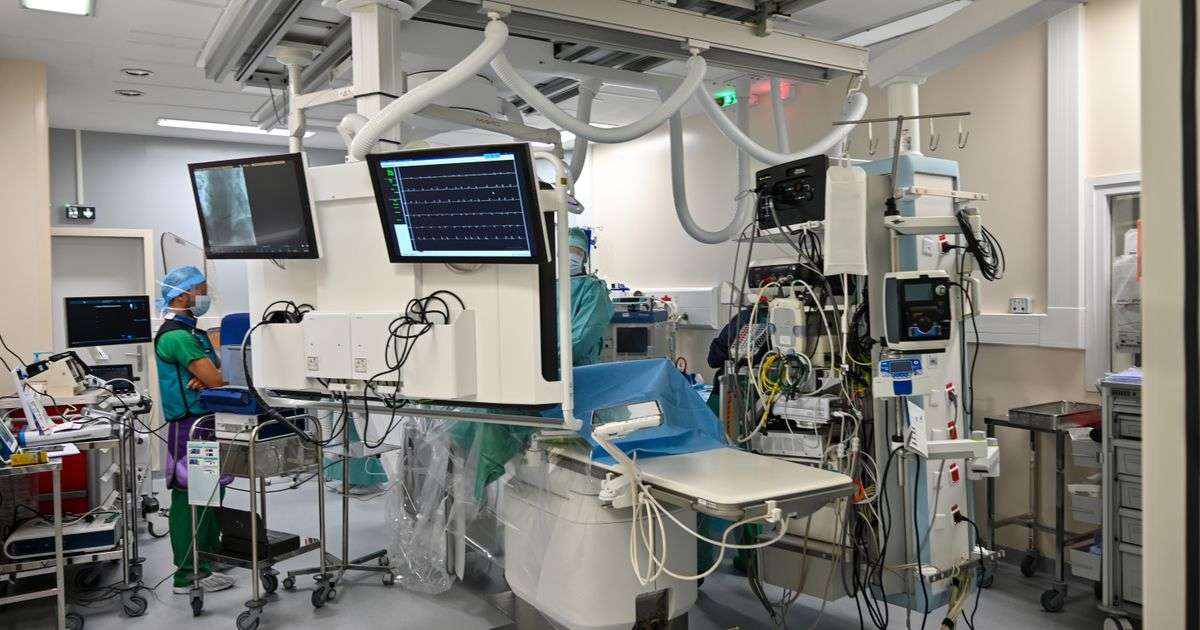
Bentall protsedurasi nima?
The aorta is the main artery that carries blood from the heart to the rest of the body. Its first section, where it leaves the heart, is called the aortic root. The root holds the aortic valve and is also the place where the two coronary arteries, which supply the heart muscle, branch off.
In the Bentall procedure the surgeon removes the diseased aortic valve, the aortic root and usually the ascending aorta, and replaces them with a composite graft. This is a tube of strong woven fabric with an artificial valve already sewn into one end. Because the coronary arteries arise from the part that is removed, the surgeon cuts them out with a small button of surrounding aortic wall and stitches them into openings made in the new graft. The operation is a form of ochiq yurak operatsiyasi and is carried out by a cardiothoracic surgeon.
Other names for the Bentall procedure
- Aortic root replacement
- Composite graft replacement of the aortic root
- Composite valve graft surgery
- Bentall operation or Bentall surgery
- Modified Bentall procedure (button Bentall)
- Bio-Bentall (when a tissue valve is used)
Why is the Bentall procedure done?
The operation is recommended when the aortic root has become dangerously enlarged or damaged and the aortic valve cannot be kept. An enlarged root can tear or burst without warning, and that is a life-threatening emergency. The main conditions treated are:
- Aortic root aneurysm. A ballooning of the root, often together with an ko'tarilgan aorta anevrizmasi yoki kengroq torakal aorta anevrizmasi.
- Aorta diseksiyasi. A tear in the inner lining of the aorta. When an aorta diseksiyasi involves the root and valve, emergency root replacement may be needed.
- Inherited connective tissue conditions. In Marfan syndrome and related conditions the aortic wall is weak and stretches early in life. Surgery is advised at a smaller aortic size in these people.
- Bicuspid aortic valve with a dilated root. People born with a bikuspid aorta qopqog'i often develop both valve disease and enlargement of the aorta.
- Valve disease with root enlargement. og'ir aorta stenozi yoki leaky aortic valve combined with a widened root.
- Infektsiya. og'ir yuqumli endokardit that has destroyed the valve and formed an abscess in the root.
Types of aortic root surgery and how they compare
Types of Bentall procedure
- Mechanical Bentall. The graft contains a mechanical valve made of durable carbon material. It is designed to last for life, but you must take a blood thinner every day for life and have regular blood tests to check the dose.
- Bio-Bentall. The graft contains a tissue valve made from animal tissue. Lifelong blood thinners are usually not needed for the valve alone, but tissue valves wear out over the years and a further procedure may be needed later.
Valve-sparing root replacement as an alternative
If the root is enlarged but the valve leaflets themselves are thin, flexible and healthy, the surgeon may be able to replace only the root and keep your own valve. This is called valve-sparing aortic root replacement (often known as the David procedure). The main advantage is that no artificial valve is used, so lifelong blood thinners are usually avoided. It is only possible when the leaflets are thin and flexible, it is technically demanding, and the preserved valve can leak again in later years.
| Option | Nima almashtiriladi | Blood thinner for life | Odatda qachon hisobga olinadi |
|---|---|---|---|
| Mechanical Bentall | Valve, root and ascending aorta | ha | Younger adults who can take blood thinners reliably |
| Bio-Bentall | Valve, root and ascending aorta | Odatda yo'q | Older adults, or those who cannot or do not wish to take blood thinners |
| Valve-sparing root replacement | Root and ascending aorta; own valve kept | Odatda yo'q | Healthy valve leaflets with an enlarged root |
Stent graft methods such as torakal endovaskulyar aortani tiklash are not a standard option for the root. Related operations on this site include open aortic valve replacement, Ross proseduru va open aortic aneurysm repair.
Kim mos keladi va kim mos kelmasligi mumkin?
You may be advised to have a Bentall procedure if:
- Your aortic root has reached the size at which the risk of a tear outweighs the risk of surgery. In many adults this is around 5 to 5.5 cm, and smaller in people with inherited aortic conditions, a family history of dissection or rapid growth.
- Your aortic valve is narrowed, leaking or infected and cannot be repaired or preserved.
- You have an aortic dissection involving the root.
The operation may carry a higher risk, or may not be advised, if you are very frail, have severe lung, kidney or liver disease, have very poor heart muscle function, or have another serious illness that limits life expectancy.
How to prepare for the Bentall procedure
Jarrohlikdan oldingi testlar
- An ekokardiyogram to assess the valve, the root and the pumping function of the heart.
- A yurak KT tekshiruvi or yurak MRI to measure the whole aorta accurately.
- A koronar angiografiya or CT coronary study to look for blocked heart arteries that could be bypassed at the same time.
- An elektrokardiogramma, a ko'krak qafasi rentgenogrammasi, lung function tests where needed, and blood tests including a to'liq qonni hisoblash, kidney and liver function, blood group and cross-matching.
- A dental check, because infection in the mouth can spread to a new heart valve.
Muhokama qilinadigan dorilar
Tell your team about every medicine and supplement you take. Blood thinners and medicines that affect clotting are usually stopped or changed some days before surgery, but only on your doctor's instruction.
Kundan oldin va o'sha kuni
- Stop smoking as early as possible. It lowers the risk of chest infection and helps wound healing.
- Do not eat or drink for the period advised before the operation.
How is the Bentall procedure performed?
- Anaesthesia and monitoring. You are given a general anaesthetic.
- Ko'krak qafasini ochish. The surgeon makes a cut down the middle of the chest and divides the breastbone to reach the heart.
- Heart-lung machine. Tubes connect you to a heart-lung machine, which takes over the work of the heart and lungs.
- Removing the diseased parts. The aorta is opened. The aortic valve, the root and the diseased ascending aorta are removed.
- Sewing in the composite graft. A graft of the right size, with its valve, is stitched firmly to the ring of tissue where the old valve sat.
- Re-attaching the coronary arteries. Two small openings are made in the side of the graft and the coronary buttons are sewn into them so that blood can again reach the heart muscle.
- Joining the graft to the aorta. The upper end of the graft is stitched to the healthy aorta beyond the diseased segment.
- Restarting the heart. Air is removed from the heart, blood flow is restored and the heart begins to beat again.
- Yopish. Drainage tubes and temporary pacing wires are placed, the breastbone is brought together with steel wires and the skin is closed.
Operatsiyadan keyin nima bo'ladi?
You wake up in the intensive care unit, often still on a ventilator for a few hours. Once you are stable you move to the ward. If you have a mechanical valve, blood thinning treatment is started and adjusted with blood tests before you go home.
Xatarlar va asoratlar
The Bentall procedure is major surgery.
Ko'proq tarqalgan
- Irregular heart rhythm, especially atrial fibrillation, in the days after surgery
- Bleeding that needs blood transfusion
- Chest infection or fluid around the lungs
Less common but serious
- Stroke
- Heart attack or a problem at the re-attached coronary arteries
- Slow heart rhythm that needs a permanent pacemaker
- Deep infection of the breastbone wound
- Infection of the new valve or graft, early or years later
- Death. Your surgeon will discuss your personal risk with you.
Natijalar: u qanchalik yaxshi ishlaydi?
The Bentall procedure is a well-established operation. When it is done as planned surgery in experienced centres, most people come through it well, and the replaced section of the aorta is no longer at risk of rupture or dissection. The fabric graft itself is expected to last for life.
The operation does not cure the underlying tendency of the aorta to enlarge. The remaining aorta needs to be checked with scans for life, particularly in people with inherited conditions or a previous dissection.
Recovery after the Bentall procedure
- First two weeks at home. Tiredness is usual. Walk a little more each day. Keep the wound clean and dry as advised.
- Weeks two to eight. Do not lift, push or pull anything heavier than a few kilograms, and avoid driving until your surgeon agrees, commonly at around six weeks.
- Ikki-uch oy. Most people return to desk work and normal daily activity. A supervised cardiac rehabilitation programme helps you regain fitness safely.
- Kuzatish. You will have wound and heart checks in the first weeks, then echocardiograms and aortic scans at intervals set by your doctor.
Tibbiy yordamga qachon murojaat qilish kerak
- Sudden severe pain in the chest, back or abdomen
- Fever, chills, or redness, swelling or discharge from the wound
- Breathlessness that is getting worse, or swelling of the legs
- Fast, irregular heartbeat, fainting or dizziness
- Weakness of the face, arm or leg, or difficulty speaking or seeing
- Unusual bleeding, black stools, blood in urine or large bruises if you take a blood thinner
Life after the Bentall procedure
- Qon bosimi. Keep it well controlled. Take your tablets every day and check your readings at home if advised.
- Blood thinners. If you have a mechanical valve, take your blood thinner at the same time each day, attend every blood test, and tell every doctor, dentist and pharmacist that you are on it.
- Preventing valve infection. Look after your teeth and gums, see a dentist regularly, and tell your dentist that you have an artificial heart valve, as antibiotics may be advised before certain dental procedures.
- Mashq qilish. Regular walking, cycling and swimming are encouraged once you have recovered. Ask before taking up heavy weightlifting, contact sports or competitive sport.
Benefits of the Bentall procedure
- Removes the enlarged or torn aortic root, the part most at risk of rupture
- Treats the diseased aortic valve in the same operation
What is the cost of the Bentall procedure in India?
Narx har bir kishida farq qiladi. Asosiy omillar quyidagilardir:
- Jarrohlik rejali yoki favqulodda holatmi
- The type of valve graft used (mechanical or tissue)
- Any additional work, such as bypass grafts or aortic arch repair
- Length of stay in intensive care and on the ward
- Your general health and any complications that need extra care
- The city, the hospital and the type of room chosen
Narxlar har bir kishida farq qiladi. Haqiqiy narxlarni bilish uchun kasalxonaga murojaat qiling.
Many health insurance policies cover heart surgery that is medically necessary, so check the terms, waiting periods and pre-authorisation process with your insurer.
Why choose Apollo Hospitals for the Bentall procedure?
- Cardiothoracic surgeons, cardiologists, cardiac anaesthetists and perfusionists work together as one team for aortic surgery.
- Echocardiography, CT and MRI are available for accurate measurement of the aorta before surgery and for follow-up afterwards.
- Dedicated cardiac intensive care units with trained nursing staff support recovery in the first days.
- Physiotherapy and cardiac rehabilitation support your return to daily activity, and blood thinning treatment is monitored after discharge.
To discuss an enlarged aorta or aortic valve disease, you can kardiolog bilan uchrashuvga yoziling, who will arrange the tests and refer you to a heart surgeon if an operation is advised.
Tegishli o'qish
- Marfan syndrome and heart surgery
- Aortani ajratish
- Open aortic valve replacement
- Transkateter aorta qopqog'ini implantatsiyasi (TAVI)
- A patient story: Bentall surgery for ascending aortic aneurysm
Questions to ask your doctor about the Bentall procedure
- How large is my aortic root now, and how fast has it grown?
- Can my own valve be kept with a valve-sparing operation?
- Which valve do you recommend for me, mechanical or tissue, and why?
- What is my personal risk from this surgery?
- Will I need bypass grafts or arch repair at the same time?
- Will I need a blood thinner, and how will it be monitored?
- How often will I need scans of the rest of my aorta?
tez so'raladigan savollar
1. Is the Bentall procedure a major operation?
Yes. It is open heart surgery that involves the heart-lung machine and replacement of the valve, the root and part of the aorta.
2. How long does recovery take after a Bentall procedure?
Most people are in hospital for seven to ten days and feel close to normal in two to three months.
3. What is the difference between the Bentall procedure and aortic valve replacement?
Aortic valve replacement changes only the valve. The Bentall procedure replaces the valve together with the aortic root and ascending aorta, and the coronary arteries have to be re-attached.
4. What is valve-sparing root replacement, and is it better?
It replaces the enlarged root with a graft but keeps your own aortic valve. It avoids an artificial valve and, usually, lifelong blood thinners. It is only possible when the valve leaflets are healthy, and the kept valve may leak later.
5. Will I need blood thinners for life?
If you receive a mechanical valve, yes. With a tissue valve, long-term blood thinning is usually not needed for the valve itself.
6. Which is better, a mechanical or a tissue valve?
Mechanical valves last longer but need lifelong blood thinning. Tissue valves avoid that but can wear out. Make the choice together with your surgeon.
7. At what size does an aortic root need surgery?
In many adults surgery is considered when the root measures around 5 to 5.5 cm. It may be advised earlier in people with Marfan syndrome or similar conditions, a bicuspid valve with other risk factors, a family history of dissection.
8. How long does the graft last?
The fabric tube is expected to last for life. Tissue valves commonly work for many years, but they can wear out, and this tends to happen sooner in younger people.
9. Can the Bentall procedure be done with a stent?
A stent graft passed through an artery is not a standard treatment for the aortic root, because the valve and the coronary arteries lie in that area.
10. Is the Bentall procedure done as an emergency?
Yes, when an aortic dissection or rupture involves the root. Emergency surgery carries a higher risk than planned surgery.
11. What are the long-term problems after surgery?
Possible later problems include infection of the valve or graft, blood clots or bleeding linked to blood thinners, wearing out of a tissue valve, a leak at a stitch line, and enlargement of other parts of the aorta.
12. Can I exercise and live normally afterwards?
Most people return to work, travel and regular moderate exercise. Activities that cause sudden heavy straining, such as lifting very heavy weights, and contact sports if you take a blood thinner, are usually discouraged. Ask your doctor what is safe for you.
13. Can I have an MRI scan after a Bentall procedure?
The graft, modern artificial valves and the breastbone wires are generally safe in MRI scanners. Always tell the scanning team about your operation.
14. Which doctor performs the Bentall procedure?
A cardiothoracic (heart) surgeon performs the operation. A cardiologist usually makes the diagnosis, monitors the aorta before surgery and looks after long-term follow-up.
Xulosa
The Bentall procedure replaces a diseased aortic valve, root and ascending aorta with a single valve graft and re-attaches the coronary arteries. It protects against rupture and dissection of the root and treats the valve at the same time. A heart surgeon and cardiologist who know your scans and your health can explain which option fits you and when surgery should be done.
Ushbu sahifa umumiy ma'lumot uchun mo'ljallangan va shifokoringizning maslahatini almashtirmaydi. Davolash to'g'risidagi qarorlar sizning tibbiy tarixingizni biladigan malakali mutaxassis bilan qabul qilinishi kerak.
So'nggi qo'shilgan


Apollo kasalxonalarida yurak mutaxassislari






Voz kechish:
Ushbu sahifada taqdim etilgan ma'lumotlar faqat umumiy axborot va ta'lim maqsadlari uchun mo'ljallangan. Ma'lumotlarning aniq, ishonchli va muntazam ravishda ko'rib chiqilishini ta'minlash uchun oqilona harakat qilsak-da, uni professional tibbiy maslahat, tashxis yoki davolashning o'rnini bosuvchi deb hisoblamaslik kerak.
Tibbiy muolajaning yaroqliligi, uning foydalari, xavflari, tayyorgarligi, tiklanishi, potentsial asoratlari va kutilgan natijalari har bir kishida farq qilishi mumkin. Tibbiyot mutaxassisi sizning shaxsiy holatingiz va tibbiy tarixingizga asoslanib, muolajaning mos kelishini aniqlaydi.
Har qanday tibbiy muolaja bo'yicha qaror qabul qilishdan oldin, shaxsiy maslahat uchun malakali tibbiyot mutaxassisi bilan maslahatlashing.
Tibbiy kontentimiz qanday yaratilishi, ko'rib chiqilishi, yangilanishi va saqlanishi haqida qo'shimcha ma'lumot olish uchun, iltimos, bizning [Tahririyat siyosati] ni o'qing.




