


Zrecenzowane przez zespół redakcyjny Apollo
Szybka odpowiedź
Corpus callosotomy is an epilepsy operation in which a neurosurgeon cuts part or all of the corpus callosum, the band of nerve fibres that connects the two halves of the brain. This stops seizure activity from spreading quickly from one side to the other. It is used mainly to reduce drop attacks, the sudden falls that cause injuries, in people whose seizures are not controlled by medicines. It does not cure epilepsy. Other seizure types usually continue, and anti-seizure medicines are still needed.
| Kluczowe fakty | Szczegóły |
|---|---|
| Co to jest | Surgical division of the corpus callosum to limit the spread of seizures |
| Główny cel | Fewer and milder drop attacks and fewer injuries from falls |
| Czym nie jest | A cure for epilepsy |
| Dla kogo to jest | Children and adults with drug-resistant epilepsy and drop attacks, with no single removable seizure focus |
| Znieczulenie | Znieczulenie ogólne |
| Czas trwania: | Kilka godzin |
| Pobyt w szpitalu | About one week in most cases |
| Kto to wykonuje? | Neurosurgeon trained in epilepsy surgery, working with an epilepsy team |
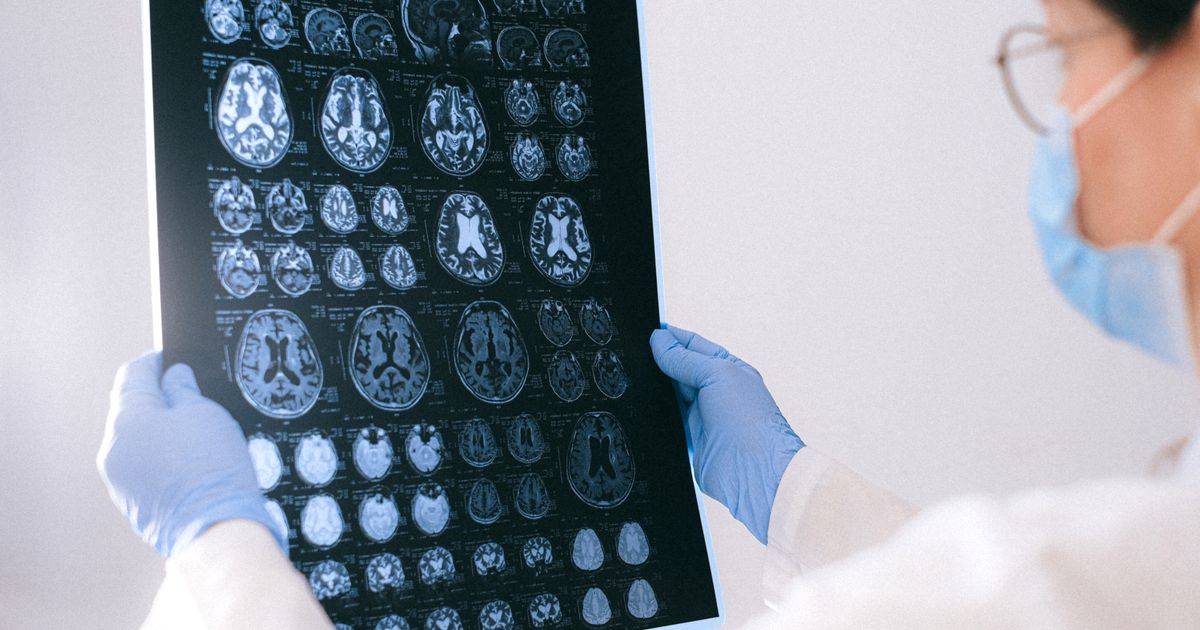
What is corpus callosotomy?
The brain has two halves, called hemispheres. They exchange information through a thick bridge of nerve fibres in the middle of the brain, the corpus callosum. In some forms of padaczka, abnormal electrical activity that begins on one side crosses this bridge within a fraction of a second and involves the whole brain. When that happens, the person may suddenly lose muscle tone or stiffen and fall without warning.
In a corpus callosotomy, the surgeon divides this bridge, either the front two-thirds or its full length. Nothing is removed from the brain. The seizure activity can still start, but it is far less able to spread to both sides at once, so the sudden, violent falls become less frequent or less severe.
Doctors call this a palliative operation. That means it is intended to reduce the most harmful seizures and improve safety and daily life, not to stop epilepsy altogether.
Other names for corpus callosotomy
- kalozotomia
- Callosal section or callosal disconnection
- Split-brain surgery (an older, informal term)
- Anterior callosotomy and complete callosotomy
- Disconnection surgery for epilepsy
Why is corpus callosotomy done?
The main reason is drop attacks that continue despite adequate trials of anti-seizure medicines. Drop attacks are usually napady atoniczne, in which the muscles suddenly go limp, or tonic seizures, in which the body suddenly stiffens. The person falls in an instant and cannot protect themselves. Repeated injuries to the head, face and teeth are common, and many children need to wear a helmet.
The operation is considered in conditions such as:
- Lennox-Gastaut syndrome, a severe childhood-onset epilepsy with several seizure types
- Other generalised or multifocal epilepsies with frequent drop attacks
- Epilepsy that followed skurcze niemowlęce, brain infection such as zapalenie mózgu, or widespread brain injury around birth
- Some people with generalised tonic-clonic seizures that begin on one side and spread rapidly, or with repeated episodes of prolonged seizures (stan padaczkowy)
It is chosen when tests show that the seizures do not arise from one small area that could be removed. If such an area is found, an operation that removes or destroys it offers a better chance of stopping seizures. Those operations are described on our operacja padaczki strona.
Types of corpus callosotomy
How much is divided
- Anterior (front two-thirds) callosotomy: The back part of the bridge, which carries visual and sensory information, is left intact. This lowers the risk of disconnection symptoms and is often preferred in older children and adults with good language and thinking skills.
- Całkowita kalosotomia: The whole length is divided in one operation. It is more effective against drop attacks and is often chosen for younger children and for people with severe developmental disability.
- Etapowa kalosotomia: The front part is divided first. If drop attacks continue, the remaining part is divided in a second operation.
Jak to się robi
- Open microsurgery: The standard method, through an opening in the skull (kraniotomia) using an operating microscope.
- Endoscope-assisted surgery: A smaller opening and a thin camera are used at some centres.
- MRI-guided Ablacja laserowa: Thin laser fibres are passed through small holes to divide the fibres with heat. It is offered at a limited number of centres.
- Radiochirurgia stereotaktyczna: Focused radiation is occasionally used. Its effect is delayed and the evidence is limited.
Corpus callosotomy compared with other options for drop attacks
| Option | Co to obejmuje | Typowy efekt | Punkty do rozważenia |
|---|---|---|---|
| Corpus callosotomy | Brain operation that divides the connecting fibres | Often a marked reduction in drop attacks | Open brain surgery. Risk of disconnection symptoms. Cannot be reversed. |
| Stymulacja nerwu błędnego | A small device under the skin of the chest sends regular pulses to a nerve in the neck | Gradual reduction in seizures in some people. Generally less effective for drop attacks. | No brain surgery. Adjustable and removable. Battery needs replacing. |
| Terapia dietetyczna | A strict medically supervised ketogenic diet | Helps some children | Demanding to follow. Needs a dietitian and monitoring. |
| Resective or ablative surgery | Removing or destroying a single seizure focus | Can stop seizures | Possible only when one focus is found |
Other forms of brain stimulation, such as głęboka stymulacja mózgu, are used for selected people with drug-resistant epilepsy. The epilepsy team will explain which options apply.
Kto się nadaje, a kto nie?
You or your child may be suitable if:
- Epilepsy is drug-resistant, meaning seizures continue despite proper trials of at least two suitable anti-seizure medicines
- Drop attacks are the most disabling seizure type
- A full evaluation has found no single focus that can be removed
- The family understands that the goal is fewer falls, not freedom from seizures
It may not be advised if:
- A removable seizure focus is found
- Drop attacks are rare or mild and other seizure types are the main problem, since these respond less well
- Episodes turn out not to be epileptic
- General health makes a long brain operation unsafe
Jak przygotować
Evaluation before surgery
- Review by an epilepsy specialist of seizure types, medicines tried and development
- Wideo EEG monitoring in hospital to record typical seizures
- Mózg MRI using an epilepsy protocol
- A Skanowanie zwierzęcia or other functional imaging in selected cases
- Assessment of memory, language and development by a neuropsychologist. A Test Wady is occasionally used to check which side controls language.
- Discussion of the findings at an epilepsy surgery team meeting
- Blood tests and a pre-anaesthetic check-up
Leki do omówienia
Anti-seizure medicines are continued unless the team gives other instructions. Tell the doctors about every other medicine, especially blood thinners. Some anti-seizure medicines affect blood clotting, and the team may check this before surgery.
W dniu
- Follow the fasting instructions, and give morning medicines with a sip of water if told to
- A strip of hair may be clipped in theatre
- For a child, bring a comfort object and plan for a parent to stay
How is corpus callosotomy performed?
- Anaesthesia and positioning: General anaesthesia is given. The head is held steady in a frame, and an image-guidance system may be used to plan the route.
- Skin incision and bone opening: A cut is made on the top of the head behind the hairline, and a window of bone is removed.
- Reaching the midline: The covering of the brain is opened. The surgeon gently eases one hemisphere aside to work in the natural gap between the two halves, protecting the veins and arteries that run there.
- Dividing the corpus callosum: Under the microscope, the white band of fibres is identified and divided from front to back for the planned length.
- Kontrola: The extent of division is confirmed, and any bleeding is controlled.
- Zamknięcie: The brain covering is closed, the bone is fixed back in place and the skin is stitched.
Co dzieje się później?
The first night is usually spent in an intensive care unit. Headache, nausea and sleepiness are common in the first days. Anti-seizure medicines are continued. A scan may be done to check the result. Some people are quiet, slow to speak or reluctant to move one side for a few days. Physiotherapists, occupational therapists and speech therapists begin work early. Most people go home after about a week.
Ryzyko i komplikacje
More common, usually temporary
- Headache, tiredness and nausea
- Reduced speech or slow responses for days to weeks
- Weakness, clumsiness or neglect of one side, often the non-dominant leg or hand
- Difficulty controlling bladder for a short time
Syndrom odłączenia
Because the two hemispheres can no longer share information fully, some people have trouble with tasks that need both sides to work together. Examples are difficulty naming an object felt in the left hand with eyes closed, or one hand acting at cross purposes with the other. These effects are more likely after a complete callosotomy in older children and adults. They usually improve over weeks to months, and young children adapt well. A few people have lasting difficulties.
Uncommon but serious
- Infection of the wound or the brain coverings
- Bleeding or brain swelling
- Stroke from injury to nearby blood vessels
- Build-up of fluid in the brain that needs treatment
- Lasting problems with speech, memory or coordination
- Risks of general anaesthesia, and very rarely death
Some families notice that focal seizures become more obvious after surgery. This is usually because seizures that once spread across the brain now stay on one side.
Wyniki: jak dobrze to działa?
Most people who are selected carefully have a worthwhile reduction in drop attacks, and in a good proportion the drop attacks stop or become rare. Complete division gives better control of drop attacks than division of the front part alone. Generalised tonic-clonic seizures often improve as well. Focal seizures and absence-type seizures respond less.
Complete freedom from all seizures is uncommon, and families should not expect it. Benefit can lessen over the years in some people. Anti-seizure medicines are continued, although the team may later simplify them. Families often report fewer injuries, less need for a helmet, better alertness and more confidence in daily activities, but improvement in learning and behaviour varies and cannot be promised.
regeneracja
- W szpitalu: About a week, including a day or two of close monitoring.
- Pierwszy miesiąc: Rest at home with gentle activity. Tiredness and headaches ease gradually. Stitches or clips are removed at around ten to fourteen days.
- Od jednego do trzech miesięcy: Return to school or work in stages. Therapy continues if there is weakness or speech difficulty.
- Dalsze działania: Regular reviews with the epilepsy team to track seizures and adjust medicines.
Kiedy szukać pomocy medycznej
- Fever, neck stiffness, or redness, swelling or discharge from the wound
- Severe or worsening headache, or repeated vomiting
- Increasing drowsiness or confusion
- New weakness, or loss of speech after it had started to recover
- A seizure lasting more than five minutes, or seizures coming one after another
- Clear fluid leaking from the wound or nose
Life after corpus callosotomy
- Give anti-seizure medicines exactly as prescribed. Do not stop or reduce them without advice.
- Keep a seizure diary that notes the type and number of seizures, so that the benefit can be measured
- Continue safety precautions, such as supervision near water and heights and a helmet if advised, until the team confirms that drop attacks are controlled
- Attend physiotherapy, occupational therapy and speech therapy as recommended
- Keep regular sleep, since lack of sleep can trigger seizures
- Driving rules for people with epilepsy still apply
- Ask about support for learning and for carers
Korzyści
- Fewer and less severe drop attacks
- Fewer head and facial injuries and hospital visits
- Often fewer generalised tonic-clonic seizures
- More independence and easier care at home and school
- No device to maintain or replace
What is the cost of corpus callosotomy in India?
Koszt zależy od:
- The pre-surgical evaluation, including video EEG monitoring, MRI and other scans
- Anterior, complete or staged surgery, and the technique used
- Days in intensive care and total length of stay
- Room category, operating theatre and anaesthesia charges
- Rehabilitation therapy after surgery
- Other medical conditions and any complications
Koszty różnią się w zależności od osoby. Aktualne ceny można sprawdzić w szpitalu.
Many health insurance policies cover epilepsy surgery when it is medically necessary. Confirm the details with your insurer.
Why choose Apollo Hospitals for corpus callosotomy?
- Neurosurgeons and neurologists who assess people with drug-resistant epilepsy together before recommending surgery
- EEG, MRI and other imaging services within the hospital network for pre-surgical evaluation
- Intensive care and paediatric support after surgery
- Physiotherapy, occupational therapy and speech therapy for rehabilitation
- Laser and endoscopic techniques and full epilepsy surgery programmes are not offered at every hospital. Availability differs between centres. Please check with the hospital.
To discuss whether epilepsy surgery is an option, you can book an appointment with a neurosurgeon w szpitalach Apollo.
Powiązane czytanie
Questions to ask your doctor about corpus callosotomy
- Has the evaluation ruled out a seizure focus that could be removed?
- Which of the seizure types are likely to improve, and which are not?
- Do you advise an anterior or a complete callosotomy, and why?
- How does it compare with vagus nerve stimulation in this case?
- What disconnection symptoms should we expect, and for how long?
- How long will the hospital stay and rehabilitation be?
- Will the medicines change after surgery?
- What happens if drop attacks continue?
FAQ
1. Does corpus callosotomy cure epilepsy?
No. It reduces the spread of seizures between the two sides of the brain and is aimed mainly at drop attacks. Other seizures usually continue and medicines are still needed.
2. What are drop attacks?
Drop attacks are seizures in which a person suddenly falls, either because the muscles go limp or because the body stiffens. They last seconds but often cause injuries.
3. Is it the same as split-brain surgery?
Yes, that is an older popular name for the same operation. The two halves of the brain remain in place and continue to work. Only the main connection between them is divided.
4. Will the person's personality or intelligence change?
Lasting changes in personality or intelligence are not expected. Temporary slowness, reduced speech or coordination problems can occur and usually improve. Some families notice better alertness once falls reduce.
5. What is the difference between anterior and complete callosotomy?
Anterior callosotomy divides the front two-thirds and has a lower risk of disconnection symptoms. Complete callosotomy divides the full length and controls drop attacks better.
6. What is the best age for this surgery?
There is no single best age. It is done in children and adults. Younger children tend to adapt more easily, and earlier control of drop attacks may limit injuries and disruption to development.
7. How long does the operation take?
It usually takes several hours, including anaesthesia and positioning.
8. Will anti-seizure medicines be stopped afterwards?
No. Medicines are continued. Over time the team may be able to reduce the number or dose, depending on seizure control.
9. Can the corpus callosum be rejoined later?
No. The division is permanent, which is why careful evaluation and counselling come first.
10. Is vagus nerve stimulation a better choice?
It is less invasive and reversible, but it is generally less effective for drop attacks. Some people have one treatment and later the other. The choice depends on seizure type, age and family preference.
11. Is the surgery done in adults?
Yes. Adults with drug-resistant epilepsy and disabling drop attacks can benefit. An anterior callosotomy is often preferred first to limit disconnection symptoms.
12. Jak długo trwa rekonwalescencja?
Hospital stay is about a week. Most people return to their usual routine within one to three months, with therapy if needed.
13. What if the seizures do not improve?
If the front part alone was divided, completing the division may help. Other options include nerve stimulation, dietary therapy and changes in medicines.
14. Which doctor performs corpus callosotomy?
A neurosurgeon with training in epilepsy surgery performs it. The decision is made with neurologists who specialise in epilepsy, along with neuropsychologists and rehabilitation therapists.
Wniosek
Corpus callosotomy is an established operation for people with drug-resistant epilepsy whose drop attacks cause repeated injuries. It lowers the number and force of these falls in most carefully chosen patients, but it does not cure epilepsy and it carries the risks of brain surgery. A thorough evaluation by an epilepsy team is the first step in deciding whether it is right for you or your child.
Ta strona ma charakter ogólny i nie zastępuje porady lekarskiej. Decyzje dotyczące leczenia należy podejmować z wykwalifikowanym specjalistą, który zna Twoją historię medyczną.
Niedawno dodane


Neurosurgeons at Apollo Hospitals




Zrzeczenie się:
Informacje zawarte na tej stronie służą wyłącznie celom informacyjnym i edukacyjnym. Dokładamy wszelkich starań, aby informacje były dokładne, wiarygodne i regularnie weryfikowane, jednak nie powinny one zastępować profesjonalnej porady medycznej, diagnozy ani leczenia.
Odpowiedniość zabiegu medycznego, wraz z jego korzyściami, ryzykiem, przygotowaniem, rekonwalescencją, potencjalnymi powikłaniami i oczekiwanymi rezultatami, może się różnić w zależności od osoby. Lekarz określi, czy zabieg jest odpowiedni, na podstawie Twojego indywidualnego stanu zdrowia i historii choroby.
Przed podjęciem decyzji dotyczącej jakiegokolwiek zabiegu medycznego należy skonsultować się z wykwalifikowanym pracownikiem służby zdrowia w celu uzyskania indywidualnej porady.
Aby uzyskać więcej informacji na temat sposobu tworzenia, sprawdzania, aktualizowania i utrzymywania naszych treści medycznych, zapoznaj się z naszą [Polityką redakcyjną].




