


Recenzat de echipa editorială Apollo
Răspuns rapid
His bundle pacing is a way of fitting a pacemaker so that its lead stimulates the heart's own electrical wiring instead of the heart muscle alone. Together with left bundle branch area pacing, it is known as conduction system pacing. The aim is a heartbeat that spreads through the lower chambers in a near natural pattern, which may protect the pumping function in people who need pacing most of the time. It is technically harder than a standard pacemaker implant and is not suitable for everyone.
| fapte cheie | Detalii |
|---|---|
| Ce este | A pacemaker lead placed on the His bundle or the left bundle branch area, the heart's natural conduction pathway |
| Scop principal | To treat a slow heartbeat or heart block while keeping the lower chambers beating in step |
| Cine îl efectuează | A cardiologist trained in heart rhythm procedures (cardiac electrophysiologist) |
| Anestezie | Usually a numbing injection with light sedation |
| Spitalizare | Often one to two days, depending on your condition |
| Recuperare | Light activity within days; arm movement on the implant side is limited for a few weeks |
| Principalele limitări | Longer and more demanding procedure; the lead cannot always be placed, and the energy needed to pace can rise over time |
| Urmare | Regular device checks for life |
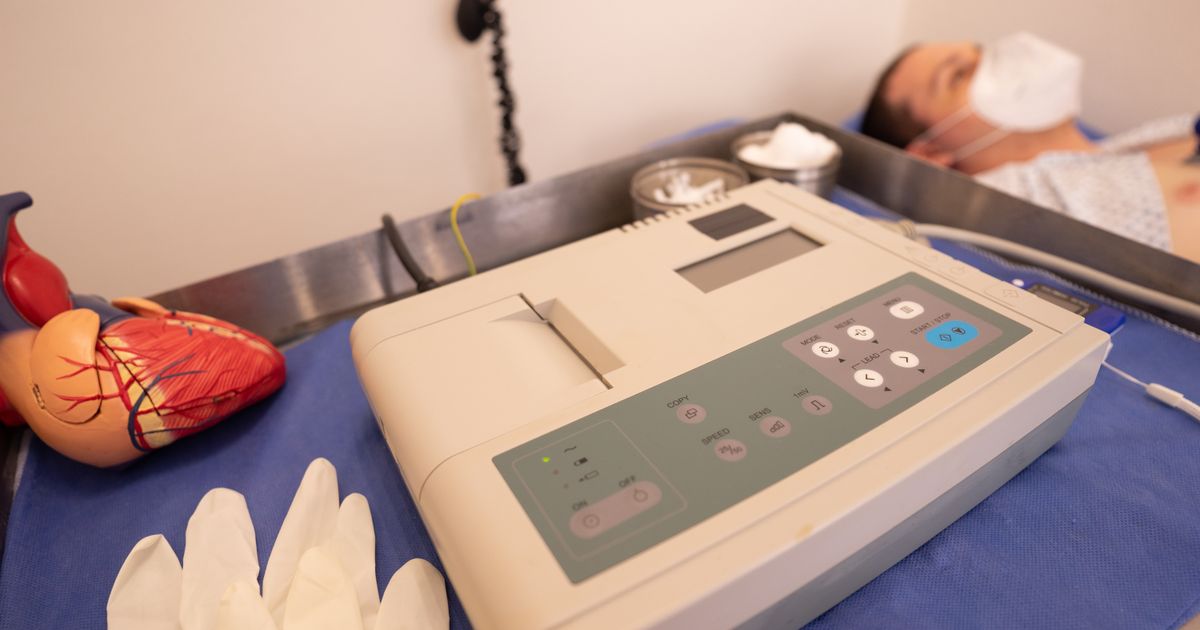
What is His bundle pacing?
Every heartbeat starts as an electrical signal in the upper chambers of the heart. It passes through the AV node into the bundle of His, a short cable of specialised fibres, then divides into right and left bundle branches and spreads through both lower chambers (ventricles) so that they squeeze together.
A standard pacemaker lead is fixed into the muscle of the right ventricle. It works well, but the signal then travels slowly from muscle cell to muscle cell, and the two ventricles contract slightly out of step. In His bundle pacing, the tip of the lead is screwed directly onto the bundle of His, so the signal travels down the natural wiring.
Left bundle branch area pacing is a newer, closely related method in which the lead is screwed a little deeper into the wall between the ventricles to reach the left bundle branch. Both methods are called conduction system pacing. Many centres now prefer left bundle branch area pacing because it is usually easier to achieve and the readings tend to be more stable.
Other names for His bundle pacing
- HBP
- Conduction system pacing (CSP)
- Physiological pacing
- Left bundle branch area pacing (LBBAP) or left bundle branch pacing (LBBP), the related method
- His bundle pacemaker
Why is His bundle pacing done?
The reasons are the same as for any pacemaker: a heartbeat that is too slow or unreliable. The difference is the wish to avoid the out-of-step contraction of standard pacing, which in a minority of people paced for most of their heartbeats can weaken the heart muscle over the years (pacing-induced cardiomyopathy). Conduction system pacing may be considered for:
- Blocul cardiac: inclusiv bloc cardiac complet, where the ventricles are expected to depend on the pacemaker for most beats.
- Slow heart rhythms: , cum ar fi bradicardie or sindromul sinusului bolnav when frequent ventricular pacing is likely.
- Atrial fibrillation treated by AV node ablation: unii oameni cu fibrilatie atriala have the AV node blocked by cateter ablația and then rely fully on a pacemaker.
- Heart failure with a conduction delay: selected people with insuficienţă cardiacă și bloc de ramură stângă, usually when cardiac resynchronisation therapy (CRT) is not possible or has not worked.
- Weakening of the heart after years of standard pacing: an existing pacemaker system may be upgraded.
The evidence is still growing. Studies so far are encouraging, but large long-term trials are still under way. Standard pacemakers and CRT remain well-proven treatments.
Types of pacing and how they compare
Conduction system pacing uses ordinary pacemaker generators; only the lead position differs. It can be part of a stimulator cardiac cu o singură cameră, A stimulator cardiac cu două camere or, in selected cases, a CRT or defibrillator system.
| Metodă | Where the lead sits | Atuuri | Limitări |
|---|---|---|---|
| Standard right ventricular pacing | Muscle of the right ventricle | Quick, reliable, decades of experience | Ventricles contract out of step; may weaken the heart in some people paced most of the time |
| His bundle pacing | On the bundle of His | Closest to natural activation | Small target, harder to place; more energy often needed; readings can change over time; cannot correct every block |
| Left bundle branch area pacing | Deep in the wall between the ventricles | Easier to achieve than His pacing; low, stable energy needs in most people | Newer method; long-term data and lead removal experience are still limited |
| CRT (biventricular pacing) | Right ventricle plus a vein on the left ventricle | Strong evidence in heart failure with conduction delay | Depends on suitable veins; not everyone responds |
Cine este potrivit și cine s-ar putea să nu fie?
You may be suitable if you need a pacemaker and are expected to be paced for most of your heartbeats, if your pumping function is already reduced, or if CRT has not worked.
It may be less suitable, or the plan may change during the procedure, if:
- The electrical block lies far down the conduction system, where His bundle pacing cannot bypass it.
- The wall between the ventricles is heavily scarred or very thick, which can make lead fixation difficult.
- You need a pacemaker only as an occasional backup, in which case a standard lead position is usually enough.
Your doctor may also discuss whether you need an defibrilator cardioverter implantabil (ICD).
How to prepare for His bundle pacing
Teste înainte de procedură
- An ECG și adesea o Monitor Holter recording to document the rhythm problem.
- An ecocardiografie to measure pumping function and wall thickness.
- Analize de sânge.
- Uneori a RMN cardiac sau un studiu de electrofiziologie to locate the level of block or scarring.
Medicamente de discutat
Tell your doctor about every medicine and supplement you take. Blood thinners and diabetes medicines may need to be adjusted. Do not stop any medicine on your own. Mention any allergy, especially to contrast dye or antibiotics.
În ziua
- You will usually be asked not to eat for about six hours beforehand; follow the timing given by your hospital.
- Arrange for someone to take you home and stay with you for the first night.
How is His bundle pacing performed?
The procedure is done in a cardiac catheterisation or electrophysiology laboratory.
- Pregătirea: ECG stickers and monitoring are attached, a drip is placed in your arm and antibiotics are given to lower the risk of infection.
- Amorțeală și sedare: the skin below the collarbone, usually on the left, is numbed. Light sedation keeps you relaxed.
- Making the pocket: a small cut is made and a pocket is created under the skin for the pacemaker.
- Reaching the heart: a vein under the collarbone is entered and a shaped guiding tube is passed into the heart under X-ray guidance.
- Finding the conduction system: the lead is moved in small steps while the team watches electrical signals from its tip and the ECG pattern to locate the His bundle or the left bundle branch area.
- Fixing the lead: the lead is screwed into place. For left bundle branch area pacing it is advanced deeper into the wall between the ventricles.
- Testarea: the team measures the energy needed to pace and checks the ECG. If the readings are not good enough, the lead is repositioned or a standard position is used.
- Închidere: the leads are connected to the pacemaker, which is placed in the pocket. The wound is closed with stitches or skin glue and covered with a dressing.
Ce se întâmplă după procedură?
Your heart rhythm, blood pressure and wound are checked on the ward. A chest X-ray and a device check usually confirm the lead position before you go home. Mild soreness and bruising around the pocket are common for a few days. You will be given a device identity card, wound care instructions and a date for your first pacemaker check.
Riscuri și complicații
Most people have no serious problems, but every device implant carries some risk. Our page on complications with pacemakers covers the general risks in more detail.
Mai frecvente
- Bruising, swelling or soreness at the implant site
- A rise in the energy needed to pace (the pacing threshold), seen more often with His bundle leads, which can shorten battery life
- Failure to place the lead on the conduction system, so that a standard lead position is used
neobișnuit
- Lead movement or loss of conduction system capture, which may need a repeat procedure
- Infection of the pocket or leads
- Bleeding or a collection of blood in the pocket
- Air leak around the lung (pneumothorax)
- The lead passing through the wall between the ventricles, or injury to a small artery in that wall, during left bundle branch area pacing
- Fluid or blood around the heart
Rezultate: cât de bine funcționează?
When the lead is placed successfully, the ECG usually shows a narrower, more natural beat. Studies suggest this can help preserve pumping function in people paced most of the time, and can improve it in some whose heart has weakened because of a conduction delay or earlier pacing.
His bundle pacing cannot be achieved in every patient, and in some the readings worsen over time so that the lead has to be revised. Left bundle branch area pacing is placed successfully more often, but its very long-term performance is still being studied. No pacing method cures the underlying heart condition.
Recovery after His bundle pacing
- Prima săptămână: keep the wound clean and dry as instructed. Short walks are encouraged.
- First four to six weeks: avoid lifting the arm on the implant side above shoulder height and heavy lifting, so that the lead can settle.
- Conducerea și serviciul: ask your doctor when you may drive and return to work.
- First device check: usually within a few weeks, when the settings are fine-tuned.
Când să solicitați ajutor medical
- Redness, increasing swelling, warmth, discharge or opening of the wound
- Febra sau frisoane
- Dizziness, fainting or a return of your earlier symptoms
- Dificultăți de respirație, dureri în piept sau tuse persistentă
- Hiccups that do not stop, or twitching of the chest or tummy muscles
Life after His bundle pacing
- Attend every device check. Thresholds are watched closely, especially in the first year.
- Carry your device card and show it at airport or building security.
- Keep mobile phones and headphones at least 15 cm away from the pacemaker, and avoid lingering near strong magnets or large industrial equipment.
- Tell every doctor and scan centre that you have a pacemaker. Whether MRI is allowed must be confirmed for your device.
- The battery typically lasts several years. When it runs low, the generator is replaced in a smaller procedure.
Benefits of His bundle pacing
- Uses the heart's own wiring, so the ventricles contract in a near normal sequence
- May lower the chance of the heart weakening from long-term pacing
- Can be an alternative when a CRT lead cannot be placed or CRT has not helped
What is the cost of His bundle pacing in India?
Costul depinde de mai mulți factori:
- The type of device (single chamber, dual chamber, CRT or defibrillator) and its features
- The special leads and guiding tubes used
- The length and difficulty of the procedure
- Room category and length of hospital stay
- Orașul și spitalul
Costurile variază de la persoană la persoană. Vă rugăm să verificați prețurile reale cu spitalul.
Many health insurance policies cover medically necessary pacemaker implantation; confirm the details with your insurer.
Why choose Apollo Hospitals for His bundle pacing?
- Heart rhythm specialists who implant pacemakers, CRT devices and defibrillators and can discuss which option suits you
- Cardiac catheterisation and electrophysiology laboratories with the recording equipment needed to locate the conduction system
- Device clinics for long-term checks and programming
- Disponibilitatea diferă între centre. Vă rugăm să verificați cu spitalul.
To discuss whether conduction system pacing is right for you, programează o întâlnire cu un cardiolog la spitalele Apollo.
Citire conexă
- Dual chamber pacemaker implantation
- Single chamber pacemaker implantation
- Terapia de resincronizare cardiacă (CRT)
- Leadless pacemaker implantation
- Bloc de ramificare a pachetului stâng
Questions to ask your doctor about His bundle pacing
- Why do you recommend conduction system pacing instead of a standard pacemaker for me?
- Will you aim for His bundle pacing or left bundle branch area pacing, and why?
- What happens if the lead cannot be placed on the conduction system?
- Do I need CRT or a defibrillator as well?
- How often will my device need to be checked?
- How long is the battery expected to last in my case?
- Will I be able to have an MRI scan with this device?
- When can I drive, travel and return to work?
Întrebări frecvente
1. Is His bundle pacing better than a normal pacemaker?
Not for everyone. A standard pacemaker is safe, proven and enough for many people. Conduction system pacing may offer an advantage when you are expected to be paced most of the time or your pumping function is already reduced.
2. What is the difference between His bundle pacing and left bundle branch area pacing?
Both stimulate the heart's own wiring. In His bundle pacing the lead sits on the first part of the pathway. In left bundle branch area pacing it is screwed deeper into the wall between the ventricles. The second method is usually easier to achieve and needs less energy.
3. Is His bundle pacing a major operation?
No. It is done through a small cut below the collarbone under a numbing injection and sedation, and the chest is not opened. It does take longer than a standard implant and needs specific training.
4. Cât durează procedura?
It varies. Finding and fixing the lead on the conduction system takes extra time, so it is usually longer than a standard pacemaker implant. Your doctor can give you an estimate.
5. Este procedura dureroasă?
You may feel pressure and pushing but should not feel sharp pain. The site is sore for a few days afterwards, and this usually settles with simple pain relief.
6. Can the lead always be placed on the His bundle?
No. If the lead cannot be fixed securely or the readings are poor, the doctor may use left bundle branch area pacing or a standard lead position in the same sitting.
7. What does it mean if my pacing threshold rises?
The threshold is the least energy needed to make the heart beat. If it rises, the battery drains sooner. A small rise is managed by reprogramming; a large rise may mean the lead has to be repositioned or replaced. This happens more often with His bundle leads.
8. Can His bundle pacing replace CRT in heart failure?
Sometimes, but CRT has the longest record of evidence. Conduction system pacing is generally considered when a CRT lead cannot be placed or CRT has not helped. Research comparing the two is continuing.
9. Cât durează bateria?
Generally several years. It depends on how often you are paced and how much energy each beat needs. Battery level is measured at every device check, so replacement can be planned in advance.
10. Can I have an MRI scan after His bundle pacing?
Many modern systems allow MRI under specific conditions, depending on the generator and leads used. Show your device card and check with your cardiologist before any scan.
11. Când mă pot întoarce la activitățile normale?
Most people return to light daily activities within a few days. Avoid raising the arm on the implant side above the shoulder and heavy lifting for about four to six weeks.
12. Can an existing pacemaker be changed to His bundle pacing?
Sometimes. A conduction system lead can be added in an upgrade procedure, depending on your veins, existing leads and general health.
13. Will I feel the pacemaker working?
Most people do not. You may notice that tiredness, dizziness or breathlessness improve. Report muscle twitching, hiccups or palpitations, as the settings may need adjustment.
14. Which doctor performs His bundle pacing?
A cardiologist trained in heart rhythm disorders and device implantation, called a cardiac electrophysiologist. Not every centre offers the technique, so ask about the team's experience.
Concluzie
His bundle pacing and left bundle branch area pacing place the pacemaker lead on the heart's own conduction pathway so that the ventricles beat in a near natural sequence. The procedure is more demanding, the lead cannot always be placed and thresholds can rise over time, so careful selection and regular follow-up matter. Discuss the options with a heart rhythm specialist who knows your condition.
Această pagină are scop informativ general și nu înlocuiește sfatul medicului dumneavoastră. Deciziile privind tratamentul trebuie luate împreună cu un specialist calificat care vă cunoaște istoricul medical.
Adaugat recent


Specialiști în cardiologie la Spitalele Apollo








Avertisment:
Informațiile furnizate pe această pagină sunt destinate exclusiv scopurilor generale de informare și educație. Deși depunem eforturi rezonabile pentru a ne asigura că informațiile sunt corecte, fiabile și revizuite periodic, acestea nu ar trebui considerate un substitut pentru sfatul, diagnosticul sau tratamentul medical profesional.
Gradul de adecvare a unei proceduri medicale, împreună cu beneficiile, riscurile, pregătirea, recuperarea, potențialele complicații și rezultatele așteptate ale acesteia, poate varia de la o persoană la alta. Profesionistul dumneavoastră din domeniul sănătății va determina dacă o procedură este adecvată în funcție de afecțiunea dumneavoastră individuală și de istoricul medical.
Vă rugăm să consultați un profesionist calificat din domeniul sănătății pentru sfaturi personalizate înainte de a lua decizii cu privire la orice procedură medicală.
Pentru mai multe informații despre modul în care este creat, revizuit, actualizat și întreținut conținutul nostru medical, vă rugăm să citiți [Politica editorială].




