

Apollo Hospitals Navi Mumbay shifokorlari noyob qon ketish buzilishi bilan og'rigan bemorga robotik histerektomiyani muvaffaqiyatli amalga oshirdilar
A multidisciplinary team at Apollo Hospitals, Navi Mumbai, has successfully performed a robotic hysterectomy on a 37-year-old woman diagnosed with Glanzmann’s Thrombasthenia, a rare genetic condition that severely impairs the blood’s ability to clot and can lead to life-threatening bleeding episodes.
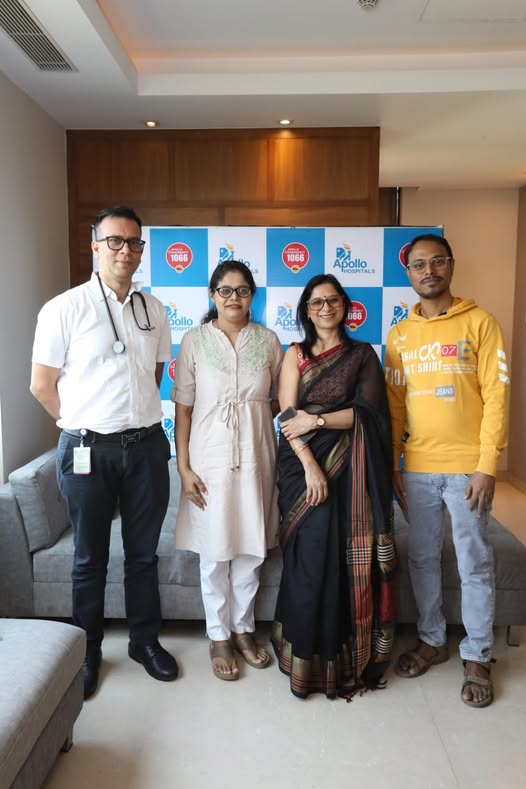
L to R: Dr. Punit Jain - Sr Consultant Hematology, Hemato Oncology & Program Coordinator Bone Marrow Transplant & CAR T-cell Therapy, Apollo Hospitals, Navi Mumbai, Mrs. Neelam Yadav (Patient), Dr. Tripti Dubey - Sr Consultant Obstetrics, Gynaecology & Robotic Surgery, Apollo Hospitals, Navi Mumbai, and Mr. Sudhir Yadav (Patient's husband).
The patient had endured years of severe menstrual bleeding that often required hospitalisation and blood transfusions. During a recent episode, her haemoglobin level dropped to a critically low 4 g/dL, prompting doctors to recommend a hysterectomy as a definitive solution to prevent recurrent bleeding and improve her long-term quality of life. Doctors also noted that the woman had previously delivered a child through a Caesarean section and required multiple blood and platelet transfusions at the time due to complications related to her underlying bleeding disorder.
Surgery in patients with Glanzmann’s Thrombasthenia is particularly complex due to the risk of uncontrolled bleeding, even from minor surgical interventions. To mitigate these risks, the clinical team opted for a robotic assisted minimally invasive procedure. The surgery was led by Dr. Tripti Dubey (Senior Consultant – Obstetrics, Gynaecology and Robotic Surgery, Apollo Hospitals) in collaboration with Dr. Punit Jain (Consultant – Haematology, Hemato-Oncology and Bone Marrow Transplant Specialist, Apollo Hospitals), combining expertise in robotic gynaecology and haematology to carefully manage the patient’s clotting disorder.
The surgery was completed with near-zero intraoperative blood loss and without the need for transfusion during the procedure — a remarkable achievement given the patient’s underlying condition. Following a monitored postoperative recovery, the patient stabilised well and was able to resume routine activities soon afterward.
This case underscores the growing role of robotic surgery in managing complex, high-risk conditions. By enabling enhanced precision, smaller incisions, and improved control during delicate procedures, robotic platforms are helping clinicians expand the boundaries of safe surgical care for patients with rare and challenging disorders.





 Chennai yaqinidagi eng yaxshi shifoxona


