


Nojeren'ny Ekipa Tonian-dahatsoratry ny Apollo
Valiny haingana
Chorionic villus sampling (CVS) is a prenatal diagnostic test in which a tiny sample of the placenta is taken, under ultrasound guidance, to check the baby for chromosomal and certain inherited genetic conditions. It is usually done between 11 and 14 weeks of pregnancy, earlier than amniocentesis. It gives a definite answer for the conditions tested, but it carries a small risk of miscarriage, so it is offered only when there is a clear medical reason. Prenatal sex determination is prohibited by law in India and is not part of this test.
| Ny tena zava-misy | Details |
|---|---|
| Inona izany | Sampling of placental tissue (chorionic villi) for genetic testing |
| Rehefa vita izany | Usually between 11 and 14 weeks of pregnancy |
| Ahoana no anaovana azy | Fine needle through the abdomen, or a thin tube through the cervix, guided by ultrasound |
| Fotoana lany | The sampling takes a few minutes; the visit takes longer |
| fanatoranana | Usually a numbing injection in the skin; no general anaesthesia |
| Loza lehibe | A small added risk of miscarriage |
| Results | Early results in a few days; full results usually in about two weeks, depending on the test |
| Iza no manatanteraka izany | Manam-pahaizana manokana momba ny fitsaboana ny foetus na dokotera mpitsabo aretim-behivavy voaofana |
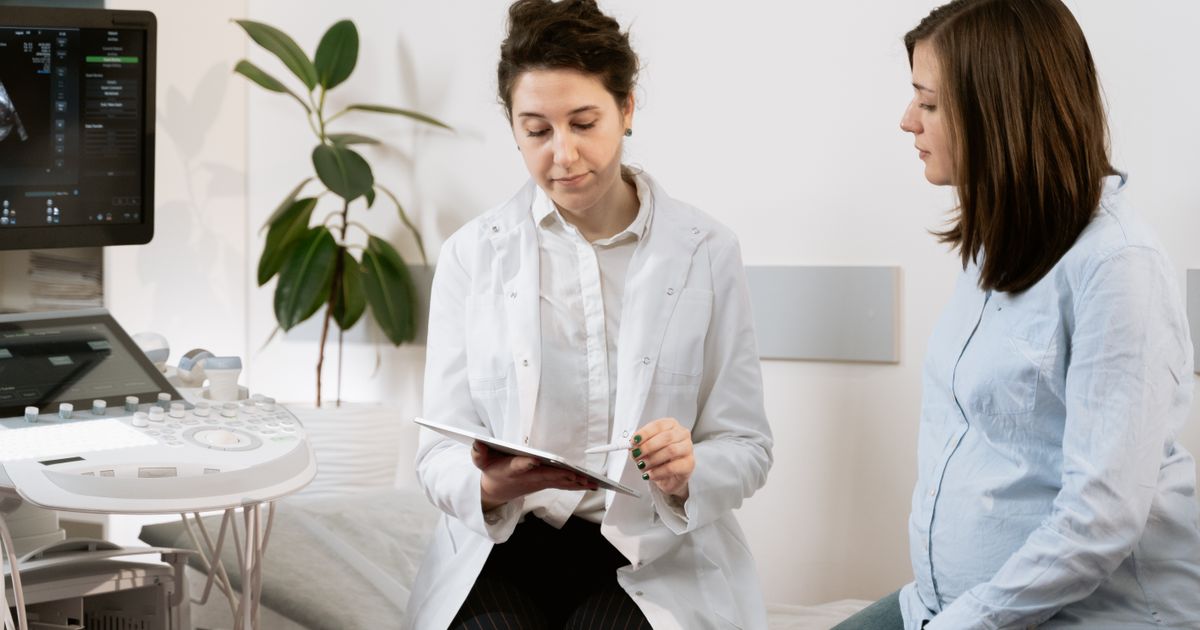
What is chorionic villus sampling?
The placenta is the organ that connects the baby to the wall of the womb. Its surface is made of tiny finger like projections called chorionic villi. These develop from the same fertilised egg as the baby, so in most cases they carry the same genetic material. In CVS, a small amount of this tissue is removed and sent to a genetics laboratory.
CVS is a diagnostic test. This is different from screening tests such as the nuchal translucency scan, blood marker tests or the NIPT test, which only estimate the chance of a condition. A screening test cannot harm the pregnancy but cannot give a definite answer. CVS can confirm or rule out the specific conditions that are tested, at the cost of a small procedure related risk.
Other names for chorionic villus sampling
- CVS test
- Chorionic villus biopsy
- Placental biopsy
- Transabdominal CVS and transcervical CVS
- Prenatal diagnostic test in the first trimester
Why is chorionic villus sampling done?
CVS is offered when the chance of a serious genetic condition in the baby is higher than usual. It is never a routine test. Common reasons include:
- A high chance result on screening: for example a combined first trimester screening or NIPT result suggesting Syndrome Down, Syndrome Edwards na hafa trisomy.
- Findings on an early scan: such as an increased nuchal translucency measurement or a structural difference seen on pregnancy ultrasound.
- A known inherited condition in the family: when both parents are carriers, or one parent is affected. Examples include thalassemia, Aretina sela aretin-tsaina, fibsy gnostique, Duchenne distrophy hozatra, hemophilia sy Tay Sachs disease.
- A previous pregnancy or child with a chromosomal or genetic condition.
- A parent who carries a chromosomal rearrangement.
What CVS cannot tell you
- It does not detect every genetic condition. The laboratory tests only for what has been requested.
- It does not detect neural tube defects such as spina bifida. These are looked for by ultrasound and blood tests later in pregnancy.
- It does not show most structural problems of the heart or other organs, which are assessed by scans.
- A normal result does not guarantee a baby with no health problems.
Fanamarihana ara-dalàna: prenatal sex determination is prohibited by law in India. CVS is performed only for the medical indications allowed by law, at registered centres, and the sex of the baby is not disclosed.
Types of CVS and comparison with amniocentesis
- Transabdominal CVS: a fine needle is passed through the skin of the abdomen and the wall of the womb into the placenta. This is the more commonly used route.
- Transcervical CVS: a thin flexible tube or fine forceps is passed through the vagina and cervix to the placenta. It may be chosen when the placenta lies low or at the back of the womb and is hard to reach through the abdomen.
The doctor chooses the route after looking at the position of the placenta and the womb on ultrasound.
The other main diagnostic test is amniocentesis, in which a small amount of the fluid around the baby is taken. Both tests answer similar questions. The main differences are timing and what is sampled.
| endri-javatra | Chorionic villus santionany | Amniocentesis |
|---|---|---|
| Sample taken | Tambajotra placenta | Tsiranoka amniotique |
| Fandaharam-potoana mahazatra | 11 ho 14 herinandro | From 15 weeks onwards |
| Tombony lehibe | Earlier answer, so decisions can be made sooner | Tests cells shed by the baby itself; unclear results are less common |
| Mety ho afa-jaza | Small added risk | Small added risk; in experienced hands the two are considered broadly similar |
| Unclear result due to placental mosaicism | Occurs in a small number of tests | Rare |
| Detects neural tube defects | No | Can help, through a test on the fluid |
Who is suitable for CVS?
CVS may be suitable if you are in the right stage of pregnancy, there is a medical reason as listed above, and you have had genetic counselling and wish to have a definite answer. The choice is yours. Some couples prefer not to have an invasive test, and that decision is respected.
Iza no mety tsy ho mety
- Women who are less than 10 weeks pregnant. CVS is not done this early because very early sampling has been linked with limb problems in the baby.
- Women with active vaginal bleeding or an untreated vaginal or cervical infection, particularly for the transcervical route.
- Women in whom the placenta cannot be reached safely; amniocentesis at a later date may be advised.
- Women with blood borne infections such as HIV or hepatitis B, in whom the small chance of passing the infection to the baby needs careful discussion first.
- Twin pregnancies can be tested, but the procedure is more complex and should be done at a centre with experience.
How to prepare for CVS
Counselling and tests
- A genetic counselling session to explain what is being tested, the possible results and the options that follow.
- An ultrasound scan to confirm the stage of pregnancy, the baby's heartbeat and the position of the placenta.
- A blood group test. If you are Rh negative (see Rh factor), you will be given an injection after the test to prevent your body forming antibodies against the baby's blood.
- Screening blood tests for infections, as advised.
- For inherited conditions, blood samples from both parents so that the exact gene change is known before the test.
Fanafody horesahina
- Tell the doctor if you take blood thinners or have a bleeding disorder.
- Mention any allergies, including to numbing injections or antiseptic solutions.
Amin'ny andro
- You can usually eat and drink normally.
- You may be asked to arrive with a comfortably full bladder, as this can improve the ultrasound view. Follow the instructions given by the centre.
- Arrange for someone to accompany you home.
Ahoana no fomba anaovana santionany chorionic villus?
- Consent and scan: the doctor confirms your details and consent, then performs an ultrasound to check the baby and locate the placenta.
- Cleaning the skin: for the abdominal route, the skin is cleaned with antiseptic and a numbing injection may be given.
- Inserting the needle: watching the ultrasound screen throughout, the doctor passes a fine needle through the abdomen into the placenta. The needle does not enter the fluid sac or touch the baby.
- Taking the sample: gentle suction draws a small amount of villi into a syringe. You may feel pressure or a cramp like a period pain for a short time.
- Transcervical route: if this route is used, a speculum is placed in the vagina, the cervix is cleaned and a thin tube is guided through it to the placenta to collect the sample.
- Checking the sample and the baby: the sample is checked to confirm there is enough tissue, and the baby's heartbeat is checked again on ultrasound.
Inona no hitranga aorian'izay?
You rest for a short time at the centre and can then go home. Mild cramping and a little spotting are common for a day or two. Rest for the remainder of the day and avoid heavy lifting, strenuous exercise and sexual intercourse for a couple of days, or as advised.
The laboratory may run a rapid test for the common chromosomal conditions, with results in a few days, followed by a full karyotype or a more detailed test that takes around two weeks. Tests for single gene conditions have their own timelines. The doctor or genetic counsellor explains the results to you in person.
Risks and complications of CVS
Fahita matetika ary matetika malemy
- Cramping or soreness in the lower abdomen
- Light vaginal spotting, more often after the transcervical route
Tsy fahita firy nefa manan-danja
- afa-jaza: CVS carries a small added risk of pregnancy loss over and above the background risk that exists in every early pregnancy. Recent studies suggest that, when the test is done by experienced operators, this added risk is low and lower than once thought. Your doctor can tell you the figure quoted at their centre.
- aretina in the womb, which is rare.
- Ny fivoahan'ny fluid or heavier bleeding.
- Fahatsiarovan-tena Rh in Rh negative mothers, prevented by an injection after the test.
- Not enough sample or a failed laboratory culture, which means the test has to be repeated or amniocentesis done later.
- Unclear results: in a small number of tests the placenta contains a mixture of normal and abnormal cells that is not present in the baby (confined placental mosaicism). Amniocentesis is then advised to clarify the result.
- Limb defects in the baby have been linked with CVS performed before 10 weeks, which is why it is not done that early.
Results: how accurate is CVS?
For the conditions tested, CVS is highly accurate and gives a definite result in the large majority of cases. A small proportion of results are uncertain and need a further test. Results fall into three groups: no abnormality found for the conditions tested, a condition confirmed, or an unclear finding. If a condition is confirmed, the doctor and genetic counsellor explain what it means for the baby's health, what care is available, and the options open to you within the law. There is no pressure to decide in any particular direction.
Recovery after CVS
Most women feel normal within a day or two and return to usual light activities the next day. No stitches or dressings are needed apart from a small plaster.
Rahoviana no mitady fanampiana ara-pitsaboana
- Heavy or bright red vaginal bleeding
- Leaking of clear fluid from the vagina
- Severe or worsening abdominal pain or cramps
- Sakafo na mangatsiaka
- Foul smelling vaginal discharge
- Mena na mamontsina eo amin'ny toerana fanjaitra
Ny fiainana aorian'ny fitsapana
- Continue your regular antenatal visits, supplements and scans.
- Keep the later anomaly scan appointment, because CVS does not check the baby's organs.
- Ask whether you still need a blood test or scan for neural tube defects.
- If a condition is confirmed, ask for referral to the relevant specialists, such as a paediatrician or geneticist. See also bevohoka mety hampidi-doza.
- Keep copies of the genetic report; it may help other family members and future pregnancies.
Benefits of chorionic villus sampling
- Gives a definite answer for the conditions tested, where screening gives only a probability
- Can be done earlier in pregnancy than amniocentesis
- Allows more time for counselling, planning and decisions
- Can reassure families with a known inherited condition when the result is normal
- Is a short outpatient procedure without general anaesthesia
What is the cost of chorionic villus sampling in India?
Ny vidiny dia miankina amin'ny lafin-javatra maro:
- The genetic tests requested on the sample, which usually form the larger part of the cost
- Whether tests on the parents' blood are needed
- The hospital and city
- Genetic counselling sessions and ultrasound scans
- Any repeat sampling or follow up amniocentesis
Miovaova arakaraka ny olona ny vidiny. Azafady mba jereo any amin'ny hopitaly ny tena vidiny.
Insurance cover for prenatal genetic testing differs widely between policies, so check with your insurer beforehand.
Why choose Apollo Hospitals for chorionic villus sampling?
- Obstetricians and fetal medicine specialists perform the test under continuous ultrasound guidance.
- Genetic counselling is offered before and after the test.
- Prenatal diagnostic procedures are carried out for medical indications in line with Indian law, and the sex of the baby is not disclosed.
- Obstetric, neonatal and paediatric teams are available for onward care.
- Samy hafa ny toerana misy azy arakaraka ny foibe. Azafady mba jereo amin'ny hopitaly.
To discuss prenatal testing, you can book an appointment with an obstetrician and gynaecologist ao amin'ny hopitaly Apollo.
Famakiana mifandray
Questions to ask your doctor about CVS
- Why is CVS being suggested for me, and which conditions will be tested?
- Would amniocentesis or waiting be a reasonable alternative?
- What miscarriage risk does your centre quote for this test?
- Which route will you use, and why?
- When and how will I get the results?
- What happens if the result is unclear?
- Do I need the injection for Rh negative blood group?
- What activity should I avoid afterwards, and for how long?
- Who will explain the results and the options to us?
FAQs
1. Is chorionic villus sampling painful?
Most women describe it as uncomfortable more than painful. There may be a sharp sting from the needle and a cramp like period pain during sampling, which settles quickly.
2. At what week is CVS done?
It is usually done between 11 and 14 weeks of pregnancy. It is not done before 10 weeks.
3. Is CVS safe for the baby?
It is generally safe when done by a trained specialist at the right stage of pregnancy, but it is an invasive test and carries a small added risk of miscarriage. This is why it is offered only when there is a medical reason.
4. How high is the risk of miscarriage after CVS?
The added risk is small. The exact figure varies between studies and centres, so ask your doctor what is quoted locally.
5. Which is better, CVS or amniocentesis?
Neither is better in every case. CVS gives an earlier answer. Amniocentesis is done later and is less likely to give an unclear result. Your doctor will advise based on your stage of pregnancy and the reason for testing.
6. Can CVS replace NIPT or the other way round?
No. NIPT is a screening test on the mother's blood and carries no risk to the pregnancy, but a high chance result needs confirmation. CVS or amniocentesis is the confirming test.
7. How long do CVS results take?
Rapid results for common chromosomal conditions may be ready in a few days. Full results usually take about two weeks, and some gene tests take longer.
8. Can the result be wrong?
Wrong results are very uncommon. Occasionally the placenta has cell changes that the baby does not have, which gives an unclear result and calls for amniocentesis.
9. Will the test reveal the sex of my baby?
No. Prenatal sex determination is prohibited by law in India, and the sex of the baby is not disclosed.
10. Do I need bed rest after CVS?
Strict bed rest is not needed. Rest for the remainder of the day and avoid strenuous activity for a couple of days, or as your doctor advises.
11. Can CVS be done in a twin pregnancy?
Yes, but it is technically more difficult because each placenta has to be sampled separately. It should be done at a centre with experience in twin pregnancies.
12. Does a normal CVS result mean my baby is healthy?
It means the conditions that were tested have not been found. It cannot rule out every genetic or structural problem, so regular scans and antenatal care remain important.
13. Is CVS compulsory if my screening test shows a high chance?
No. It is your choice. Your doctor will explain the options, which include CVS, amniocentesis at a later stage or no invasive test.
14. Which doctor performs chorionic villus sampling?
CVS is performed by a fetal medicine specialist or an obstetrician trained in ultrasound guided prenatal procedures, working with a genetic counsellor and a genetics laboratory.
Famaranana
Chorionic villus sampling is an early prenatal diagnostic test that examines placental tissue for chromosomal and inherited conditions. It gives a definite answer sooner than amniocentesis but carries a small risk of miscarriage and, occasionally, an unclear result. It is offered only for medical reasons, after counselling, and the decision to have it rests with you. Speak to your obstetrician or a fetal medicine specialist about whether it is right for your pregnancy.
Ity pejy ity dia natao ho fampahafantarana ankapobeny fa tsy manolo ny torohevitra avy amin'ny dokoteranao. Ny fanapahan-kevitra momba ny fitsaboana dia tokony hatao miaraka amin'ny manam-pahaizana manokana izay mahafantatra ny tantaran'ny fahasalamanao.
Nampiana vao haingana


Disclaimer:
Ny fampahalalana omena ato amin'ity pejy ity dia natao ho fampahafantarana ankapobeny sy ho fanabeazana fotsiny ihany. Na dia miezaka mafy aza izahay mba hahazoana antoka fa marina, azo itokisana ary averina jerena tsy tapaka ny fampahalalana, dia tsy tokony hoheverina ho solon'ny torohevitra ara-pitsaboana matihanina, ny aretina na ny fitsaboana izany.
Mety tsy hitovy amin'ny olona tsirairay ny mety ho vitan'ny fomba fitsaboana iray, miaraka amin'ny tombontsoa azo avy aminy, ny risika mety hitranga, ny fiomanana, ny fahasitranana, ny fahasarotana mety hitranga, ary ny vokatra antenaina. Ny matihanina amin'ny fahasalamanao no hamaritra raha mety ny fomba fitsaboana iray mifototra amin'ny toe-pahasalamanao manokana sy ny tantaram-pahasalamanao.
Miangavy anao mba hanatona matihanina amin'ny fahasalamana mahafeno fepetra mba hahazoana torohevitra manokana alohan'ny handraisana fanapahan-kevitra momba ny fomba fitsaboana rehetra.
Raha mila fanazavana fanampiny momba ny fomba famoronana, fandinihana, fanavaozana ary fikojakojana ny votoatin-kevitra ara-pitsaboana dia vakio azafady ny [Politika Tonian-dahatsoratra].




