


إجابة مباشرة
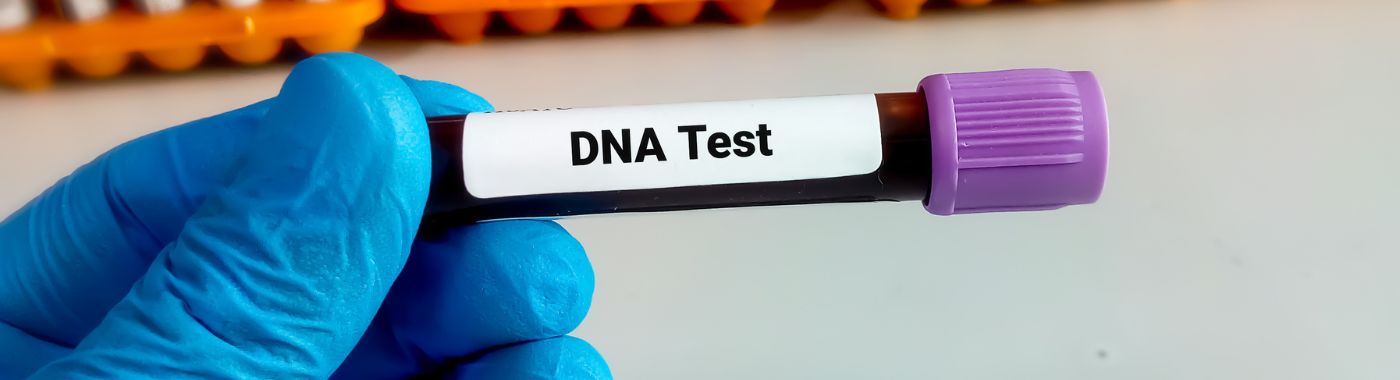
A DNA test analyses deoxyribonucleic acid from blood, a cheek (buccal) swab or saliva to answer one specific question, a relationship question such as paternity, or a genetic health question such as carrier status. No single DNA test covers all purposes. Results require interpretation in clinical context, usually alongside genetic counselling.
الوجبات الرئيسية
- Purpose decides the test: relationship testing, carrier screening, diagnostic gene testing and ancestry testing use different methods and cannot be substituted for each other.
- A negative genetic test is not a clean bill of health: it means the variants covered by that specific panel were not identified.
- Genetic results carry family implications: a finding in one person may have meaning for siblings, children and parents.
- Prenatal and sex-determination rules are strict in India: the PC-PNDT Act 1994 prohibits use of any test to determine fetal sex.
- Genetic counselling before and after testing matters more than the test itself for health-related DNA testing. Results vary depending on individual clinical circumstances.
في لمحة
| العناصر | التفاصيل |
|---|---|
| What is analysed | DNA from white blood cells, buccal cells, saliva or, in specific settings, tissue or fetal DNA in maternal blood |
| Common sample | Buccal swab or 2-5 mL EDTA blood, depending on the test |
| الفئات الرئيسية | Relationship (paternity, maternity, siblingship), carrier screening, diagnostic gene/panel/exome testing, pharmacogenomics, ancestry, forensic |
| وقت جمع العينة | Buccal swab: 2-5 minutes. Blood draw: about 5 minutes. Legal testing appointments take longer because of identity checks |
| الصيام المُتقطع | Not required for DNA analysis itself |
| من يطلب ذلك؟ | Clinician, clinical geneticist, or a court/legal authority for relationship testing |
| الاستشارة | Recommended before and after any health-related genetic test |
المعروف أيضا باسم
- Genetic test, gene test
- DNA profiling, DNA fingerprinting
- Paternity test, "father-child DNA test"
- Carrier screening, carrier test
- Molecular test, PCR-based genetic test
- Genome test, exome test, gene panel
What a DNA test is
DNA is the genetic material inside almost every cell. A DNA test examines selected parts of that material. Two broad technical approaches are used:
- Short tandem repeat (STR) profiling: compares repeating DNA segments between individuals. This underpins paternity, maternity, siblingship and forensic identification.
- Sequencing and variant analysis: reads the genetic code of one gene, a panel of genes, the exome or the genome to look for disease-associated variants.
Array-based SNP genotyping is a third approach, used by most direct-to-consumer ancestry and "wellness" kits. It examines selected common variants only and is not equivalent to diagnostic sequencing.
Why a DNA test is done
- To confirm a suspected genetic diagnosis: for example thalassaemia, Duchenne muscular dystrophy, spinal muscular atrophy, cystic fibrosis, or an inherited cardiomyopathy.
- Carrier screening before or during pregnancy: particularly relevant in India for beta-thalassaemia and sickle cell disease.
- تقييم مخاطر الإصابة بالسرطان الوراثي: for example BRCA1/BRCA2 and related genes when family history or tumour features suggest it.
- Relationship and legal testing: paternity, maternity, siblingship, immigration and inheritance matters.
- الاختبارات الدوائية الجينية: to inform drug choice or dose in selected situations.
- التعرف الجنائي: conducted through authorised laboratories under legal process.
Who should consider a DNA test
- People with an unexplained condition with features suggesting a genetic cause, early onset, multiple organ involvement, or developmental delay.
- Couples planning a pregnancy where either partner has thalassaemia trait, sickle cell trait, or a family history of a genetic disorder.
- Consanguineous couples (marriage within the extended family), which is common in parts of India and raises the chance of recessive conditions.
- Families with a strong pattern of cancer, several affected relatives, young age at diagnosis, or bilateral disease.
- Close relatives of someone with a confirmed pathogenic variant (targeted testing for that variant).
- Parents of a child with recurrent unexplained illness, hearing loss, or seizures of unclear cause.
- Individuals or courts needing legally valid proof of a biological relationship.
A DNA test is generally not useful for a healthy person with no symptoms and no family history who simply wants reassurance. Speak to a clinician or genetic counsellor first.
What a DNA test cannot detect or exclude
- A negative result does not exclude a genetic condition. Every test has a defined scope. A gene panel reports on the genes on that panel; variants outside it, in non-coding regions, or of types the method cannot see are not assessed.
- Standard sequencing can miss certain variant types, including large deletions and duplications, repeat expansions (as in fragile X or Huntington disease), and mosaicism at low levels. These need specific methods.
- A risk result is not a diagnosis. A pathogenic BRCA variant raises cancer risk; it does not mean cancer is present or certain.
- Variants of uncertain significance (VUS) are common and cannot be used to guide treatment decisions. Classification may change over time.
- Most common diseases are not predictable from a DNA test. Type 2 diabetes, coronary disease and most cancers are shaped by many genes plus environment. Consumer "risk scores" have limited individual predictive value, and less validation in South Asian populations.
- Ancestry results are statistical estimates, based on comparison with reference panels. South Asian sub-regional resolution is limited, and percentages may change when a company updates its database.
- A DNA test cannot tell you your fetus's sex in India: such use is prohibited by law.
- Relationship testing cannot distinguish identical twins and can be ambiguous between close relatives (for example an uncle versus a father) unless additional relatives are tested.
- A DNA test does not measure disease activity. It does not replace blood counts, imaging or clinical examination.
If symptoms persist despite a normal or uninformative genetic result, return to your doctor. "Not identified" means the specific variants looked for were not found, not that disease has been excluded.
فحوصات ذات صلة ولكنها مختلفة
| اختبار | السؤال يجيب عليه | الفرق الرئيسي |
|---|---|---|
| اختبار الجين الواحد | Does this person carry a variant in one named gene? | Narrow, fast, used when the clinical diagnosis is already suspected |
| لوحة الجينات | Which of several candidate genes explains this phenotype? | Broader; more chance of a VUS |
| Clinical exome / whole exome | Is there a coding variant anywhere that explains an undiagnosed disorder? | Poor coverage of non-coding regions; may find incidental results |
| تسلسل الجينوم الكامل | As above, with broader coverage including some structural variants | Costlier; interpretation burden higher |
| النمط النووي | Are whole chromosomes normal in number and gross structure? | Sees large chromosomal changes that sequencing may miss |
| مجموعة الكروموسومات | Are there submicroscopic deletions or duplications? | First-line in many cases of developmental delay; does not read the genetic code |
| STR-based relationship test | Are these two people biologically related? | Says nothing about health or disease risk |
| Non-invasive prenatal screening (NIPT) | Is the chance of common fetal trisomies raised? | A screening test, not diagnostic; abnormal results need amniocentesis or CVS. Sex disclosure is prohibited in India |
| Amniocentesis / CVS with genetic testing | Diagnostic fetal genetic result | Invasive, small procedure-related risk, performed under PC-PNDT-compliant indications |
| HPLC / haemoglobin electrophoresis | Is there a haemoglobin disorder or trait? | Usually the first-line screen for thalassaemia; DNA testing confirms and defines the mutation |
| Direct-to-consumer ancestry kit | Broad ancestral composition estimate | Not a clinical test; should not guide medical decisions |
| ملف تعريف الجينوم الورمي | What variants are present in the cancer tissue? | Tests the tumour, not inherited DNA; a separate germline test is needed to assess heritability |
يعتمد تحديد الاختبار الذي يُجرى أولاً على المشكلة السريرية.
- Couple planning a pregnancy, Indian setting: complete blood count with red cell indices and HPLC usually come before DNA analysis for thalassaemia.
- Child with developmental delay: chromosomal microarray and targeted tests are often considered before exome sequencing.
- Suspected specific single-gene disorder: targeted single-gene testing is usually more efficient than a broad panel.
- Strong family cancer history: a multigene hereditary cancer panel, preceded by counselling and ideally starting with the affected relative.
- Legal paternity dispute: an STR test performed with documented chain of custody; nothing else substitutes.
كيفية تحضير
Preparation is set by the laboratory and by the test type. Your laboratory's written instructions take precedence over any general guidance.
- صيام: not needed for DNA analysis. If other blood tests are booked at the same visit, follow the instruction for those.
- Buccal swab and saliva samples: most laboratories ask you to avoid food, drinks, chewing gum, paan, tobacco, smoking and brushing for a period before collection, commonly around 30 minutes to an hour. Follow the exact interval your kit states.
- ورقة العمل: bring the referral, previous reports, and any family member's genetic report. For hereditary conditions, a three-generation family history is valuable.
- Legal or relationship testing: government photo identity for every participant, photographs, consent forms, and for a child the consent of the legal guardian. Chain-of-custody sampling must be done at an authorised collection centre, not at home.
- تقديم المشورة: for health-related testing, book pre-test counselling so you understand what the result can and cannot say, and what an uncertain result would mean.
فترة الحمل
Tell the laboratory you are pregnant. Prenatal genetic testing in India is governed by the PC-PNDT Act 1994; fetal sex is never disclosed. Invasive sampling (amniocentesis, CVS) is done only on accepted medical indications at registered centres.
أطفال
Buccal swabs are preferred over blood where the method allows. Testing a child for an adult-onset condition is generally deferred unless the result would change management in childhood. Guardian consent is required.
People who have had a blood transfusion or bone marrow transplant
Donor DNA in the blood can confuse results. A recent transfusion or any haematopoietic stem cell transplant must be declared; a buccal or skin sample may be needed instead.
People on blood thinners or with bleeding disorders
Mention this before a venous sample so pressure can be applied for longer. Do not stop or alter any prescribed medicine, speak to the prescriber.
Older adults and people with chronic kidney disease, heart failure or diabetes
DNA testing itself imposes no fluid, fasting or dietary demands. If a combined appointment involves fasting or fluid loading for other tests, tell the unit about fluid restriction, heart failure, advanced CKD or glucose-lowering medicines so the schedule can be adjusted safely.
What happens during a DNA test
- الهوية والموافقة: verified first, and formally documented for legal testing.
- جمع العينات: a swab is rotated firmly against the inner cheek for the time the kit specifies, or blood is drawn from an arm vein into an EDTA tube. Saliva kits require spitting into a tube up to a marked line.
- Labelling and transport: samples are sealed, labelled and transported under defined conditions. DNA is stable, but poor collection is the commonest cause of failure.
- Laboratory processing: DNA extraction, amplification or sequencing, then analysis. For sequencing tests, variant interpretation against databases and the clinical details you provided is the slowest step.
كم من الوقت تستغرق العملية
- Collection appointment: a few minutes for a swab; longer for legal testing because of documentation.
- Relationship/STR testing: usually a matter of days to a few weeks, longer where legal reporting formats are required.
- Targeted single-variant or familial variant testing: generally quicker than broad panels.
- Panels, exome and genome sequencing: typically several weeks, because interpretation and sometimes parental samples are needed.
- Rapid/urgent sequencing exists for critically ill newborns at selected centres and is much faster, but availability is limited.
Exact turnaround depends on the laboratory, the test ordered and whether confirmatory testing or family samples are required. Ask your laboratory for its own timeline at the time of booking.
فهم تقريرك
There is no "normal range" for a DNA test. Reports are categorical, and the wording matters.
- Pathogenic / likely pathogenic: the variant is considered disease-causing. Whether it explains your symptoms depends on the condition, inheritance pattern and clinical picture.
- متغير ذو أهمية غير مؤكدة (VUS): evidence is insufficient. A VUS should not be used to make surgical, reproductive or treatment decisions, and family members are not usually tested for it.
- Likely benign / benign: not considered a cause of disease.
- No reportable variant detected: nothing was found within the tested scope and method. The condition is not thereby excluded.
- المشغل: one altered copy of a recessive gene. Carriers are usually healthy but can pass the variant on; the partner's status matters for reproductive planning.
- Relationship reports: exclusion is reported when genetic markers are incompatible with the claimed relationship. Inclusion is reported as a high probability of relationship, based on the markers tested and assumptions about population frequencies and untested close relatives.
- Ancestry reports: percentage estimates with confidence intervals, tied to the company's reference panel.
Interpretation belongs with the clinician or genetic counsellor who requested the test. A report read in isolation is easy to misread.
قد تكون النتائج مضللة في بعض الأحيان
Falsely suggesting a relationship or variant is present
- تلوث اشعاعى of a swab with another person's cells, or collection from an unwashed home surface.
- Sample mix-up or mislabelling, particularly with unsupervised home collection where identity is unverified.
- Pseudogenes and repetitive regions can mimic variants unless confirmed by a second method.
- Somatic changes from clonal haematopoiesis in older adults can appear in blood-derived DNA and be mistaken for inherited variants.
- Close-relative confusion: a brother or father of the alleged father can produce an apparent inclusion in a limited-marker test.
Falsely suggesting nothing is present
- Method blind spots: large deletions, duplications, repeat expansions, deep intronic variants and mosaicism may be missed by standard sequencing.
- Donor DNA after transfusion or bone marrow transplant masking the person's own genotype.
- Panel scope too narrow for the condition being considered.
- Low DNA yield or degraded sample giving incomplete coverage; the laboratory may report an inconclusive result rather than a negative one.
- Allele dropout due to a variant in a primer binding site.
Results that are technically correct but clinically over-read
- Incomplete penetrance: carrying a pathogenic variant does not guarantee the disease will appear.
- Consumer wellness and "nutrigenomics" outputs often report weakly evidenced associations as if actionable.
- درجات المخاطر متعددة الجينات derived mainly from European datasets transfer poorly to South Asian individuals.
المخاطر والسلامة
Buccal swab and saliva collection
Physical risk is minimal. Occasional gagging or mild gum discomfort. Repeat collection may be needed if DNA yield is inadequate.
أخذ عينات من الدم الوريدي
Brief pain, bruising, small risk of fainting, and rarely local infection or nerve irritation. People on anticoagulants may bruise more.
Invasive prenatal sampling for genetic testing
Amniocentesis and chorionic villus sampling carry a small risk of pregnancy loss, bleeding, leaking of amniotic fluid and infection. These risks are specific to the procedure, not to DNA analysis, and are discussed in detail during counselling before consent.
Psychological, family and privacy risks
- Unexpected findings, including non-paternity, undisclosed adoption or unknown consanguinity, can surface during family studies.
- Incidental findings unrelated to the reason for testing may be reported by broad sequencing; your consent form should state whether you wish to receive them.
- Genetic data is sensitive personal data. In India, processing is governed by the Digital Personal Data Protection Act 2023. Ask any provider what data is stored, whether it is shared or used for research, and how to request deletion.
- Anxiety, guilt towards relatives, and concerns about insurance or employment are real and worth discussing during counselling.
تختلف النتائج باختلاف الظروف السريرية الفردية.
الأعلام الحمراء
حالة طارئة الآن
- A critically ill newborn or infant with seizures, severe hypotonia, unexplained acidosis or a suspected metabolic crisis, this needs emergency care, with genetic testing arranged in parallel, not instead.
- Collapse, severe breathlessness or chest pain in someone with a known inherited cardiomyopathy or channelopathy.
- Heavy bleeding or a rapidly expanding swelling at a blood sampling site.
- Fever, abdominal pain, vaginal bleeding or fluid leak after amniocentesis or CVS.
نفس اليوم أو اليوم التالي
- A newly reported pathogenic variant in a gene linked to sudden cardiac events, contact the ordering clinician promptly for advice on activity and family screening.
- Sudden neurological change, unexplained fainting or new palpitations in someone under evaluation for an inherited condition.
- Distress, hopelessness or thoughts of self-harm after receiving a genetic result, seek help the same day.
موعد روتيني
- A variant of uncertain significance, a carrier result, or a positive hereditary cancer result, all need a planned counselling appointment, not emergency care.
- Persisting symptoms despite an uninformative genetic result.
- Planning pregnancy after a carrier result, or arranging cascade testing for relatives.
- Questions about an ancestry or consumer wellness report.
حالات خاصة
Pregnancy and prenatal testing
Testing during pregnancy is time-sensitive and should be arranged through an obstetrician and genetic counsellor. Prenatal diagnosis in India operates strictly under the PC-PNDT Act 1994, at registered facilities, with prescribed documentation, and without any disclosure of fetal sex.
الأطفال والمراهقون
Testing is appropriate when a result will guide care during childhood. Predictive testing for adult-onset conditions is usually postponed until the young person can decide for themselves.
الأزواج من ذوي القرابة
Marriage between relatives increases the chance that both partners carry the same recessive variant. Expanded carrier screening and counselling are often offered before or early in pregnancy.
People with haemoglobinopathies and thalassaemia trait
Thalassaemia trait and sickle cell trait are common in several Indian communities. Both partners should be screened before pregnancy where possible. Note also that haemoglobin variants can make HbA1c unreliable, relevant if diabetes is being assessed at the same visit.
مرضى السرطان
Tumour profiling and germline testing answer different questions. A variant found in a tumour does not automatically mean relatives are at risk; a separate blood or saliva germline test is needed to establish that.
People who have had a transplant or recent transfusion
Declare this so an appropriate sample type is chosen.
كبار السن
Genetic testing can still be valuable, chiefly to guide relatives' screening. Clonal changes in blood with age can complicate interpretation.
DNA testing in the Indian context
- Haemoglobin disorders dominate demand. Beta-thalassaemia and sickle cell disease are the commonest single-gene disorders managed in Indian genetic clinics, and India runs national programmes for sickle cell screening in tribal and high-prevalence districts.
- قرابة is customary in several regions and raises recessive disease risk, making carrier screening particularly useful.
- قانون منع الكشف المبكر عن الأمراض قبل الولادة وتحديد جنس الجنين لعام 1994 governs any test with prenatal application. Determining or disclosing fetal sex is a criminal offence for both the provider and the person seeking it.
- Drugs and Magic Remedies (Objectionable Advertisements) Act 1954 restricts exaggerated claims; be sceptical of marketing that promises disease prevention or "cure" from a DNA kit.
- قانون حماية البيانات الشخصية لعام 2023 applies to genetic data collected through any form, portal or app.
- Court-admissible relationship testing requires supervised collection, documented chain of custody and reporting by an appropriately accredited laboratory. Home kits ordered online are not accepted for legal purposes.
- المصطلحات التي ستسمعها محلياً: "DNA test for father", "gene test", "thalassaemia carrier test", "BRCA test", "NIPT" and "double marker/triple marker", the last two are screening blood tests, not DNA diagnoses.
- South Asian genomic representation in global variant databases is still limited, which increases the proportion of uncertain results and weakens imported risk scores.
التكاليف والتأمين في الهند
Costs differ widely, from relatively modest for a single targeted variant to substantially higher for exome or genome sequencing. Figures quoted anywhere are indicative only; ask the laboratory for a written quotation before sampling.
العوامل التي تؤثر على التكلفة
- Test breadth: single variant, single gene, panel, exome or genome.
- تكنولوجيا: PCR and Sanger sequencing versus next-generation sequencing; add-on methods such as MLPA or triplet-repeat analysis are charged separately.
- Family samples: trio testing (child plus both parents) costs more but often resolves results faster.
- التف حوله: urgent or rapid processing attracts a premium.
- المتطلبات القانونية: chain-of-custody documentation, witnessed collection and court-format reporting add cost.
- الاختبار التأكيدي of a finding by a second method.
- جلسات الاستشارة قد يتم إصدار فاتورة منفصلة.
- Sample logistics, including courier to a reference laboratory, sometimes overseas.
- Location and sector: metro private laboratories, government genetic centres and public screening programmes differ considerably.
تأمين
Coverage for genetic testing under Indian health policies is inconsistent and often excluded, especially for predictive or screening indications. Testing to investigate a current illness during an admission is more likely to be considered than testing of a healthy relative. Obtain pre-authorisation in writing where possible. Some state programmes and public institutions offer subsidised or free screening for thalassaemia and sickle cell disease.
الخرافات والحقائق
| أسطورة | حقيقة |
|---|---|
| A DNA test checks everything about my health. | Every test has a defined scope. No test reads all disease risk. |
| A normal genetic report means I will not get the disease. | It means the tested variants were not identified. Environment, lifestyle and untested genes still matter. |
| A home kit is fine for a paternity dispute in court. | Legal admissibility requires verified identity and chain of custody. Home kits do not provide this. |
| Ancestry percentages are fixed facts. | They are estimates against a reference panel and can change with database updates. |
| A variant of uncertain significance means I have the disease. | It means the evidence is insufficient. It should not drive treatment decisions. |
| Being a carrier means I am ill. | Carriers of recessive conditions are usually healthy; the relevance is mainly reproductive. |
| A DNA test can tell the sex of my baby. | Determining or disclosing fetal sex is prohibited in India under the PC-PNDT Act 1994. |
| A tumour gene report means my children are at risk. | Tumour testing examines the cancer. Inherited risk needs a separate germline test. |
| Genetic testing is pointless because nothing can be done. | Results can guide surveillance, drug choice, reproductive planning and family screening, though not for every condition. |
الأسئلة المتكررة
Does a DNA test hurt?
A buccal swab or saliva sample is painless and takes a few minutes. Some tests need a small venous blood sample, which causes brief pain and occasionally bruising. Invasive prenatal sampling is a different procedure with its own risks, explained separately during counselling before you consent.
Can I do a DNA test without telling my doctor?
Consumer kits can be bought directly, but health-related results are easy to misinterpret without context. Clinical decisions should not rest on a consumer report. Genetic counselling before testing helps you choose the right test and understand what an uncertain or unexpected result would mean for you and your relatives.
Is a paternity test done at home valid in court?
No. Courts in India require identity verification, witnessed collection and a documented chain of custody from an appropriately accredited laboratory. A home kit result may satisfy personal curiosity but is not accepted as legal evidence in custody, maintenance, inheritance or immigration proceedings.
My genetic report says "variant of uncertain significance". What now?
No action is usually taken on the variant itself. Management follows your clinical picture and family history. The laboratory may reclassify the variant later as evidence accumulates. Ask your genetic counsellor whether re-analysis after a period of time is appropriate for your situation.
Should both partners be tested before planning a pregnancy?
Screening both partners is often recommended in India for thalassaemia and sickle cell trait, and more broadly where there is consanguinity or a family history of a genetic disorder. A recessive condition generally becomes a risk only when both partners carry a variant in the same gene.
Can a DNA test tell me whether I will get diabetes or a heart attack?
No. These conditions involve many genes plus diet, activity, sleep and other factors. Genetic risk scores are research tools with limited individual accuracy, and most were built in European populations, so they translate poorly to South Asian individuals. Clinical assessment remains more informative.
Who can see my genetic data?
Ask the provider directly. Under the Digital Personal Data Protection Act 2023, you should be told what data is collected, why, how long it is retained and whether it is shared. Check specifically whether your sample or data will be used for research or transferred outside India.
Will a DNA test tell me why my child has developmental delay?
Sometimes. Chromosomal microarray and exome sequencing identify a cause in a meaningful proportion of cases, but many children receive no genetic explanation. An uninformative result does not close the assessment; clinical follow-up and later re-analysis of stored data may still help.
If a relative has a known genetic variant, do I need the full test?
Usually not. Once a family variant is identified, relatives can have targeted testing for that single variant, which is quicker and cheaper. Bring the relative's laboratory report to your appointment, the exact gene and variant notation is needed to set up the test correctly.
مصادر
- قانون تقنيات التشخيص قبل الحمل وقبل الولادة (حظر اختيار الجنس)، 1994، حكومة الهند.
- قانون حماية البيانات الشخصية الرقمية لعام 2023، حكومة الهند.
- قانون الأدوية والعلاجات السحرية (الإعلانات المرفوضة) لعام 1954، حكومة الهند.
- American College of Medical Genetics and Genomics (ACMG) standards for interpretation of sequence variants and recommendations for reporting secondary findings.
- National Health Mission, Ministry of Health and Family Welfare: guidelines on prevention and control of haemoglobinopathies in India; National Sickle Cell Anaemia Elimination Mission.
- Indian Council of Medical Research: National Ethical Guidelines for Biomedical and Health Research Involving Human Participants.
- National Medical Commission professional conduct regulations.











 أفضل مستشفى بالقرب مني في تشيناي


