


Tshuaj xyuas los ntawm Apollo Editorial Team
Teb ceev
Pleurodesis is a procedure that makes the lung stick to the inside of the chest wall, so that fluid or air can no longer collect in the space between them. It is mainly used for pleural effusions that keep coming back, often because of cancer, and for a collapsed lung that has happened more than once. A substance that irritates the lining is placed through a chest tube or during keyhole surgery, or the lining is roughened by the surgeon. It relieves breathlessness in many people, but it does not treat the underlying disease and it does not always work.
| Cov ntsiab lus tseeb | Paub meej |
|---|---|
| Nws yog dab tsi | A procedure to seal the space between the lung and the chest wall |
| Kev siv tseem ceeb | Repeated pleural effusion, repeated or persistent collapsed lung |
| txoj kev | Chemical (an irritating substance) or mechanical (surgical roughening or removal of the lining) |
| Yuav muab li cas | Through a chest tube at the bedside, or during thoracoscopy or keyhole surgery |
| Tshuaj loog | Local anaesthesia with pain relief and sedation, or general anaesthesia for surgery |
| Nyob hauv tsev kho mob | Usually a few days, until the chest tube is removed |
| Ua los ntawm | A pulmonologist or a thoracic surgeon |
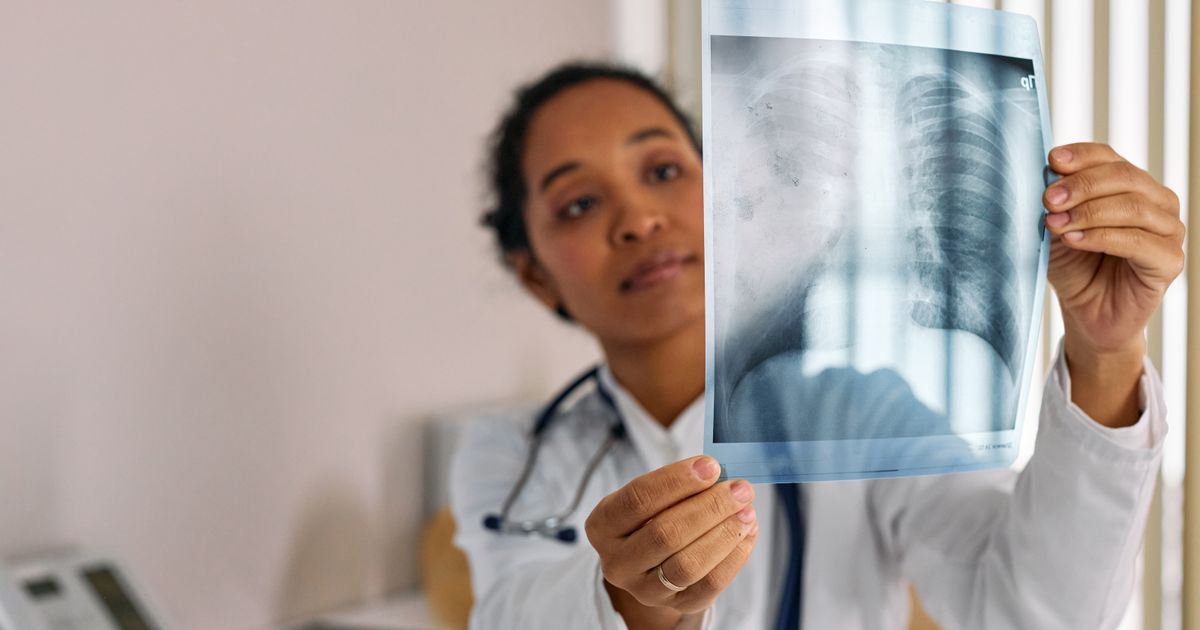
What is pleurodesis?
Each lung is wrapped in a thin, smooth lining called the pleura. One layer covers the lung and the other lines the inside of the chest wall. Between the two is a very thin space with a small amount of fluid that lets the lung glide as you breathe. In some conditions this space fills with fluid (a pleural effusion) or with air (a pneumothorax). The lung is then squeezed and you feel breathless.
Pleurodesis deliberately causes mild inflammation of the two layers. As they heal, they stick together and the space closes. With no space left, fluid or air has nowhere to collect. The lung continues to work normally once it is stuck to the chest wall.
Other names for pleurodesis
- Pleural sclerosis
- Chemical pleurodesis
- Mechanical or surgical pleurodesis
- Pleural abrasion
- Bedside pleurodesis or slurry pleurodesis
- Thoracoscopic pleurodesis or poudrage
Why is pleurodesis done?
Pleurodesis is advised when fluid or air keeps returning after it has been drained and the cause cannot be quickly corrected.
- Malignant pleural effusion: fluid caused by cancer that has spread to the pleura. It is seen most often with mob ntsws cancer, breast cancer, ntawm zes qe menyuam cancer thiab cov mob ntsws. This is the most common reason for pleurodesis.
- Repeated pneumothorax: a collapsed lung that has happened more than once, or a first collapse in someone for whom another would be dangerous, such as pilots and divers.
- Persistent air leak: a collapsed lung that does not seal with a chest tube alone.
- Repeated non-cancerous effusions: occasionally, fluid from lub plawv tsis ua hauj lwm, liver disease or kidney disease that keeps returning in spite of full medical treatment. Here pleurodesis is a last option and works less reliably.
The aim is relief of breathlessness and fewer repeat drainage procedures. Pleurodesis does not cure cancer or the condition that produced the fluid.
Types of pleurodesis
Chemical pleurodesis
An irritating substance is placed in the pleural space. The one used most widely is a sterile mineral powder. Other choices include a medicine that irritates the lining, such as certain antibiotics or antiseptic solutions used for this purpose, and sometimes the patient's own blood for a persistent air leak. The substance can be given in two ways:
- Slurry through a chest tube: the powder is mixed with sterile salt water and passed down the chest tube at the bedside.
- Spray during thoracoscopy (poudrage): the dry powder is sprayed evenly over the lining while the doctor looks inside the chest with a camera.
Mechanical pleurodesis
During keyhole surgery (VAT), the surgeon rubs the lining of the chest wall with a rough pad (pleural abrasion) or removes a strip of it (pleurectomy). This is used mainly for pneumothorax, usually along with removal of the air blisters that caused the leak.
| feature | Bedside chemical pleurodesis | Thoracoscopic or surgical pleurodesis |
|---|---|---|
| Qhov twg nws ua tiav | Ward or procedure room | Operating room or thoracoscopy suite |
| Tshuaj loog | Local anaesthesia and pain relief | Kev siv tshuaj loog los yog kev siv tshuaj loog dav dav |
| How the lining is treated | Slurry passed through the chest tube | Powder sprayed under vision, or lining rubbed or removed |
| Other steps possible | tsis muaj leej twg | Biopsy, breaking up pockets of fluid, removal of air blisters |
| Often chosen for | Frail patients with a known cancer-related effusion | Fitter patients, unclear diagnosis, repeated pneumothorax |
Lwm txoj kev xaiv uas koj tus kws kho mob yuav tham txog
- Repeated needle drainage for people with slow build-up of fluid or limited life expectancy.
- A tunnelled indwelling pleural catheter: a soft tube left under the skin so that fluid can be drained at home. It is useful when the lung cannot fully expand.
- A pleuroperitoneal shunt hauv cov rooj plaub xaiv.
- Treatment of the cause, xws li cov kws khomob for cancers that respond well.
Who is suitable for pleurodesis, and who may not be?
Tej zaum koj yuav tsim nyog yog tias:
- Your breathlessness clearly improved when the fluid or air was drained.
- The fluid or air has come back, or is very likely to.
- Your lung expands fully against the chest wall after drainage. The two layers must touch in order to stick.
Pleurodesis may not be suitable if:
- The lung is trapped by a thick layer or blocked airway and cannot expand ("trapped lung"). An indwelling catheter is usually better.
- There is active infection in the pleural space, such as empyema.
- Draining the fluid did not ease your breathing, which suggests another cause.
- Life expectancy is very short, when simple drainage may be kinder.
- Tej zaum koj yuav xav tau mob ntsws hloov in future, since a stuck lung makes that surgery harder. This needs discussion with the transplant team.
How to prepare for pleurodesis
Tests
- A hauv siab Xoo hluav taws xob, chest ultrasound or CT scan to see the amount of fluid or air and whether the lung can expand.
- Kev tshuaj xyuas cov kua dej hauv lub ntsws and sometimes a pleural qhov nqaij me to confirm the cause.
- Kev kuaj ntshav, suav nrog ua tiav cov ntshav suav thiab kev kuaj ntshav txhaws.
- An ECG and anaesthetic check if surgery is planned.
Cov tshuaj uas yuav tsum tau tham txog
- Blood thinners may need to be paused. Do not stop them without advice.
- Tell your doctor if you take steroid tablets or anti-inflammatory pain relief. These may reduce the inflammation that pleurodesis depends on, and your doctor may adjust them.
- Mention any allergies.
Hnub
- For a bedside procedure you can usually eat normally. For thoracoscopy or surgery, follow the fasting instructions.
- You will sign a consent form after the benefits, risks and alternatives are explained.
How is pleurodesis performed?
The steps below describe chemical pleurodesis through a chest tube, the most common method.
- Chest tube placement: under local anaesthesia, a tube is passed between the ribs into the pleural space, usually with ultrasound guidance.
- Ntws dej: fluid is drained in stages over a day or so. Draining slowly avoids coughing and chest tightness.
- Check X-ray: an X-ray confirms that the fluid has gone and the lung has expanded.
- Nyem qhov mob: pain relief is given beforehand, and a numbing solution is often put down the tube, because the procedure can be painful.
- Instilling the agent: the slurry is passed down the tube into the pleural space.
- Clamping: the tube is closed for an hour or so to keep the agent in contact with the lining. Some teams ask you to change position during this time, though this is not always needed.
- Drainage and suction: the tube is reopened, sometimes with gentle suction, to keep the two layers together while they stick.
- Kev tshem tawm raj: the tube is taken out when drainage has fallen to a low level, usually within a few days.
In thoracoscopic or surgical pleurodesis, you are sedated or asleep. The doctor passes a camera through a small cut, drains the fluid, takes biopsies if needed, and then sprays the powder or roughens the lining. A chest tube is left in place afterwards.
What happens after pleurodesis?
- Chest pain and a mild fever in the first one to two days are common and are signs of the intended inflammation. They are treated with pain relief and fever medicine.
- Nurses check your temperature, pulse, breathing and oxygen level.
- You are encouraged to sit up, breathe deeply and walk with the drain.
- A chest X-ray is taken before and after the tube is removed.
- A stitch at the tube site is removed about a week later.
Risks and complications of pleurodesis
Ntau hom
- Chest pain during and after the procedure
- Fever for a day or two
- Soreness or minor infection at the tube site
- Failure of the layers to stick, with return of fluid or air
Tsis tshua muaj tshwm sim
- Infection in the pleural space
- Breathlessness from inflammation of the lung. Serious lung inflammation after the mineral powder is rare with the graded, large-particle preparations now used.
- Fluid in the lung if a large effusion is drained too quickly
- Bleeding, or injury from the chest tube
- Pockets of fluid that are hard to drain later
- Long-lasting chest wall discomfort
- Risks of sedation or general anaesthesia when surgery is used
Results: how well does pleurodesis work?
Pleurodesis stops fluid from returning in most suitable patients, but not in all. Success is more likely when the lung expands fully and less likely when the lung is partly trapped or the fluid is produced very quickly. For repeated pneumothorax, surgical pleurodesis combined with removal of air blisters gives the lowest chance of another collapse, though a small risk remains.
If pleurodesis fails, it may be repeated, or an indwelling pleural catheter may be offered. In cancer-related effusions, pleurodesis improves comfort and breathing. It has not been shown to lengthen life.
Recovery after pleurodesis
- Most people go home within a few days, once the chest tube is out.
- Soreness at the tube site and a pulling feeling on deep breaths settle over one to two weeks.
- Keep the dressing dry until the wound has sealed.
- Light activity and walking can start straight away. Avoid heavy lifting for a few weeks, and longer after surgery.
- Ask your doctor which pain relief to use, since anti-inflammatory tablets may be discouraged for a short period.
- Do not fly until your doctor confirms that the lung is fully expanded.
Nrhiav kev pab kho mob thaum twg
- Breathlessness that returns or worsens
- Fever beyond the first two days, or chills
- Severe or increasing chest pain
- Redness, swelling or discharge at the tube site
- Kev hnoos ntshav
- A swollen, painful leg
Life after pleurodesis
- Breathing feels normal once healing is complete. Most people do not notice that the lung is stuck to the chest wall.
- Continue treatment for the underlying condition, including cancer treatment where advised.
- Stop smoking. It raises the risk of another collapsed lung and harms healing.
- Nquag ua ub ua no. Pulmonary rehabilitation can help if you remain short of breath.
- Tell any doctor who treats you in future that you have had pleurodesis. It changes how chest scans look, and a PET-CT scan can show the treated lining as active for years.
- After pleurodesis for pneumothorax, ask your doctor about flying and diving. Diving is usually not advised.
Benefits of pleurodesis
- Relief of breathlessness, cough and chest heaviness
- Fewer hospital visits for repeat drainage
- A single treatment in most cases, with no tube to look after at home
- Lower chance of another collapsed lung
- Can be done at the bedside in people too frail for surgery
What is the cost of pleurodesis in India?
Tus nqi nyob ntawm:
- The method used (bedside, thoracoscopic or surgical)
- The agent and single-use items required
- Scans and laboratory tests
- Type of anaesthesia and use of an operating room
- Lub sijhawm nyob hauv tsev kho mob thiab hom chav
- Kev kho mob ntawm lwm yam mob lossis teeb meem
- Lub nroog thiab lub tsev kho mob
Tus nqi sib txawv ntawm ib tus neeg mus rau ib tus neeg. Thov nrog tsev kho mob tham kom paub tus nqi tiag tiag.
Health insurance usually covers pleurodesis when it is medically needed, but check your policy terms with your insurer.
Why choose Apollo Hospitals for pleurodesis?
- Pulmonologists, thoracic surgeons and oncologists decide together between pleurodesis, an indwelling catheter and other options.
- Ultrasound and CT guidance are available for safe chest tube placement.
- Pain control is planned in advance, as the procedure can be uncomfortable.
- Cancer care, palliative care and physiotherapy teams are involved where needed.
- Thoracoscopy services are not the same at every unit. Availability differs between centres. Please check with the hospital.
Yuav tham txog koj cov kev xaiv, teem caij ntsib kws kho mob ntsws at Apollo Hospitals. For surgical pleurodesis you may be referred to a kws phais mob hauv siab.
Kev nyeem ntawv
- Lub ntsej muag zoo nkauj effusion
- Pneumothorax
- VATS (video-assisted thoracoscopic surgery)
- Txaus Ntshai
- Kev tshuaj xyuas cov kua dej hauv lub ntsws
Questions to ask your doctor about pleurodesis
- What is causing the fluid or air in my chest?
- Is my lung able to expand fully?
- Koj pom zoo kom kuv siv txoj kev twg, thiab yog vim li cas?
- Would an indwelling pleural catheter suit me better?
- How painful will it be, and how will pain be controlled?
- How likely is it to work in my case?
- What happens if the fluid comes back?
- Which of my medicines should I stop or change?
- Kuv yuav nyob hauv tsev kho mob ntev npaum li cas?
FAQ
1. Is pleurodesis a surgery?
Not always. Chemical pleurodesis can be done at the bedside through a chest tube under local anaesthesia. Mechanical pleurodesis is done during keyhole surgery under general anaesthesia.
2. Is pleurodesis painful?
It can be, because it works by irritating the lining. Doctors give pain relief beforehand and often place a numbing solution in the chest. Pain usually settles within a few days.
3. How long does pleurodesis take?
Putting the agent into the chest takes only a few minutes, and the tube is then clamped for about an hour. The whole hospital stay, including drainage before and after, is usually a few days.
4. How successful is pleurodesis?
It works for most people whose lung expands fully after drainage. It is less successful when the lung is trapped or when fluid forms very quickly. Your doctor can tell you what to expect from your scans.
5. Is pleurodesis permanent?
Yes. Once the two layers have stuck together, they usually stay that way for life. This is the intended result.
6. Can I breathe normally after pleurodesis?
Yes. The lung still fills and empties with each breath. Lung function tests may show a very small change, which most people do not notice.
7. What is used for pleurodesis?
The agent used most often is a sterile mineral powder. Other options are a medicine that irritates the lining or, for some air leaks, the patient's own blood. Your doctor chooses based on your condition and what is available.
8. Does pleurodesis cure cancer?
No. It controls the fluid and eases breathing. The cancer itself needs separate treatment, which your oncologist will advise.
9. What if pleurodesis does not work?
The procedure may be repeated, done by thoracoscopy, or replaced by an indwelling pleural catheter that lets you drain fluid at home.
10. Which is better, pleurodesis or an indwelling pleural catheter?
Both relieve breathlessness. Pleurodesis needs a hospital stay but leaves no tube. A catheter avoids a long stay and suits a lung that cannot expand, but it needs regular drainage and care at home. The choice depends on your scans and your preference.
11. How long will I stay in hospital after pleurodesis?
Usually a few days. You go home when the chest tube has been removed and your pain is controlled.
12. Can fluid come back after pleurodesis?
Yes, in some people, either in the same place or in small pockets. Tell your doctor if breathlessness returns.
13. Can I fly after pleurodesis?
Only after your doctor confirms on an X-ray that the lung is fully expanded with no air in the chest. Ask for a clear date before booking travel.
14. Which doctor performs pleurodesis?
Bedside and thoracoscopic pleurodesis are done by a pulmonologist, often one trained in interventional pulmonology. Surgical pleurodesis is done by a thoracic surgeon.
xaus
Pleurodesis closes the space around the lung so that fluid or air cannot keep collecting. It can bring lasting relief from breathlessness, but it treats the effect and not the cause, and it does not succeed in everyone. Whether pleurodesis, a home drainage catheter or another approach is right for you depends on your diagnosis, your scans and what matters most to you, so talk it through with your doctor.
Cov nplooj ntawv no yog rau cov ntaub ntawv dav dav thiab tsis hloov cov lus qhia los ntawm koj tus kws kho mob. Kev txiav txim siab txog kev kho mob yuav tsum tau ua nrog tus kws tshwj xeeb uas paub koj keeb kwm kev kho mob.
Nyuam qhuav ntxiv


Cov kws kho mob ntsws ntawm Apollo Tsev Kho Mob


Disclaimer:
Cov ntaub ntawv muab rau ntawm nplooj ntawv no tsuas yog rau kev qhia dav dav thiab kev kawm xwb. Txawm hais tias peb siv zog ua kom cov ntaub ntawv no muaj tseeb, txhim khu kev qha, thiab tshuaj xyuas tas li, nws yuav tsum tsis txhob raug suav hais tias yog ib qho kev hloov pauv rau cov lus qhia kho mob, kev kuaj mob, lossis kev kho mob.
Qhov kev tsim nyog ntawm kev kho mob, nrog rau nws cov txiaj ntsig, kev pheej hmoo, kev npaj, kev rov zoo, cov teeb meem uas yuav tshwm sim, thiab cov txiaj ntsig xav tau, yuav txawv ntawm ib tus neeg mus rau ib tus neeg. Koj tus kws kho mob yuav txiav txim siab seb qhov kev kho mob puas tsim nyog raws li koj tus mob thiab keeb kwm kev kho mob.
Thov nrog ib tus kws kho mob uas tsim nyog tham kom tau txais cov lus qhia rau koj ua ntej koj txiav txim siab txog kev kho mob.
Yog xav paub ntxiv txog peb cov ntsiab lus kho mob raug tsim, tshuaj xyuas, hloov kho tshiab, thiab tswj hwm li cas, thov nyeem peb [Txoj Cai Kho Mob].




