


Revisat per l'equip editorial d'Apollo
Resposta ràpida
Revision hip replacement is a repeat operation in which some or all parts of an earlier artificial hip are removed and replaced. It is done when the first implant has become loose, worn, infected, unstable or damaged, or when the bone around it has broken. The surgery is longer and more complex than a first hip replacement, and recovery usually takes more time. Most people gain relief from pain and walk better afterwards, but results are generally less predictable than after a first hip replacement.
| Factors clau | Detalls |
|---|---|
| Què és això | Surgery to replace part or all of a failed hip implant |
| Motius habituals | Loosening, wear, infection, repeated dislocation, fracture around the implant |
| Qui ho realitza | An orthopaedic surgeon experienced in complex joint replacement |
| Anestèsia | Spinal or general anaesthesia, sometimes both |
| Temps al teatre | Commonly two to four hours; longer in complex cases |
| Estada hospitalària | Several days to a week or more |
| Recuperació | Often six to twelve months for full benefit |
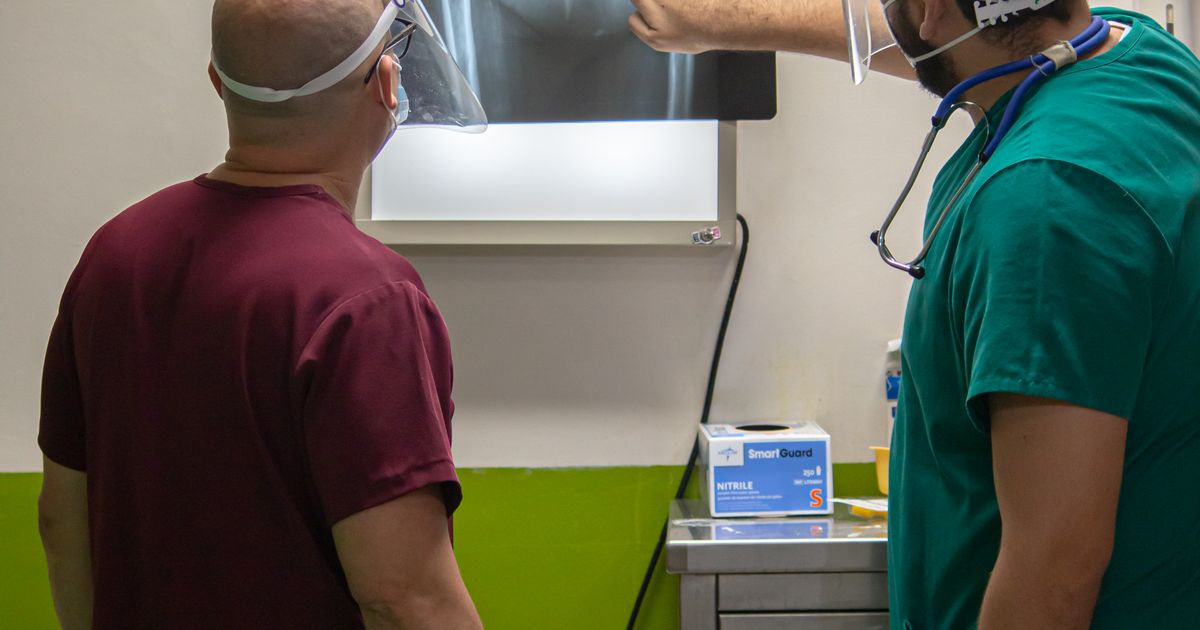
What is revision hip replacement surgery?
En una reemplaçament total de maluc, the worn ball and socket of the hip are replaced with artificial parts: a cup in the pelvis, a liner inside the cup, a ball, and a stem that sits inside the thigh bone. These parts work well for many years in most people, but they do not always last for life.
Revision hip replacement means operating again on a hip that already has an implant. The surgeon may change only one part, such as the liner or the ball, or may remove and replace every part. Because bone may have been lost around the old implant and scar tissue has formed, revision often needs special implants, bone graft and more surgical time. General information on repeat joint surgery is given on the revision joint replacement
Other names for revision hip replacement
- Revision total hip arthroplasty
- Revision hip arthroplasty
- Redo hip replacement
- Hip implant revision surgery
- Hip replacement repair surgery
Why is revision hip replacement done?
- Loosening without infection: over time the bond between implant and bone can fail, causing pain in the groin or thigh.
- Wear and bone loss: tiny particles from a worn liner can cause the surrounding bone to thin (osteolysis).
- Infection around the implant: this may happen soon after surgery or years later, when germs reach the joint through the blood.
- Repetit dislocació: the ball keeps coming out of the socket.
- Fracture around the implant: a fall can break the thigh bone or pelvis next to the implant. See fractura de maluc.
- Implant breakage or a reaction to metal debris from certain implant types.
- Other problems: marked leg length difference, stiffness from extra bone formation, or a failed resurfacing de maluc.
Not every painful hip replacement needs revision. Pain can also come from the spine, tendons or other causes of dolor al maluc. Operating again without a clear cause often gives poor results, so careful investigation comes first.
Types of revision hip replacement
- Liner or head exchange: only the plastic liner and the ball are changed. The fixed cup and stem are left.
- Cup (socket) revision: the cup in the pelvis is replaced.
- Stem revision: the stem in the thigh bone is replaced, often with a longer one.
- Full revision: all parts are replaced.
- Revision for a fracture around the implant: the bone is fixed with plates and cables, with or without a new stem.
Revision for infection
| Enfocament | Què es fa? | Quan s'utilitza |
|---|---|---|
| Wash-out with implant kept | The joint is opened and cleaned, the liner and ball are changed, and antibiotics are given for weeks | Early infection with firmly fixed implants |
| Single-stage revision | Old implant removed, joint cleaned and new implant fitted in one operation | Selected cases where the germ is known and bone and soft tissue are healthy |
| Two-stage revision | Implant removed and a temporary spacer containing antibiotics is placed; a new implant is fitted in a second operation weeks to months later | Long-standing or difficult infections |
How revision differs from a first hip replacement
A revision takes longer, involves more blood loss and carries higher risks. Removing a well-fixed implant can damage bone. Gaps in bone may need empelt d’os, metal wedges or supporting cages, and special liners may be used to reduce the chance of dislocation. Recovery is slower, and the new implant, on average, does not last as long as a first one.
Qui és adequat i qui pot no ser-ho?
Revision is considered when tests show a clear mechanical problem or infection, symptoms affect daily life, and you are fit enough for a major operation. Some situations, such as infection, fracture or a hip that will not stay in joint, need surgery fairly soon.
Surgery may be delayed or avoided when:
- The cause of pain has not been found
- Heart, lung or kidney disease makes a long operation unsafe until it is treated
- Diabetes is poorly controlled, or there is an untreated infection elsewhere such as in the teeth, skin or urine
- Symptoms are mild and X-rays are stable, in which case regular monitoring may be enough
- A person is very frail, where the risks of surgery may outweigh the benefit
How to prepare for revision hip replacement
- imaging: a hip X-ray i pelvis X-ray, compared with older films. A escàner CT shows bone loss, and an RM or exploració òssia is used in some cases.
- Tests for infection: blood tests for inflammation and, often, a sample of fluid drawn from the hip with a needle.
- Controls d'aptitud física: a recompte de sang complet, blood sugar, kidney and liver tests, blood grouping, an ECG and a physician review.
- Old records: bring the operation note or implant sticker from your first surgery. Knowing the exact implant helps the surgeon plan.
- Medicaments a comentar: blood thinners, diabetes medicines, steroids and medicines that lower immunity. Do not take antibiotics before the hip fluid test unless your surgeon has advised it.
- Salut general: stop smoking, correct anaemia, improve nutrition and treat dental or skin infections.
- El dia: fast as instructed. Blood is usually kept ready in case a transfusion is needed.
How is revision hip replacement performed?
- Anestèsia: espinal o general anestèsia is given and antibiotics are started. If infection is suspected, antibiotics may be held until samples are taken.
- Incisió: the old scar is usually used and extended if needed.
- Exposure and samples: scar tissue is released and the joint is opened. Tissue and fluid samples are sent to the laboratory.
- Removing the old parts: loose parts come out easily. Firmly fixed parts and old bone cement are removed with special tools, sometimes through a controlled cut in the thigh bone that is later wired back.
- Preparing the bone: the socket and thigh bone are cleaned and bone loss is assessed. Gaps are filled with bone graft or metal supports.
- Fitting new implants: a new cup, liner, stem and ball are fitted as required. Trial parts are used first to check leg length and stability.
- Tancament: the wound is closed in layers.
Què passa després de l'operació?
You may spend the first night in a high-dependency or intensive care area if the operation was long. Pain relief, antibiotics and measures to prevent blood clots are given, and a blood transfusion is sometimes needed. A physiotherapist helps you stand and walk with a frame, usually within a day or two. The amount of weight you can put on the leg depends on how the bone was rebuilt and may be limited for six to twelve weeks. If infection is confirmed, antibiotics are continued for several weeks.
Riscos i complicacions
The same complications that can follow a first hip replacement can follow a revision, but each is more likely.
Més comú
- Blood loss needing transfusion
- Swelling and bruising of the thigh and leg
- A difference in leg length
- A limp from weak hip muscles, which may improve slowly
Menys comú però greu
- Dislocation of the new hip
- New or continuing infection
- A break in the thigh bone or pelvis during or after surgery
- Coàguls de sang a la cama (trombosi venosa profunda) o pulmons
- Injury to a nerve, which can cause foot weakness, or to a blood vessel
- Loosening of the new implant
- Extra bone forming around the hip, causing stiffness
- Heart, lung or kidney complications of a long operation
- Need for yet another operation
Resultats: com de bé funciona?
Most people have less pain and better walking after a revision, particularly when the cause was loosening or wear. The outcome depends heavily on the reason for the revision, the amount of bone and muscle that remains, and general health. Revisions for infection or repeated dislocation are harder to treat, and more than one operation is sometimes needed.
It is fair to expect a useful improvement, but not necessarily a hip as good as a successful first replacement. Some people continue to use a stick outdoors, and a mild limp can remain.
Recovery after revision hip replacement
- A l'hospital: walking with a frame, breathing exercises, ankle movements and learning safe ways to sit, stand and turn in bed.
- Setmanes 1 a 6: walk with a frame or crutches within the weight limit you have been given. Stitches or clips are removed at about two weeks.
- Setmanes 6 a 12: after a check X-ray, weight bearing is increased and walking aids are reduced. Hip strengthening begins.
- Mesos 3 a 6: return to driving, light work and longer walks for many people.
Your team may advise hip precautions for some weeks, such as not crossing the legs, not bending the hip too far and avoiding low chairs, to lower the risk of dislocation.
Quan buscar ajuda mèdica
- Fever, chills, or a wound that is red, hot, swollen or leaking
- Sudden severe hip pain, a leg that looks shorter or turned, or being unable to stand, which may mean a dislocation
- Dolor o inflor de panxell
- Dolor al pit o falta d'alè
- New numbness or weakness in the foot
- A fall, even if the pain seems mild
Life after revision hip replacement
- Keep up the exercises for the hip and buttock muscles for many months.
- Choose low-impact activity such as walking, swimming and static cycling. Avoid running, jumping and heavy lifting.
- Prevent falls: remove loose rugs, use night lights and wear well-fitting footwear.
- Ask your doctor about bone health and osteoporosi treatment if needed.
- Have infections anywhere in the body treated early, and tell every doctor and dentist that you have a hip implant.
- Attend follow-up visits with X-rays for life, as advised.
Benefits of revision hip replacement
- Relief from the pain of a loose or worn implant
- Better walking and independence
- Control of infection that cannot be cured with antibiotics alone
- A stable hip in people with repeated dislocation
- Rebuilding of lost bone, which protects against fracture
What is the cost of revision hip replacement in India?
Revision usually costs more than a first hip replacement. The factors include:
- Which parts are replaced and the type of revision implants used
- Need for bone graft, metal supports, plates or cables
- Whether one or two operations are needed, as in infection
- Time in theatre, blood transfusion and intensive care
- Durada de l'estada i categoria de l'habitació
- Scans, laboratory tests and long courses of antibiotics
- La ciutat i l'hospital
Els costos varien de persona a persona. Si us plau, consulteu amb l'hospital per conèixer els preus reals.
Insurance cover for revision surgery varies between policies, so confirm the terms and any implant limits with your insurer before admission.
Why choose Apollo Hospitals for revision hip replacement?
- Orthopaedic surgeons who perform first-time and revision substitució articular
- Imaging and laboratory services to find the cause of a failed implant, including tests for infection
- Physicians, anaesthetists, infection specialists and intensive care teams available for complex cases
- Physiotherapy and rehabilitation planned around each person's weight-bearing limits
- La disponibilitat varia entre centres. Consulteu amb l'hospital.
If you have pain or instability in a replaced hip, reservar una cita amb un cirurgià ortopèdic at Apollo Hospitals for an assessment.
Lectures relacionades
- Substitució total de maluc
- Revision joint replacement
- Robotic hip replacement surgery
- Luxació de maluc
- Hip arthritis: surgical and non-surgical treatment
Questions to ask your doctor about revision hip replacement
- What exactly has gone wrong with my hip replacement?
- Has infection been ruled out, and how?
- Which parts will you replace?
- Will I need bone graft or special implants?
- Will this be one operation or two?
- What are the main risks in my case?
- How much weight can I put on the leg afterwards, and for how long?
- What improvement can I realistically expect?
Preguntes freqüents
1. What is revision hip replacement?
It is a repeat operation on a hip that already has an artificial joint. Some or all of the old parts are removed and replaced because they have loosened, worn out, become infected, keep dislocating or the bone around them has broken.
2. How long does a hip replacement last before it needs revision?
Most hip replacements last well beyond fifteen years, and many last much longer. Younger, more active people place more demand on the implant. Some hips need revision early because of infection, dislocation or a fracture.
3. What are the signs that a hip replacement is failing?
New pain in the groin, buttock or thigh, especially when starting to walk, a limp that is getting worse, a feeling that the hip is unstable, a leg that seems shorter, or swelling, warmth or discharge near the scar.
4. Is revision hip replacement more difficult than the first operation?
Yes. The old implant has to be removed, there is scar tissue, and bone may be missing or weak. The operation takes longer, blood loss is greater and the risk of complications is higher.
5. How long does revision hip surgery take?
A simple liner exchange may take about an hour. A full revision commonly takes two to four hours, and complex reconstructions take longer.
6. How long is the hospital stay?
It is usually several days to a week. People who need treatment for infection, have other medical conditions or need more help with walking may stay longer.
7. Quant dura la recuperació?
Many people use a frame or crutches for six to twelve weeks. Day-to-day function is often reasonable by three to six months, with further gains for up to a year.
8. Is revision hip replacement as successful as the first?
It usually relieves pain and improves walking, but on average the results are not as good or as long-lasting as a first hip replacement, and the chance of complications such as dislocation and infection is higher.
9. What is a two-stage revision?
It is a method used for infection. In the first operation the implant is removed and a temporary spacer containing antibiotics is placed. After a course of antibiotics, when tests suggest the infection has cleared, a new implant is fitted in a second operation.
10. Can a hip be revised more than once?
Yes, but each further revision is more difficult because more bone and muscle are lost. This is one reason surgeons take care to find the cause of failure before operating.
11. Can revision be avoided?
Not always. Attending follow-up X-rays helps to detect wear and bone loss before they cause major damage, when a smaller operation may be enough.
12. Will I be able to sit on the floor or squat after revision?
These positions bend the hip deeply and can cause dislocation, so most surgeons advise against them after revision.
13. Is revision hip replacement safe for older people?
Age itself is not a bar, but the risks rise with frailty and other illnesses. A careful medical assessment is done, and the plan is chosen to balance benefit and risk for each person.
14. Which doctor performs revision hip replacement?
Revision hip replacement is performed by an orthopaedic surgeon, preferably one with experience in revision and complex joint replacement surgery.
Conclusió
Revision hip replacement is a demanding operation used when an earlier hip replacement has loosened, worn out, become infected, dislocated repeatedly or broken. It can restore comfort and mobility, but it carries higher risks and a longer recovery than first-time surgery, and results vary with the cause. Finding the exact reason for failure before operating is the most important step. If your replaced hip has become painful or unstable, an early review with an orthopaedic surgeon gives the widest choice of treatment.
Aquesta pàgina té informació general i no substitueix el consell del vostre metge. Les decisions sobre el tractament s'han de prendre amb un especialista qualificat que conegui el vostre historial mèdic.
Recentment afegit


Cirurgians ortopèdics als hospitals Apollo





Exempció de responsabilitat:
La informació proporcionada en aquesta pàgina només té finalitats informatives i educatives generals. Tot i que fem tots els esforços raonables per garantir que la informació sigui precisa, fiable i es revisi regularment, no s'ha de considerar un substitut del consell, el diagnòstic o el tractament mèdic professional.
La idoneïtat d'un procediment mèdic, juntament amb els seus beneficis, riscos, preparació, recuperació, possibles complicacions i resultats esperats, pot variar de persona a persona. El vostre professional sanitari determinarà si un procediment és apropiat en funció de la vostra condició individual i del vostre historial mèdic.
Si us plau, consulteu un professional sanitari qualificat per obtenir assessorament personalitzat abans de prendre decisions sobre qualsevol procediment mèdic.
Per obtenir més informació sobre com es crea, revisa, actualitza i manté el nostre contingut mèdic, llegiu la nostra [Política editorial].




