


सीधा उत्तर
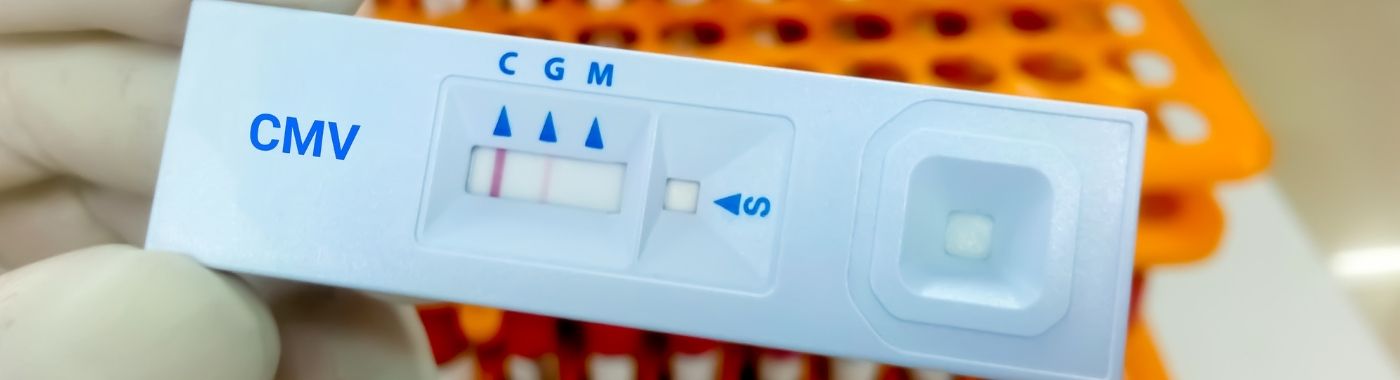
The CMV test looks for cytomegalovirus infection, either by measuring antibodies (CMV IgM and IgG) in blood or by detecting viral DNA with PCR in blood, urine, saliva, tissue or amniotic fluid. Antibody tests indicate exposure and rough timing; PCR indicates active viral presence and viral load. Neither test alone diagnoses CMV disease.
चाबी छीन लेना
- Two different tests, two different questions: CMV serology answers "has this person been exposed?"; CMV PCR answers "is virus detectable now, and how much?"
- Most adults in India are CMV IgG positive, so a positive IgG on its own usually means past exposure, not current illness.
- A positive result is not automatically a disease: CMV can be detectable without causing any symptoms, especially in healthy people.
- Timing decides everything for newborns: congenital CMV is best confirmed by saliva or urine PCR within the first three weeks of life.
- Results need clinical interpretation by the doctor who ordered the test, alongside symptoms, immune status and other investigations. Results vary depending on individual clinical circumstances.
एक नज़र में
| Feature | विस्तार |
|---|---|
| किसका परीक्षण किया जाता है? | CMV IgM and IgG antibodies; IgG avidity; CMV DNA by PCR (qualitative or quantitative viral load) |
| नमूना प्रकार | Blood (serum or plasma/whole blood), urine, saliva, respiratory samples, tissue, cerebrospinal fluid, amniotic fluid |
| उपवास | Not required for CMV serology or PCR |
| नमूना संग्रहण समय | Blood draw: a few minutes. Urine or saliva collection: usually under 5 minutes |
| कुल भ्रमण समय | Typically 15-30 minutes including registration and sample collection |
| मुख्य उपयोग | Congenital CMV diagnosis, pre-transplant and post-transplant monitoring, evaluation in advanced HIV, mononucleosis-like illness, suspected CMV in pregnancy |
| इसका अर्थ कौन निकालता है? | The requesting doctor, obstetrician, neonatologist, paediatrician, transplant physician, infectious diseases specialist or physician |
इसके अलावा के रूप में जाना
- Cytomegalovirus test
- CMV IgG and IgM test; CMV antibody test
- CMV PCR test; CMV DNA test; CMV viral load test; CMV quantitative PCR
- CMV IgG avidity test
- Commonly asked for in India as "CMV blood test", "CMV titre" or "TORCH CMV" (CMV is one component of the TORCH panel)
What the CMV test is
Cytomegalovirus is a herpes-family virus. After the first infection, CMV stays in the body in a latent state for life and can reactivate, particularly when the immune system is suppressed. Because latency is lifelong and common, CMV testing is about distinguishing three different states: never infected, previously infected and now latent, or currently active.
The CMV test is not a single test. The main forms are:
- CMV IgG: indicates past exposure and persists for life. Used mainly to establish immune status, for example, screening donors and recipients before organ or stem-cell transplant, or establishing whether a pregnant woman was already CMV-exposed before conception.
- CMV IgM: may rise in recent or reactivated infection, but IgM can persist for months and can appear non-specifically in other viral illnesses. CMV IgM is not a reliable stand-alone marker of recent infection.
- CMV IgG avidity: low avidity suggests infection within roughly the preceding few months; high avidity suggests older infection. Mainly used in pregnancy to help date a suspected primary infection.
- CMV PCR (DNA detection): detects viral genetic material. Quantitative PCR reports viral load in international units per millilitre (IU/mL) and is the standard method for monitoring transplant recipients and other immunocompromised patients.
Why the CMV test is done
- Suspected congenital CMV: in a newborn with small head size, low birth weight for gestation, jaundice, enlarged liver or spleen, petechial rash, abnormal cranial imaging, or a failed newborn hearing screen.
- Suspected CMV infection in pregnancy: usually after an illness with fever and lymph node swelling, or after ultrasound findings suggesting fetal infection.
- Transplant medicine: donor and recipient CMV IgG status guides risk stratification and prophylaxis; serial quantitative PCR guides pre-emptive antiviral therapy.
- Advanced HIV or other severe immunosuppression: when CMV retinitis, colitis, oesophagitis, pneumonitis or encephalitis is suspected.
- Mononucleosis-like illness: prolonged fever, fatigue, sore throat and lymphadenopathy in which infectious mononucleosis (Epstein-Barr virus) testing is negative.
- Unexplained hepatitis or cytopenias where CMV is one of several possibilities being considered.
किसे यह परीक्षण करवाना चाहिए?
- नवजात शिशु with clinical features of congenital infection or a failed hearing screen, tested with saliva or urine PCR, ideally within 21 days of birth.
- गर्भवती महिलाओं को with a compatible febrile illness, or with fetal ultrasound abnormalities, tested on the advice of the treating obstetrician.
- Solid-organ and haematopoietic stem-cell transplant candidates, donors and recipients: as per the transplant unit's protocol.
- People with advanced HIV or on strong immunosuppressive therapy who develop suggestive symptoms, including new visual floaters or blurred vision, persistent diarrhoea or unexplained fever.
- People with a prolonged mononucleosis-like illness that remains undiagnosed.
Routine CMV screening of healthy adults, or of all pregnant women, is not universally recommended and remains debated. Whether to test is a decision for the treating doctor, not a self-ordered choice.
What the CMV test cannot detect or exclude
- It cannot separate infection from disease. CMV DNA can be detectable in blood, urine or saliva in someone with no CMV-related illness at all. Detection alone does not prove CMV is causing the symptoms.
- A negative blood PCR does not exclude organ-specific CMV disease. CMV retinitis, colitis and some cases of pneumonitis can occur with low or undetectable CMV DNA in blood. Diagnosis may need dilated retinal examination, endoscopy with biopsy, bronchoalveolar lavage or CSF testing.
- A positive IgM does not confirm recent primary infection, and a negative IgM does not exclude it, especially if tested very early or very late in the illness.
- A positive maternal test does not tell you whether the fetus is infected. That requires amniocentesis with amniotic fluid CMV PCR, usually after a specific gestational window, and even that carries a false-negative rate if performed too early.
- A negative amniotic fluid PCR does not fully exclude fetal infection, and does not predict which infected babies will develop hearing loss or developmental problems.
- The CMV test says nothing about hearing or neurodevelopmental outcome. Those need audiological assessment and paediatric developmental follow-up over time.
- Viral load numbers are not directly comparable between laboratories. Even with IU/mL standardisation, thresholds for starting antivirals are platform- and protocol-specific. Serial monitoring should ideally be done on the same platform.
- It does not detect other TORCH infections, nor drug resistance. Suspected antiviral resistance requires separate genotypic resistance testing.
A result that does not show CMV describes what was found in that sample at that moment. It is not the same as CMV being ruled out. If symptoms persist despite a normal or negative result, go back to your doctor.
संबंधित लेकिन अलग-अलग परीक्षाएं
| टेस्ट | प्रश्न इसका उत्तर है | Key difference from CMV testing |
|---|---|---|
| CMV IgG / IgM serology | Has this person ever been infected? Could infection be recent? | Measures the immune response, not the virus. Cannot quantify active infection. |
| CMV quantitative PCR (viral load) | Is viral DNA present now, and how much? | Measures virus directly. Preferred for monitoring immunocompromised patients. |
| CMV IgG avidity | Roughly when did infection occur? | Only useful when IgG is positive; used mainly in pregnancy. |
| EBV serology / monospot | Is this infectious mononucleosis due to Epstein-Barr virus? | A different virus with an overlapping clinical picture. CMV and EBV testing answer separate questions and are often ordered together. |
| Toxoplasma, rubella, HSV (rest of TORCH panel) | Is another congenital infection responsible? | Separate organisms. Broad TORCH panels ordered without a clinical reason frequently produce hard-to-interpret results. |
| CMV histopathology / immunohistochemistry on biopsy | Is CMV damaging this specific tissue? | Shows tissue invasion, which blood tests cannot. Often decisive for CMV colitis. |
| विस्तृत नेत्रगोलक परीक्षण | Is there CMV retinitis? | A clinical eye examination, not a lab test. Cannot be replaced by blood PCR. |
| Newborn hearing screening (OAE / BERA) | Is hearing affected? | Assesses function, not infection. Needed alongside, and repeatedly after, a congenital CMV diagnosis. |
तैयार कैसे करें
Preparation is minimal, but collection details are operational and vary between laboratories and hospitals. Your own unit's written instructions take precedence over any general guidance here.
- उपवास: not required for CMV serology or CMV PCR. If CMV is being drawn along with other tests such as glucose or lipids, follow the fasting instruction for those tests.
- दवाई: continue all prescribed medicines unless your prescriber specifically tells you otherwise. Tell the laboratory and your doctor about antivirals, immunosuppressants, recent immunoglobulin or blood transfusion, and any herbal or supplement use.
- Serial viral load monitoring: ask whether samples should be collected at a consistent time and, where possible, at the same laboratory using the same platform.
- Urine and saliva: containers and timing rules differ by lab. Saliva samples in infants are usually collected at least an hour after a breast or bottle feed, because milk can interfere with the assay.
गर्भावस्था
CMV testing in pregnancy should be ordered and interpreted by your obstetrician. Amniocentesis, if considered, is a separate procedure with its own consent and risk discussion. Under the PC-PNDT Act 1994, any ultrasound performed in pregnancy in India must be done at a registered facility and must never be used for sex determination.
Newborns and children
For suspected congenital CMV, timing matters more than anything else: a saliva or urine PCR within the first three weeks of life distinguishes congenital infection from infection acquired after birth. After 21 days, a positive result becomes difficult to interpret. A positive saliva result is usually confirmed on urine.
Transplant recipients and people on immunosuppressants
Never adjust or stop immunosuppressive or antiviral medication on your own based on a viral load figure. Changes must come from your transplant or infectious diseases team.
Older adults and people with other illnesses
Venepuncture may need extra care in people with fragile veins, bleeding disorders or on anticoagulants. Mention anticoagulant use before the blood draw so pressure can be applied for longer.
What happens during the CMV test
- खून का नमूना: a tourniquet is applied, the skin is cleaned, and blood is drawn from a vein in the arm. The needle is in place for well under a minute. Brief stinging and occasional bruising are usual.
- मूत्र का नमूना: collected in a sterile container. In infants, a paediatric collection bag or clean-catch technique is used.
- लार का नमूना: a swab is rubbed inside the cheek. Painless.
- Amniotic fluid, CSF, bronchoalveolar lavage or biopsy: obtained as part of a separate clinical procedure with its own consent process, performed only where clinically justified.
प्रक्रिया में कितना समय लगता है?
- ब्लड ड्रॉ: कुछ मिनट.
- Whole visit for sample collection: typically 15-30 minutes, depending on queues at the collection centre.
- प्रयोगशाला में प्रसंस्करण: serology and PCR are batch-run, so reporting intervals differ by laboratory, sample type and whether the test is sent to a reference lab. Quantitative PCR and avidity testing usually take longer than routine IgG/IgM. Ask your collection centre for its current reporting schedule.
Understanding your CMV report
Reports differ between laboratories in units, cut-offs and wording. Read your result against the reference range printed on your own report, not against figures from another lab or website.
Antibody results
- IgG negative, IgM negative: no laboratory evidence of past CMV infection. In a pregnant woman this means she is susceptible, and hygiene precautions become relevant. Very recent infection may not yet have produced antibodies.
- IgG positive, IgM negative: past CMV infection, the commonest pattern in Indian adults. It does not exclude later reactivation.
- IgG positive, IgM positive: possible recent primary infection, reactivation, or non-specific IgM. Avidity testing and repeat sampling are often needed before drawing conclusions.
- IgG negative, IgM positive: may represent very early primary infection or a false-positive IgM. A repeat sample after a few weeks, looking for IgG seroconversion, is usually required.
PCR results
- Not detected: CMV DNA was not found in that sample above the assay's limit of detection. This does not exclude compartmentalised organ disease.
- Detected, below quantifiable range: low-level DNA present. Often followed up with a repeat test rather than immediate treatment.
- Quantified viral load (IU/mL): meaningful mainly as a trend over serial samples on the same platform. Thresholds for starting antiviral therapy are set by each transplant or ID unit; there is no single universal cut-off.
No CMV result should be interpreted in isolation. The doctor who requested the test will read it together with your symptoms, immune status, imaging and other investigations.
When CMV results can be misleading
Results that can be falsely raised or falsely positive
- Non-specific IgM in other acute viral infections, including EBV, and in the presence of rheumatoid factor or certain autoantibodies.
- Persisting IgM for many months after an infection that is no longer clinically relevant.
- Contaminated samples, particularly infant saliva collected soon after a feed, or urine collected without adequate cleaning.
- Passively acquired antibody: recent immunoglobulin therapy or blood transfusion can produce a positive IgG that reflects the donor, not the patient. A newborn's IgG largely reflects maternal antibody crossing the placenta, so newborn IgG cannot diagnose congenital CMV.
- Detected-but-irrelevant DNA: healthy young children commonly shed CMV in urine and saliva for months. A positive urine PCR in a toddler usually means shedding, not disease.
Results that can be falsely lowered or falsely negative
- बहुत जल्दी परीक्षण करना, before antibodies have developed (the window period).
- Weak or absent antibody response in people with severe immunosuppression, agammaglobulinaemia or on B-cell depleting therapy, in these patients serology is unreliable and PCR is preferred.
- Antiviral therapy already started, which can suppress viral load below detection while organ disease continues.
- Compartmentalised disease: retinitis, colitis and CNS disease can occur with negative blood PCR.
- Delayed transport or improper storage degrading nucleic acid in the sample.
- Testing a newborn after 3 weeks of age, which cannot distinguish congenital from postnatally acquired infection.
जोखिम और सुरक्षा
Blood, urine and saliva sampling
Venepuncture is a low-risk procedure. Expected effects include brief pain, bruising and occasional light-headedness. Less commonly, a small haematoma or local infection at the puncture site can occur. Urine and saliva collection carry no physical risk.
Invasive sampling for CMV
Amniocentesis, lumbar puncture, bronchoscopy and endoscopic biopsy each carry their own distinct risks, which are quite different from those of a simple blood test. These procedures are done only when the clinical question justifies them, and the performing clinician will explain the specific risks and take separate consent.
डाटा प्राइवेसी
CMV results form part of your health record. Handling of personal health data in India is governed by the Digital Personal Data Protection Act 2023, and you may ask the laboratory how your data is stored and shared.
लाल झंडा
तत्काल आपातकाल: निकटतम आपातकालीन विभाग में जाएं
- New confusion, seizure, severe headache with neck stiffness, or new weakness or numbness on one side
- Sudden loss or marked reduction of vision
- Breathlessness at rest, chest pain, or lips and fingertips turning blue
- Vomiting blood, black tarry stools, or bloody diarrhoea with dizziness
- In a newborn: poor feeding, lethargy, floppiness, fever, apnoea or a rapidly spreading rash
Same day: contact your treating team today
- New floaters, flashing lights or blurring of vision in anyone who is immunocompromised, possible CMV retinitis, which needs urgent ophthalmology assessment
- Persistent diarrhoea, abdominal pain or difficulty swallowing in a transplant recipient or someone with advanced HIV
- Fever in a transplant recipient, or a rising CMV viral load reported to you
- Reduced fetal movements, or an ultrasound finding you have been asked to act on
नियमित अपॉइंटमेंट
- Prolonged tiredness, low-grade fever or swollen glands lasting more than a couple of weeks
- A CMV IgM or IgG result you do not understand, or a discordant pair of results
- A failed newborn hearing screen, or concern about a child's speech and language development
- Planning pregnancy and wanting to discuss CMV risk and hygiene measures
विशेष स्थिति
गर्भावस्था
The concern in pregnancy is primary CMV infection, which carries a higher risk of transmission to the fetus than reactivation, though reactivation and reinfection can also cause congenital CMV. Distinguishing primary from past infection often needs paired serology, avidity testing and sometimes stored earlier samples. Amniotic fluid PCR is the test that addresses fetal infection, and it has its own timing rules. Hygiene measures, thorough handwashing after nappy changes, not sharing food, utensils or drinking vessels with young children, and avoiding contact with a toddler's saliva, are the practical steps most often advised.
नवजात शिशु और शिशु
Congenital CMV is a leading non-genetic cause of sensorineural hearing loss. Hearing loss can be present at birth or appear later in childhood, so a single normal hearing test does not settle the matter; scheduled audiological follow-up is needed. Treatment decisions for symptomatic congenital CMV are made by neonatologists and paediatric infectious diseases specialists, and antiviral therapy requires close monitoring for side effects.
प्रत्यारोपण प्राप्तकर्ता
Risk depends substantially on the donor and recipient CMV IgG combination, the organ transplanted and the intensity of immunosuppression. Units use either universal antiviral prophylaxis or pre-emptive therapy guided by serial PCR. Both approaches are legitimate and protocols differ between hospitals.
एचआईवी से पीड़ित लोग
The main risk is at low CD4 counts. CMV retinitis can progress to irreversible vision loss, so any new visual symptom needs prompt eye examination rather than a blood test alone. Effective antiretroviral therapy substantially reduces the risk of CMV end-organ disease.
People with CKD, heart failure or on multiple medicines
CMV antivirals such as ganciclovir and valganciclovir need dose adjustment in reduced kidney function and can suppress blood counts. Drug choice, dosing and monitoring are decisions for the prescribing team.
CMV testing in the Indian context
- High background seroprevalence: CMV IgG positivity among Indian adults, including women of reproductive age, is high. This has a practical consequence: an isolated positive IgG report causes a great deal of unnecessary anxiety and rarely changes management by itself.
- TORCH panels ordered reflexively: broad TORCH profiles are commonly ordered in early pregnancy or after pregnancy loss without a specific clinical indication. This frequently generates positive IgG or weakly positive IgM results that are difficult to act on. Ask your obstetrician what clinical question the test is meant to answer.
- Growing transplant volumes across Indian centres have made CMV viral load monitoring a routine part of post-transplant care, with protocols set locally by each unit.
- Overlapping fever illnesses: in India, prolonged fever with hepatosplenomegaly and abnormal liver enzymes (SGPT/ALT, SGOT/AST) may be due to dengue, enteric fever, hepatitis A or E, tuberculosis, malaria or EBV. CMV should be considered alongside, not instead of, these possibilities.
- Laboratory variation: platforms and cut-offs differ widely between Indian laboratories, which matters most when comparing serial viral loads. Continuity of laboratory is worth requesting.
- नवजात की स्क्रीनिंग सुनकर is available at many, though not all, Indian hospitals. Where congenital CMV is diagnosed, ask specifically about the schedule for repeat hearing assessment.
भारत में लागत और बीमा
Costs are not standardised across India and change over time. Rather than quoting a figure, here are the factors that drive it:
- परीक्षण का प्रकार: CMV IgG or IgM immunoassays are the least expensive. Quantitative PCR (viral load) and IgG avidity cost substantially more because of reagent and platform costs.
- एकल परीक्षण बनाम पैनल परीक्षण: a TORCH panel costs more than a single CMV test, and much of the panel may not be clinically needed.
- Sample type and complexity: testing amniotic fluid, CSF or tissue involves additional processing.
- आंतरिक परीक्षण बनाम रेफरल परीक्षण: samples sent to a reference laboratory add logistics cost and reporting time.
- City, sector and accreditation: metro versus smaller-city pricing, government versus private, and NABL-accredited laboratories may price differently.
- आवृत्ति: serial viral load monitoring after transplant is a recurring cost, often the larger financial consideration.
बीमा: diagnostic tests done on an outpatient basis are often excluded from basic indemnity health insurance, while investigations during an admission or under a specified day-care or post-transplant benefit may be covered. Coverage under government schemes such as Ayushman Bharat PM-JAY depends on the package the treatment falls under. Confirm the current price and the pre-authorisation requirements with the laboratory and your insurer before testing.
मिथक और तथ्य
| मिथ्या | तथ्य |
|---|---|
| "CMV IgG positive means I have an infection that needs treatment." | A positive IgG usually reflects past infection. Most CMV IgG positive people are healthy and need no treatment. |
| "A positive IgG means I am immune and my baby is safe." | Prior infection reduces but does not remove the risk of congenital CMV. Reactivation and reinfection can still transmit. |
| "A positive IgM confirms recent infection." | CMV IgM can persist for months and can be falsely positive. Avidity testing and repeat sampling are often needed. |
| "A negative blood PCR means there is no CMV disease." | Retinitis, colitis and CNS disease can occur with undetectable blood CMV DNA. Organ-directed tests may be required. |
| "CMV is a sexually transmitted infection only." | CMV spreads through many body fluids, saliva, urine, breast milk, blood and genital secretions. Toddler saliva and urine are common sources. |
| "Antiviral treatment clears CMV from the body." | Antivirals control active replication. CMV remains latent for life and can reactivate; the word "cure" does not apply. |
| "Every pregnant woman should have a TORCH panel." | Universal TORCH screening is not routinely recommended. Testing should answer a specific clinical question. |
| "Breastfeeding must be stopped if the mother is CMV positive." | For healthy term infants, breastfeeding is generally continued. Decisions for very preterm babies are individualised by the neonatal team. |
ज़्यादातर पूछे जाने वाले सवाल
What does a CMV test actually detect?
The CMV test detects either the body's antibody response to cytomegalovirus (IgG, IgM, avidity) or the virus's own DNA by PCR. Antibodies show exposure and approximate timing; PCR shows whether viral DNA is present now and, when quantitative, how much. Neither result alone proves CMV is causing a person's symptoms.
Which CMV test should I ask for?
That depends entirely on the clinical question, so it is not a choice to make yourself. Serology suits immune-status questions and suspected recent infection in pregnancy. PCR suits newborn diagnosis and monitoring immunocompromised patients. Your doctor selects the test, sample type and timing based on your situation.
क्या सीएमवी टेस्ट दर्दनाक होता है?
A blood draw causes a brief sting and sometimes a small bruise. Urine and saliva collection are painless. Invasive samples such as amniotic fluid or biopsy tissue are separate procedures with their own discomfort and risk profile, explained by the clinician performing them.
How is CMV different from a monospot or EBV test?
Both CMV and Epstein-Barr virus can cause a mononucleosis-like illness with fever, sore throat, fatigue and swollen glands. Monospot and EBV serology look for EBV; CMV tests look for CMV. A negative EBV test does not exclude CMV, which is why the two are often requested together.
Does a negative CMV result mean I definitely do not have CMV?
No. A negative result means CMV was not found in that sample by that method at that time. Testing too early, immunosuppression, prior antiviral therapy, or disease confined to one organ can all produce a negative result. If symptoms continue, return to your doctor for reassessment.
Why must newborn testing happen within three weeks?
Before 21 days of age, a positive saliva or urine PCR indicates infection acquired before or around birth. After that, CMV picked up from breast milk or close contact cannot be distinguished from congenital infection, which changes the entire management and follow-up plan.
Can CMV be cured with medicines?
CMV cannot be eliminated from the body, it remains latent for life. Antivirals such as ganciclovir and valganciclovir can control active replication and reduce organ damage in selected patients. Treatment is reserved for specific situations, requires monitoring for side effects, and is decided by the treating specialist.
How can I reduce the chance of catching CMV in pregnancy?
Practical measures centre on hygiene around young children: wash hands thoroughly with soap after nappy changes, wiping noses and handling toys; avoid sharing food, spoons, cups or toothbrushes; and avoid kissing toddlers on the mouth. Results vary between individuals, and no measure removes risk entirely.
What should I do with a CMV report I have taken on my own?
Take it to a doctor before drawing conclusions. Self-ordered CMV serology very often returns a positive IgG, which is expected in most Indian adults and rarely changes anything. Interpretation depends on your symptoms, pregnancy status and immune status, which a report cannot supply.
सूत्रों का कहना है
- Centers for Disease Control and Prevention, Cytomegalovirus (CMV) and Congenital CMV Infection: clinical overview and laboratory testing guidance.
- Rawlinson WD, Boppana SB, Fowler KB, et al. Congenital cytomegalovirus infection in pregnancy and the neonate: consensus recommendations for prevention, diagnosis, and therapy. लैंसेट संक्रामक रोग2017.
- Kotton CN, Kumar D, Caliendo AM, et al. The Third International Consensus Guidelines on the Management of Cytomegalovirus in Solid-organ Transplantation. ट्रांसप्लांटेशन2018.
- Panel on Guidelines for the Prevention and Treatment of Opportunistic Infections in Adults and Adolescents with HIV (NIH/CDC/IDSA), Cytomegalovirus disease section.
- World Health Organization International Standard for human cytomegalovirus DNA nucleic acid amplification techniques (basis for IU/mL reporting).
- गर्भाधान पूर्व एवं प्रसवपूर्व निदान तकनीक (लिंग चयन निषेध) अधिनियम, 1994, भारत सरकार।
- डिजिटल व्यक्तिगत डेटा संरक्षण अधिनियम, 2023, भारत सरकार।











 चेन्नई के आसपास का सबसे अच्छा अस्पताल


