


Direct answer
A liver function test (LFT), also called a liver profile, is a blood panel measuring ALT (SGPT), AST (SGOT), ALP, GGT, bilirubin, albumin and total protein, sometimes with prothrombin time. The LFT panel flags liver injury, cholestasis and impaired synthetic function. LFT results do not name a cause and a normal panel does not exclude liver disease.
Key takeaways
- LFT is a screening and monitoring panel, not a single diagnosis-confirming test.
- Normal LFT values can occur in significant liver disease, including cirrhosis and established fibrosis.
- Enzyme patterns matter more than single numbers: the ALT-versus-ALP pattern guides what comes next.
- Reference ranges differ between laboratories, so compare your values only with the range printed on your own report.
- Interpretation belongs to the doctor who ordered the LFT, alongside your history, medicines, alcohol use and examination.
At a glance
| Feature | Detail |
|---|---|
| Sample | Venous blood, usually from the arm |
| Blood draw time | Typically 2-5 minutes; most of the visit is registration and waiting |
| Fasting | Often not required for LFT alone; required if bundled with lipid or glucose tests, follow your unit's instruction |
| Core parameters | ALT/SGPT, AST/SGOT, ALP, GGT, total and direct bilirubin, albumin, total protein, A:G ratio |
| Sometimes added | Prothrombin time/INR, LDH |
| Main limitation | Does not identify cause, does not measure fibrosis, does not exclude liver disease |
| Who interprets | The requesting physician, in clinical context |
Also known as
- LFT, liver profile, liver panel, hepatic function panel
- SGPT/SGOT test (the most common Indian usage for ALT/AST)
- Bilirubin test, jaundice blood test
- "Liver ka test" in everyday conversation
What a liver function test is
The liver function test is a group of blood measurements that together give an indirect picture of liver health. The name is slightly misleading: most parameters do not measure "function" at all.
- Injury markers (hepatocellular): ALT/SGPT and AST/SGOT leak from damaged liver cells. ALT is relatively liver-specific; AST also comes from muscle, heart and red blood cells.
- Cholestatic markers: ALP and GGT rise when bile flow is obstructed or bile ducts are inflamed. ALP also originates from bone, placenta and intestine.
- Clearance marker: bilirubin, the pigment from red-cell breakdown. The split into direct (conjugated) and indirect (unconjugated) fractions narrows the possibilities considerably.
- True function markers: albumin and prothrombin time/INR reflect the liver's ability to synthesise proteins.
Enzyme levels indicate that liver cells are leaking, not how well the liver is working. Advanced cirrhosis frequently shows near-normal or only mildly raised ALT and AST.
Why a liver function test is done
- Investigating symptoms such as jaundice, dark urine, pale stools, right upper abdominal pain, abdominal swelling, persistent itching or unexplained fatigue.
- Screening in higher-risk groups, including people with type 2 diabetes, metabolic risk factors, or significant alcohol intake.
- Monitoring known liver disease such as hepatitis B, hepatitis C, autoimmune hepatitis or steatotic liver disease.
- Drug safety monitoring, notably during anti-tubercular therapy, methotrexate, some antiepileptics, antifungals and certain antiretrovirals.
- Pre-operative and pre-treatment assessment, and before starting medicines cleared by the liver.
- Assessing suspected drug- or supplement-induced liver injury, including some herbal, AYUSH and gym or weight-loss supplements.
Who should get this test
- Anyone with jaundice, unexplained itching, or pale stools with dark urine.
- People with type 2 diabetes, hypertension, dyslipidaemia or central weight gain, South Asians develop metabolic liver disease at lower BMI thresholds than many other populations.
- People with regular or heavy alcohol intake.
- Anyone starting or on anti-tubercular therapy, as scheduled by the treating doctor.
- People with known hepatitis B or C, or a family history of liver disease.
- Those taking long-term herbal, ayurvedic, bodybuilding or weight-loss supplements.
- Blood donors or insurance applicants told of an abnormal screening liver value.
- People with fatty liver seen incidentally on a USG abdomen.
Routine LFT in a healthy person with no risk factors and no symptoms has limited value and commonly produces mildly abnormal results that need repeat testing. Discuss with your doctor whether the LFT is indicated for you.
What a liver function test cannot detect or exclude
- It cannot diagnose a cause. Raised ALT/SGPT does not distinguish viral hepatitis from alcohol-related injury, drug injury or metabolic steatotic liver disease. Cause requires viral serology, history, imaging and sometimes autoimmune or metabolic testing.
- It cannot measure fibrosis or cirrhosis. The LFT panel cannot stage scarring. Fibrosis assessment uses scoring tools, elastography or, occasionally, biopsy.
- It cannot exclude liver disease. Normal ALT and AST occur in compensated cirrhosis, chronic hepatitis B, and fatty liver.
- It cannot detect liver cancer. The LFT is not a cancer screening test. Hepatocellular carcinoma surveillance uses ultrasound, with or without AFP, in defined at-risk groups.
- It cannot show gallstones or bile duct stones. Cholestatic enzymes may suggest obstruction, but stones need ultrasound, MRCP or other imaging.
- It cannot localise the problem. Raised ALP may be bone rather than liver; raised AST may be muscle rather than liver.
- It cannot quantify alcohol use. GGT is neither sensitive nor specific for alcohol intake.
If symptoms continue despite a normal LFT, go back to your doctor. A normal result describes what was measured on that sample, not what is absent.
Related but different examinations
| Test | Question it answers | What it does not do |
|---|---|---|
| LFT (liver profile) | Is there biochemical evidence of liver injury, cholestasis or impaired synthesis? | Does not give cause, structure or fibrosis stage |
| Hepatitis B and C serology / viral markers | Is a specific virus present? | Does not show severity of liver injury |
| USG abdomen (sonography) | Is the liver enlarged, fatty-appearing? Are ducts dilated, is there ascites or a focal lesion? | Cannot assess biochemical function; operator-dependent; insensitive to mild fat and to small lesions |
| Liver elastography (transient or shear-wave) | How stiff is the liver, as a surrogate for fibrosis? | Transient and shear-wave techniques are different technologies with different cut-offs and are not interchangeable; readings are affected by congestion, inflammation, food and obesity |
| CT / MRI / MRCP | Detailed structure, masses, bile duct anatomy | Does not replace biochemistry; MRI requires an implant safety assessment |
| Liver biopsy | Tissue-level diagnosis and staging in selected cases | Invasive, sampling error possible |
| Abnormal-LFT workup | Why is this specific value raised in this specific person? | A different clinical pathway from the screening panel itself |
Which test comes first depends on the presentation. In painless jaundice with pale stools, imaging of the biliary tree is usually needed early alongside the LFT. In an asymptomatic person with mildly raised ALT and metabolic risk factors, viral serology and ultrasound generally come before any elastography. In suspected paracetamol overdose, the priority is urgent clinical assessment with INR and drug levels, not a routine panel.
How to prepare
Preparation rules are operational and set by each laboratory. Your own unit's written instruction takes precedence over anything on this page.
- Fasting: the LFT alone usually does not need fasting. Fasting is often asked for when the LFT is bundled into a health check with lipid profile or glucose.
- Medicines and supplements: list everything, prescription drugs, painkillers, antibiotics, statins, ayurvedic or herbal products, protein and gym supplements. Do not stop any prescribed medicine to "get a clean report"; speak to the prescriber first.
- Alcohol: tell the requesting doctor about recent intake, as it can alter GGT and AST.
- Strenuous exercise: heavy workouts in the preceding days can raise AST and ALT from muscle. Mention it.
- Water: plain water is usually permitted unless your unit states otherwise.
If you have diabetes on glucose-lowering treatment
Prolonged fasting with insulin or sulfonylureas risks hypoglycaemia. Ask for an early-morning slot, carry a sugar source, and confirm with your prescriber how to handle the morning dose.
If you have heart failure, advanced CKD or a fluid restriction
Do not increase fluid intake beyond your prescribed limit for any blood test. Tell the phlebotomy staff about dialysis days and about fistula or graft arms, which must not be used for venepuncture.
Pregnancy
ALP rises physiologically in pregnancy because of placental production, and albumin falls with plasma expansion. Always state that you are pregnant so the report is read appropriately. Prolonged fasting is generally avoided in pregnancy.
Children
Paediatric reference intervals differ by age and sex, and ALP is normally high during growth spurts. Extended fasting is usually not advised in young children; follow paediatric unit instructions.
What happens during the test
- Registration and consent: your details and requested tests are confirmed.
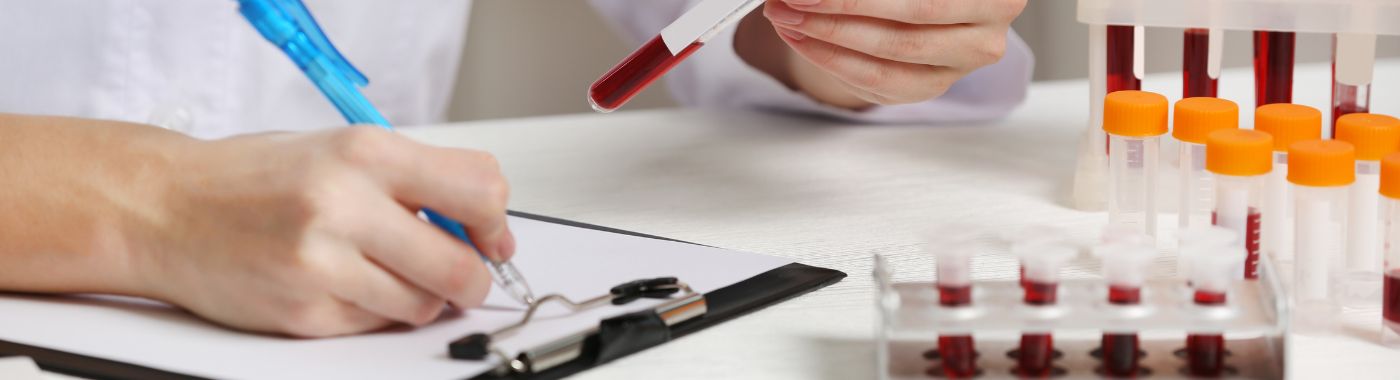
- Venepuncture: the skin is cleaned, a tourniquet applied, and blood drawn from an arm vein, typically into one or two tubes.
- Duration: the draw itself takes about 2-5 minutes. Expect the full visit to be longer depending on queue and registration.
- Afterwards: pressure is applied for a minute or two. You can eat and resume normal activity immediately unless other tests are pending.
- Laboratory processing: the sample is centrifuged and analysed on an automated platform. Reporting time depends on the individual laboratory; ask at the collection counter.
Understanding your LFT report
Read each value against the reference interval printed beside it on your own report. Ranges vary with the analyser, method, and with the laboratory's local population, and adult ranges differ by sex. Values printed on other websites should not be used as your benchmark.
Reading the pattern
- ALT/SGPT and AST/SGOT disproportionately raised: a hepatocellular pattern, suggesting liver cell injury, metabolic steatotic liver disease, viral hepatitis (including hepatitis A and E, both common in India), alcohol-related injury, or drug/supplement injury.
- ALP and GGT disproportionately raised: a cholestatic pattern, pointing towards bile duct obstruction, gallstone disease, drug cholestasis or intrahepatic bile duct disease.
- Raised ALP with normal GGT: raises the possibility of a bone source rather than liver.
- Isolated raised bilirubin, mainly indirect, with otherwise normal values: often Gilbert's syndrome, a benign inherited variant; haemolysis is the other key consideration, and in India thalassaemia trait and other haemoglobinopathies are relevant.
- Low albumin: may reflect chronic liver disease, but also acute illness, inflammation, protein loss through kidney or gut, or undernutrition.
- Prolonged PT/INR: can indicate reduced synthetic capacity in significant liver disease; also affected by vitamin K deficiency and anticoagulants.
Degree of elevation matters. A value just above the range often behaves differently from one many times the upper limit. Trend across repeat samples is frequently more informative than a single reading. No pattern on this page is a diagnosis; the doctor who requested the LFT must interpret it with your history and examination. Results vary depending on individual clinical circumstances.
When LFT results can be misleading
Falsely raised or non-hepatic elevations
- AST: strenuous exercise, intramuscular injections, muscle injury, myopathy, recent seizures, haemolysis of the sample during collection or transport.
- ALP: pregnancy (placental), childhood and adolescent growth, bone disease, healing fractures, and after a fatty meal in some blood groups.
- GGT: several medicines and obesity raise GGT without meaningful liver disease, so a lone raised GGT should not be read as proof of alcohol use.
- Bilirubin: prolonged fasting can raise unconjugated bilirubin in Gilbert's syndrome; haemolysis raises it without liver disease.
- Macro-enzyme forms and assay interference can occasionally produce persistently raised values with no disease.
Falsely reassuring or falsely lowered values
- ALT can be normal or low despite real disease, particularly in established cirrhosis, in advanced CKD and on dialysis, and sometimes in chronic hepatitis B.
- Vitamin B6 deficiency lowers measured ALT and AST.
- ALP may be low in zinc or magnesium deficiency, hypothyroidism and Wilson's disease, masking cholestasis.
- Albumin may look normal in dehydration even when synthesis is reduced.
- Timing: in acute biliary obstruction or acute drug injury, enzymes may not yet have risen when blood is taken early. Repeating the panel is often necessary.
Risks and safety
Standard venepuncture for an LFT
Risks are small but not zero: a brief sting, bruising, soreness, a small haematoma, and occasionally light-headedness or fainting. Rarely, repeated attempts are needed, or superficial nerve irritation or local infection occurs. Tell staff beforehand if you have fainted during blood tests previously, so you can be drawn lying down.
If you are on blood thinners or have a bleeding disorder
Bruising and prolonged oozing are more likely. Inform the phlebotomist, keep firm pressure on the site for longer, and do not alter anticoagulant dosing without your prescriber's instruction.
Capillary or paediatric sampling
Heel-prick or finger-prick collection in infants and small children carries a different profile, mainly local bruising and a higher chance of haemolysis affecting the sample, sometimes needing a repeat draw.
Red flags
Emergency now
- Confusion, drowsiness, disorientation, slurred speech or reversed sleep pattern in someone with known or suspected liver disease.
- Vomiting blood, or black tarry stools.
- Rapidly deepening jaundice with fever and rigors, or severe right upper abdominal pain with high fever.
- Suspected paracetamol or other overdose, or intake of a hepatotoxic substance, go to an emergency department immediately, even if you feel well.
- Widespread bruising or spontaneous bleeding.
Same day
- New jaundice, dark urine and pale stools.
- Marked enzyme elevations reported by the laboratory with vomiting, right upper abdominal pain or feeling very unwell.
- Rapidly increasing abdominal swelling or new leg oedema.
- New rash, fever or jaundice after starting a new medicine, particularly anti-tubercular therapy, contact the treating team before taking the next dose.
Routine appointment
- Mildly abnormal values on a health check with no symptoms.
- Isolated raised bilirubin with an otherwise normal panel.
- Fatty liver reported on a USG abdomen with mild ALT elevation.
- Persistent tiredness with an otherwise normal LFT.
Special situations
Pregnancy
ALP is expected to rise and albumin to fall in pregnancy. Raised transaminases, itching of palms and soles, or rising bile acids in the later stages need prompt obstetric review, as conditions such as intrahepatic cholestasis of pregnancy and pre-eclampsia-related liver involvement are pregnancy-specific.
Children
Paediatric ranges are age-specific and a high ALP is usually normal growth. Persistently raised transaminases in a child warrant paediatric assessment rather than repeat self-monitoring.
Older adults
Multiple medicines, polypharmacy interactions and coexisting heart failure can all alter the panel. Reduced muscle mass may blunt AST elevations.
People with diabetes and metabolic risk factors
Current terminology is metabolic dysfunction-associated steatotic liver disease (MASLD), replacing NAFLD, with MASH replacing NASH, under the umbrella of steatotic liver disease (SLD); MetALD describes coexisting metabolic risk and significant alcohol intake (multi-society Delphi consensus, 2023). A normal ALT does not rule out MASLD or fibrosis, so risk assessment relies on more than the LFT.
Chronic kidney disease and dialysis
Transaminases run lower in advanced CKD, so "normal" values may understate liver injury. Avoid fistula and graft arms for blood draws.
People on anti-tubercular therapy
Drug-induced liver injury is a recognised risk with isoniazid, rifampicin and pyrazinamide. Follow the monitoring schedule your TB programme or physician sets, and report nausea, vomiting, abdominal pain or jaundice the same day. Do not stop or restart the regimen on your own.
Liver function tests in the Indian context
- Terminology: SGPT and SGOT remain the commonest names on Indian reports; they are the same tests as ALT and AST respectively.
- Acute viral hepatitis including hepatitis A and hepatitis E is a frequent cause of markedly raised transaminases, often linked to contaminated water or food. Hepatitis E carries particular concern in pregnancy.
- Anti-tubercular therapy hepatotoxicity is one of the most common reasons for monitored LFTs in India, given the country's TB burden.
- Herbal, AYUSH and supplement-related liver injury is increasingly recognised. Disclose every non-prescription product, including churnas, kadhas, protein powders and fat-burners.
- Haemoglobinopathies: thalassaemia trait, sickle cell trait and G6PD deficiency are prevalent in parts of India and can raise bilirubin through haemolysis rather than liver disease.
- Metabolic liver disease at lower BMI: South Asians develop metabolic dysfunction and steatotic liver disease at lower body mass index and waist thresholds, so a "normal-looking" build does not exclude it.
- Data privacy: laboratory reports are personal health data handled under the Digital Personal Data Protection Act, 2023.
- Professional standards: laboratory reporting and physician advice fall under National Medical Commission professional conduct norms, and no health product may be advertised as curing liver disease under the Drugs and Magic Remedies (Objectionable Advertisements) Act, 1954.
Cost and insurance, and what affects the price in India
Costs for an LFT in India vary widely between cities, laboratory tiers and package structures. Ask for the itemised price before collection rather than relying on advertised figures.
- Panel composition: a basic liver profile costs less than an extended panel adding GGT, LDH, PT/INR or bile acids.
- Bundling: an LFT inside a full health check is usually cheaper per test than a standalone order.
- Accreditation and location: NABL-accredited and hospital-based laboratories often price differently from standalone collection centres; metro rates typically exceed smaller-town rates.
- Home collection may carry an extra charge.
- Turnaround urgency: stat or same-day reporting can cost more.
- Insurance: outpatient diagnostics are frequently not reimbursed unless the policy includes an OPD or health-check benefit. During an admitted hospital stay, an LFT is generally part of the covered bill, subject to policy terms. Government schemes and public hospitals may provide testing free or at subsidised rates.
All cost statements here are indicative only; confirm current charges directly with the testing facility and your insurer.
Myths and facts
| Myth | Fact |
|---|---|
| A normal LFT means the liver is healthy | Normal values occur in fatty liver, chronic hepatitis B and even compensated cirrhosis. The LFT cannot exclude liver disease. |
| Raised SGPT means the liver is failing | Raised ALT/SGPT indicates cell leakage, not failure. Synthetic function is reflected by albumin and INR. |
| A high GGT proves someone drinks alcohol | GGT rises with several medicines, metabolic conditions and biliary disease. It is not a test of alcohol intake. |
| LFT can detect liver cancer early | The LFT is not a cancer test. Surveillance in at-risk individuals uses imaging, sometimes with AFP. |
| Detox drinks, liver tonics or herbal remedies will correct an abnormal LFT | No product should be promoted as curing liver disease, and some herbal and supplement products themselves cause liver injury. Find the cause first. |
| You must always fast 12 hours before an LFT | Fasting rules are laboratory-specific and often unnecessary for the LFT alone. Follow your unit's instruction. |
| A mildly abnormal report needs urgent hospitalisation | Most mild abnormalities need repeat testing and an outpatient review. Urgency depends on symptoms and the size of the abnormality. |
Frequently asked questions
What does an LFT include?
A standard liver profile includes ALT/SGPT, AST/SGOT, ALP, GGT, total and direct bilirubin, total protein, albumin and the albumin-to-globulin ratio. Some laboratories add LDH or prothrombin time/INR. Panel composition differs between laboratories, so check the parameter list on the requisition or report.
Can an LFT tell what is damaging my liver?
No. The LFT shows the pattern and degree of abnormality but not the cause. Identifying the cause needs history of medicines, supplements and alcohol, hepatitis serology, metabolic tests, imaging such as a USG abdomen, and occasionally autoimmune testing or biopsy.
My SGPT is slightly high but I feel fine. Is that serious?
Mild isolated elevations are common and often transient, related to recent exercise, a new medicine, a supplement or metabolic fat in the liver. The usual step is repeat testing after an interval plus assessment of risk factors. See your doctor for a routine appointment, not an emergency visit.
How long does the whole process take?
The blood draw itself takes roughly 2-5 minutes. Registration and waiting usually add more time. Laboratory reporting time depends on the individual facility and whether the sample is processed in-house or sent out, so confirm the expected report time at the collection counter.
Do I need to fast before an LFT?
Fasting is often unnecessary for the LFT alone but is commonly requested when lipid or glucose tests are ordered in the same visit. Follow the instruction your laboratory gives you. If you take insulin or sulfonylureas, discuss fasting safety with your prescriber first.
How is an LFT different from an ultrasound of the liver?
An LFT is biochemistry, showing whether liver cells or bile flow are disturbed. A USG abdomen is imaging, showing size, texture, duct dilatation, ascites and focal lesions. Neither replaces the other; ultrasound findings are also operator-dependent and insensitive to mild fat.
Can medicines and supplements change my LFT?
Yes. Antibiotics, antifungals, anti-tubercular drugs, methotrexate, some antiepileptics, high-dose paracetamol, and many herbal, ayurvedic or gym supplements can alter liver enzymes. List everything you take. Do not stop a prescribed medicine to improve a report, contact the prescriber for advice.
How often should an LFT be repeated?
Frequency depends on the reason. People on potentially hepatotoxic drugs follow a schedule set by the treating doctor. Those with chronic liver disease are usually monitored at intervals decided by their hepatologist. For asymptomatic people without risk factors, routine repetition has limited value.
What should I do if my LFT is abnormal?
Take the report and your complete medicine and supplement list to the doctor who requested the test. If you have jaundice, severe abdominal pain, vomiting, confusion or bleeding, seek care the same day or immediately. Otherwise, arrange a routine review rather than self-treating.
Sources
- Rinella ME, et al. A multi-society Delphi consensus statement on new fatty liver disease nomenclature. Hepatology / Journal of Hepatology, 2023.
- National Institute for Health and Care Excellence (NICE). Guidance on non-alcoholic fatty liver disease and on abnormal liver blood tests pathways.
- European Association for the Study of the Liver (EASL) Clinical Practice Guidelines on drug-induced liver injury and on cholestatic liver disease.
- American College of Gastroenterology. Clinical Guideline: Evaluation of Abnormal Liver Chemistries.
- World Health Organization. Hepatitis A, B, C and E fact sheets.
- Central TB Division, Ministry of Health and Family Welfare, Government of India. National TB Elimination Programme technical guidance on hepatotoxicity monitoring.
- Digital Personal Data Protection Act, 2023; Drugs and Magic Remedies (Objectionable Advertisements) Act, 1954, Government of India.











 Best Hospital Near me Chennai


