


Recenzováno redakčním týmem Apollo
Rychlá odpověď
Esophagoscopy (also spelt oesophagoscopy) is a test in which a doctor looks inside the food pipe with a thin tube that carries a camera and light. A flexible scope is used in most people, with a throat spray or light sedation, and you go home the same day. A rigid scope is used under general anaesthesia for selected tasks such as removing a stuck object. During the test the doctor can take small tissue samples and, if needed, treat problems such as narrowing or bleeding.
| Klíčová fakta | Detaily |
|---|---|
| Co to je | Camera examination of the inside of the oesophagus (food pipe) |
| Dvě metody | Flexible esophagoscopy and rigid esophagoscopy |
| Časté důvody | Difficulty or pain on swallowing, long-standing heartburn, vomiting blood, a stuck food piece or object |
| Anestézie | Throat spray with or without sedation for flexible; general anaesthesia for rigid |
| Čas | Usually under half an hour for a flexible examination; longer if treatment is done |
| Pobyt v nemocnici | Obvykle denní péče |
| Půst | Needed for several hours beforehand, as instructed |
| Účinkuje | Gastroenterologist, endoscopy-trained surgeon or ENT surgeon |
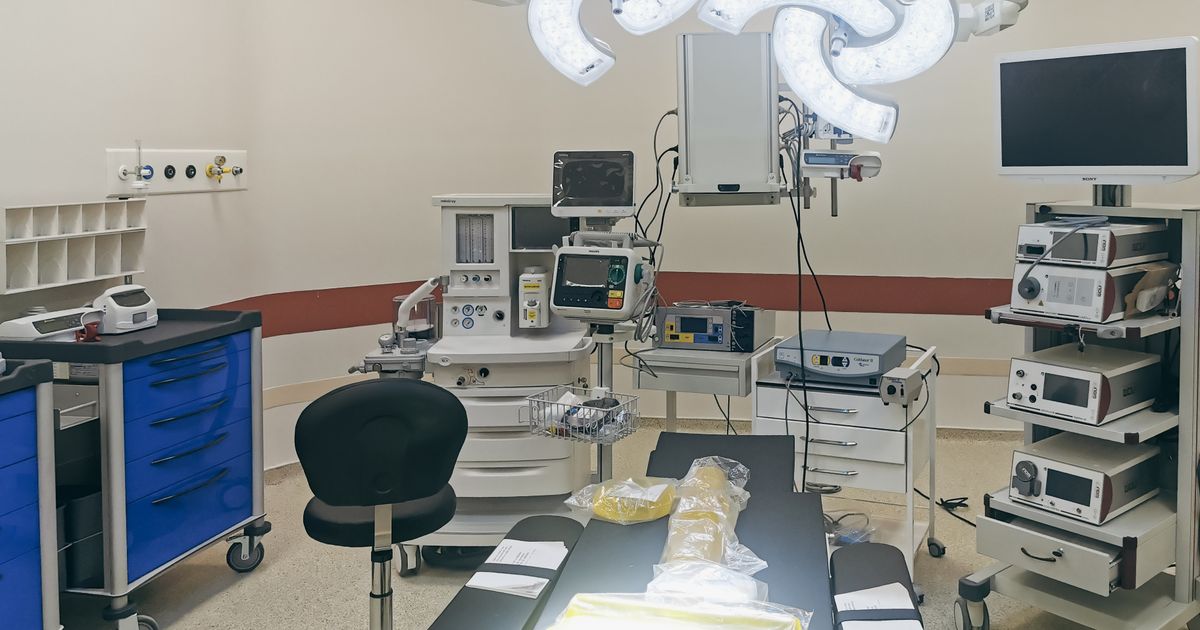
Co je ezofagoskopie?
The oesophagus is the muscular tube that carries food and drink from the throat to the stomach. Esophagoscopy is a way of seeing its inner lining directly. An instrument called an esophagoscope, or more often a standard upper endoscope, is passed through the mouth (occasionally through the nose) and moved gently down the food pipe. The picture appears on a screen.
In everyday practice, the oesophagus is usually examined as part of an upper gastrointestinal endoscopy, which goes on to look at the stomach and the first part of the small intestine in the same sitting. That test is described on our page on oesophagogastroduodenoscopy (upper endoscopy). The word esophagoscopy is used when the focus is on the food pipe alone, or when a rigid scope is used.
Other names for esophagoscopy
- Oesophagoscopy (British spelling)
- Food pipe endoscopy
- Flexible esophagoscopy
- Rigidní ezofagoskopie
- Transnasal esophagoscopy
- Upper endoscopy or gastroscopy, when the stomach is also examined
Why is esophagoscopy done?
To find the cause of symptoms
- Difficulty swallowing, or food sticking in the chest
- Bolest při polykání
- Pálení žáhy or acid reflux that is long-standing, does not settle with treatment, or comes with warning signs such as weight loss. See gastroezofageální refluxní choroba.
- Zvracení krve or passing black stools
- Unexplained chest pain after heart causes have been excluded
- Persistent vomiting or unexplained anaemia
To diagnose or monitor a condition
- Inflammation of the food pipe (ezofagitida) from reflux, infection, tablets or allergy
- Barrettův jícen, a change in the lining caused by long-term reflux that needs periodic checks
- Narrowing of the food pipe (oesophageal stricture)
- Rakovina jícnu, confirmed by biopsy
- Swollen veins in the food pipe (oesophageal varices) in people with liver disease
- Hiatal kýla a achalázie, alongside other tests
- Injury after swallowing a corrosive liquid
To treat a problem during the same procedure
- Removing a stuck piece of food or a swallowed object
- Stretching a narrowed segment (endoscopic dilation)
- Placing bands on bleeding or enlarged veins (variceal ligation)
- Placing a stent to keep a blocked food pipe open (oesophageal stenting)
- Removing early abnormal areas of lining (endoskopická resekce sliznice)
Types of esophagoscopy: flexible and rigid
| vlastnost | Flexible esophagoscopy | Rigidní ezofagoskopie |
|---|---|---|
| Laboratoř pro vývoj | Thin, bendable tube with a camera at the tip | Straight, hollow metal tube |
| Anestézie | Throat spray, often with sedation | Celková anestézie |
| Kde se to dělá | Endoskopická apartmá | Operační sál |
| Obvykle se to dělá | Gastroenterologist or endoscopy-trained surgeon | ENT surgeon or thoracic surgeon |
| Typické použití | Most diagnostic tests, biopsies and treatments; can continue into the stomach | Some stuck objects, especially sharp or high up near the throat; examination of the upper food pipe with the throat and voice box |
| Hlavní limity | Narrower working channel | Cannot be used easily with a stiff neck or jaw; slightly higher risk of a tear |
Transnasal esophagoscopy
A very thin flexible scope can be passed through the nose after a numbing spray, with the person awake and sitting up. No sedation is needed. It is offered in some centres for selected patients and is not suitable for every purpose. Availability differs between centres.
How it differs from related tests
- A general overview of scope tests is on our endoskopie stránky.
- Laryngoskopie a endoskopie hrdla look at the voice box and throat, not the food pipe.
- An upper GI series (barium swallow) uses X-rays to show the outline of the food pipe but cannot take samples.
- Manometrie jícnu measures how the food pipe muscles squeeze.
- Endoskopický ultrazvuk looks at the layers of the wall and nearby glands.
Who is suitable for esophagoscopy?
Most adults and children who need the food pipe examined can have a flexible esophagoscopy. Your doctor will weigh the benefit against the risk in each case.
Who may not be suitable, or may need extra precautions
- People with a suspected hole in the food pipe or stomach
- People who are very unstable, for example with severe breathing difficulty or a recent heart attack, unless the test is urgent
- People on blood thinners or with bleeding disorders, when a biopsy or treatment is planned
- People with severe neck arthritis, a stiff jaw or unstable neck bones, for whom a rigid scope may be unsafe
- People who cannot cooperate with an awake test, who may need deeper sedation or general anaesthesia
- Pregnant women, in whom the test is done only if clearly needed
How to prepare for esophagoscopy
Zkoušky
Many people need no tests before a routine flexible examination. Blood counts and clotting tests may be asked for if you have liver disease, bleeding or take blood thinners. A check-up before anaesthesia is needed for a rigid esophagoscopy.
Léky k diskusi
- Blood thinners and medicines that affect platelets
- Diabetes medicines and insulin, since you will be fasting
- Medicines for blood pressure and heart conditions, which are usually continued with a sip of water
- Any allergy, including to numbing sprays or sedatives
Your doctor will tell you which medicines to take, pause or adjust. Do not change them on your own.
V ten den
- Do not eat or drink for the number of hours you are told. An empty food pipe and stomach give a clear view and lower the risk of fluid entering the lungs.
- Remove dentures and tell the staff about loose teeth.
- If you are having sedation or anaesthesia, bring an adult to take you home.
- You will be asked to sign a consent form after the doctor explains the test.
How is esophagoscopy performed?
- Checks and monitoring. Your pulse, blood pressure and oxygen level are monitored throughout.
- Numbing and sedation. For a flexible test, the throat is sprayed with a numbing solution, and a sedative may be given through a vein. See sedace při vědomí. For a rigid test, you are given celková anestézie.
- Polohování. For a flexible test you lie on your left side with a small plastic guard between your teeth. For a rigid test you lie on your back with the neck extended and the teeth protected.
- Passing the scope. The scope is guided over the tongue and into the food pipe. You can breathe normally. A little air is passed in to open the food pipe for a clear view.
- Zkouška. The doctor inspects the lining from top to bottom, looking for redness, ulcers, narrowing, swollen veins or growths.
- Biopsy or treatment. Small tissue samples can be taken with tiny forceps. This is painless. Planned treatments such as dilation, banding or removal of an object are done at this stage.
- Removing the scope. The scope is withdrawn slowly and the lining is checked again on the way out.
What happens after esophagoscopy?
You rest in the recovery area until the sedation or anaesthesia wears off, usually for an hour or two. Your throat will be numb for a short while, so you are asked not to eat or drink until swallowing feels normal, to avoid choking.
The doctor usually explains what was seen before you leave. Biopsie results take a few days. If you had sedation, do not drive, operate machinery, drink alcohol or sign important documents for the rest of the day and until the next morning, as advised by the unit.
Risks and complications of esophagoscopy
A diagnostic flexible esophagoscopy is a low-risk test. The risk rises a little with rigid scopes and when treatment is carried out.
Časté a mírné
- Sore throat for a day or two
- Bloating or belching from the air used
- Drowsiness after sedation
- Mírné nepohodlí v místě vpichu
Méně časté, ale závažné
- A tear or hole in the food pipe (perforation). This is rare in diagnostic tests and more likely after dilation, removal of a sharp object or rigid esophagoscopy. It may need a stent or surgery.
- Bleeding, usually after biopsy or treatment, and more likely in people on blood thinners
- Stomach contents entering the lungs, causing a chest infection
- Reaction to the sedative or anaesthetic, including slow breathing or low blood pressure
- Damage to teeth, lips or dental work, mainly with a rigid scope
- A missed abnormality. No test is perfect, and a repeat test is sometimes advised.
Results: what can esophagoscopy show?
A normal result means the lining of the food pipe looks healthy. This is useful information, but a normal look does not rule out every cause of swallowing trouble. Problems with muscle movement, for example, may need manometry or a barium study.
An abnormal result may show inflammation, ulcers, a narrowing, a hernia, swollen veins, a change in the lining or a growth. Biopsies confirm what the abnormal area is. Your doctor will explain what the findings mean and what treatment or follow-up is needed.
Recovery after esophagoscopy
- Most people return to normal activity the next day.
- Start with sips of water, then soft food, once the numbness has gone.
- Warm drinks and soft foods soothe a sore throat.
- If you had a dilation, stent or banding, follow the specific diet and medicine advice you are given.
Kdy vyhledat lékařskou pomoc
- Severe or worsening pain in the chest, neck, back or abdomen
- Horečka nebo zimnice
- Difficulty swallowing or breathing that is new or getting worse
- Zvracení krve nebo vylučování černé, dehtovité stolice
- Swelling or a crackling feeling under the skin of the neck
- Trvalé zvracení
These can be signs of a tear or bleeding and need urgent attention.
Life after esophagoscopy
What you do next depends on what was found.
- For reflux: smaller meals, not lying down soon after eating, raising the head of the bed, keeping a healthy weight and avoiding smoking and alcohol.
- Take prescribed medicines for the full course, and swallow tablets with plenty of water while sitting upright.
- Chew food well and eat slowly if you have had a narrowing or a food blockage.
- Keep the dates for repeat checks if you have Barrett's oesophagus, varices or a stricture that needs staged dilation.
- Collect and discuss your biopsy report. Do not assume that no news means a normal result.
Benefits of esophagoscopy
- Gives a direct view of the lining, which X-rays and scans cannot
- Allows biopsy, so that inflammation, infection and cancer can be told apart
- Diagnosis and treatment can often be done in one sitting
- Quick, with same-day discharge in most cases
- Can find changes at an early stage, when treatment is simpler
What is the cost of esophagoscopy in India?
Cena závisí na:
- Flexible or rigid esophagoscopy
- Whether only the food pipe is examined or a full upper endoscopy is done
- Throat spray, sedation or general anaesthesia
- Biopsies and laboratory charges
- Any treatment done, such as dilation, banding, stenting or removal of an object
- Day care or admission, and emergency or planned procedure
- Město a nemocnice
Náklady se liší od osoby k osobě. Aktuální ceny si prosím ověřte v nemocnici.
Insurance cover for day care endoscopy varies between policies, so confirm with your insurer in advance.
Why choose Apollo Hospitals for esophagoscopy?
- Gastroenterologists, surgeons and ENT specialists trained in diagnostic and therapeutic endoscopy
- Endoscopy units with monitoring during sedation and anaesthesia support when needed
- Pathology laboratories for biopsy reporting within the hospital
- Emergency services for bleeding and swallowed objects, with surgical backup
- Transnasal and other specialised techniques are not offered everywhere. Availability differs between centres. Please check with the hospital.
If you have trouble swallowing, persistent heartburn or another symptom described above, you can book an appointment with a gastroenterologist at Apollo Hospitals. For a problem high in the throat, an ORL specialista may be the right starting point.
Související čtení
- Upper endoscopy (oesophagogastroduodenoscopy)
- endoskopie
- Kapslová endoskopie
- Endoscopic dilation for achalasia
- Gastro-oesophageal reflux disease
Questions to ask your doctor about esophagoscopy
- Why do I need this test, and are there alternatives?
- Will it be flexible or rigid, and why?
- Will you also look at my stomach?
- Will I have a throat spray, sedation or general anaesthesia?
- Do you expect to take biopsies or do any treatment?
- Které z mých léků mám přestat užívat a kdy?
- How long must I fast?
- When and how will I get the results?
- What symptoms afterwards should make me call or come back?
Nejčastější dotazy
1. Is esophagoscopy painful?
It is uncomfortable but not usually painful. The throat spray reduces gagging and sedation helps you relax. With a rigid scope you are asleep under general anaesthesia.
2. How long does esophagoscopy take?
A flexible examination usually takes under half an hour. It takes longer if treatment is done. Allow a few hours in total for preparation and recovery.
3. What is the difference between esophagoscopy and upper endoscopy?
Esophagoscopy examines the food pipe. Upper endoscopy uses the same flexible scope to examine the food pipe, stomach and first part of the small intestine. Most patients have the full upper endoscopy.
4. What is the difference between flexible and rigid esophagoscopy?
A flexible scope bends, is used with throat spray or sedation, and suits most tests. A rigid scope is a straight metal tube used under general anaesthesia for selected tasks, such as removing some stuck objects.
5. Can I breathe during the test?
Yes. The scope goes down the food pipe, not the windpipe, so breathing is not blocked. Your oxygen level is monitored throughout.
6. Do I need to fast before esophagoscopy?
Yes. You must not eat or drink for several hours beforehand. The unit will give you exact timings, which may be longer if your food pipe empties poorly.
7. Will I be awake?
For a flexible test you are awake or lightly sedated, and many people remember little of it. For a rigid test you are fully asleep.
8. Mohu jít domů tentýž den?
Usually yes. You may be kept longer if a treatment was done, if the test was an emergency or if there is any concern afterwards.
9. When can I eat after the test?
Once the throat numbness has worn off, usually within an hour or so, start with sips of water and then soft food, unless you have been told otherwise.
10. Does a biopsy mean I have cancer?
No. Biopsies are taken routinely to check for inflammation, infection and allergy-related conditions as well as abnormal cells. Most biopsies do not show cancer.
11. Is esophagoscopy safe for children?
Yes, when needed. In children it is usually done under general anaesthesia or deep sedation by doctors experienced in paediatric endoscopy, often to remove a swallowed object.
12. How often should esophagoscopy be repeated?
Most people need it once. Repeat tests are planned for conditions such as Barrett's oesophagus, varices or strictures, at intervals your doctor decides.
13. Can esophagoscopy detect acid reflux?
It can show damage caused by reflux, such as inflammation or Barrett's oesophagus. Many people with reflux have a normal-looking food pipe, so other tests may be needed.
14. Which doctor performs esophagoscopy?
Flexible esophagoscopy is performed by a gastroenterologist or a surgeon trained in endoscopy. Rigid esophagoscopy is usually performed by an ENT surgeon or a thoracic surgeon.
Závěr
Esophagoscopy lets a doctor see the inside of the food pipe, take samples and often treat the problem in the same sitting. The flexible method suits most people and is a short day care test. The rigid method is kept for particular situations and needs general anaesthesia. Serious complications are uncommon, but pain, fever, bleeding or trouble swallowing afterwards should be reported at once. Speak to a specialist about which approach fits your symptoms.
Tato stránka slouží pro obecné informace a nenahrazuje rady vašeho lékaře. Rozhodnutí o léčbě by měla být učiněna s kvalifikovaným specialistou, který zná vaši anamnézu.
Nedávno přidané


Surgeons Trained in Endoscopy at Apollo Hospitals




Disclaimer:
Informace uvedené na této stránce jsou určeny pouze pro obecné informační a vzdělávací účely. Přestože vynakládáme přiměřené úsilí, abychom zajistili, že informace jsou přesné, spolehlivé a pravidelně kontrolované, neměly by být považovány za náhradu odborné lékařské rady, diagnózy nebo léčby.
Vhodnost lékařského zákroku, spolu s jeho přínosy, riziky, přípravou, rekonvalescencí, potenciálními komplikacemi a očekávanými výsledky, se může u jednotlivých osob lišit. Váš zdravotnický pracovník určí, zda je zákrok vhodný, na základě vašeho individuálního stavu a anamnézy.
Před rozhodnutím ohledně jakéhokoli lékařského zákroku se prosím poraďte s kvalifikovaným zdravotnickým pracovníkem, který vám poskytne osobní doporučení.
Více informací o tom, jak je náš lékařský obsah vytvářen, kontrolován, aktualizován a udržován, naleznete v našich [Redakčních zásadách].




