


Recenzováno redakčním týmem Apollo
Rychlá odpověď
High tibial osteotomy (HTO) is an operation that reshapes the upper part of the shin bone, just below the knee, to change the angle of the leg. It is mainly used for people with bow legs and arthritis limited to the inner side of the knee. By shifting body weight away from the worn inner side towards the healthier outer side, it can ease pain and delay the need for a knee replacement. The natural knee joint is kept, but recovery is slower than many people expect because the cut bone has to heal.
| Klíčová fakta | Detaily |
|---|---|
| Co to je | A planned cut in the upper shin bone (tibia) to realign the leg |
| Hlavní důvod | Arthritis or cartilage wear on the inner side of the knee with a bow-leg alignment |
| Kdo to provádí | An orthopaedic surgeon with experience in knee surgery |
| Anestézie | Spinální nebo celková anestezie, často s nervovým blokem |
| Pobyt v nemocnici | Obvykle několik dní |
| Hojení kostí | Commonly around three months, sometimes longer |
| Joint kept or replaced | Your own knee joint is kept |
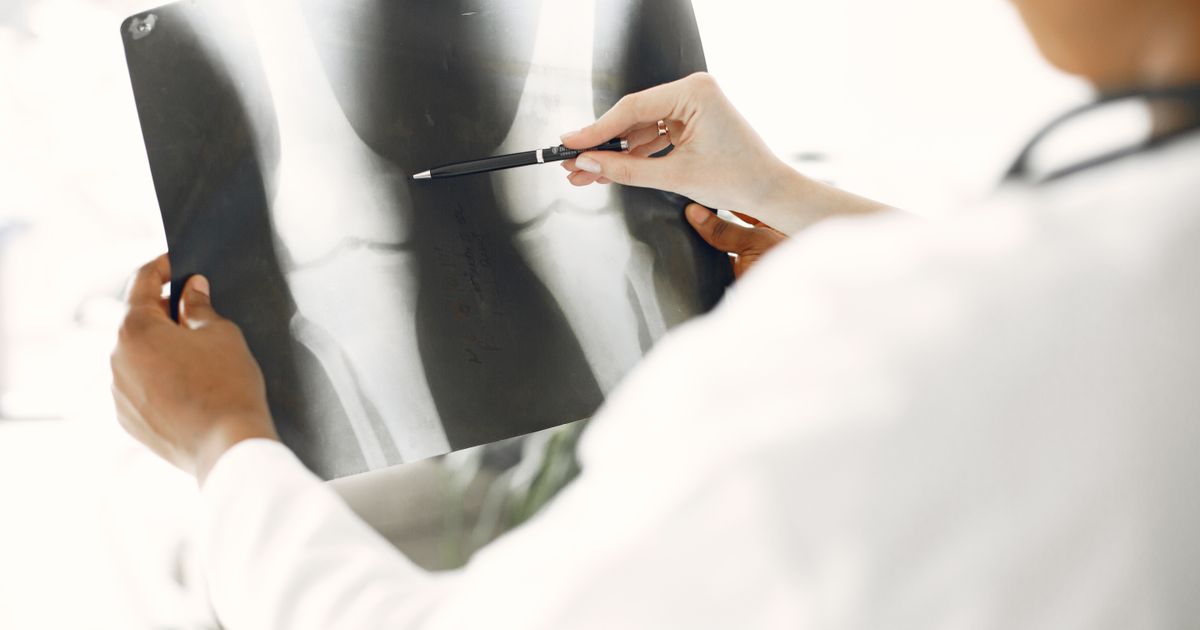
What is high tibial osteotomy?
"Osteotomy" means cutting a bone in a controlled way. "High tibial" means the cut is made near the top of the tibia, the larger of the two shin bones. In a high tibial osteotomy the surgeon makes a cut just below the knee, changes the angle of the bone by a measured amount and fixes it in the new position with a plate and screws.
The knee has an inner (medial) side and an outer (lateral) side. In a bow-legged person, more of the body weight passes through the inner side. Over years this can wear the cartilage there and cause pain, a pattern called medial compartment osteoartróza. HTO straightens the leg slightly so that load is shared more by the outer side, where the cartilage is still healthy.
Where HTO fits among knee osteotomies and knee replacement
Osteotomie kolena is the general name for realignment surgery around the knee. It can be done on the shin bone (tibia osteotomy) or on the thigh bone (femur osteotomy). HTO is the most common type of tibia osteotomy and is the one used for bow legs with inner-side wear. Knock knees with outer-side wear are more often corrected at the thigh bone.
HTO is a joint-preserving operation. It sits between non-surgical care and náhrada kolena. It is usually considered for younger, active people whose arthritis affects only one side of the knee, while a partial or totální náhrada kolenního kloubu is more often advised when the person is older or the damage is more advanced.
Other names for high tibial osteotomy
- HTO surgery
- Proximal tibial osteotomy
- Opening wedge high tibial osteotomy
- Closing wedge high tibial osteotomy
- Knee realignment surgery
- Bow leg correction surgery in adults
- Valgus-producing tibial osteotomy
Why is high tibial osteotomy done?
- Inner-side knee osteoarthritis with bow legs: the main reason. See Mohla by moje bolest kolene být způsobena artritidou?.
- To protect a cartilage or meniscus repair: HTO is sometimes combined with cartilage restoration, cartilage transplantation or meniscal transplantation on the inner side, so that the repaired area is not overloaded.
- Knee instability with poor alignment: in selected people it is done with or before a ligament operation such as Rekonstrukce ACL.
HTO is usually considered only after simpler measures have been tried, such as weight loss, exercise and physiotherapy, pain relief, braces and sometimes kloubní injekce.
Types of high tibial osteotomy
- Medial opening wedge HTO: a single cut is made on the inner side of the tibia and gently opened like a hinge to the planned angle. The gap is held with a plate and may be filled with bone graft or a bone substitute. This is the method used most often today.
- Lateral closing wedge HTO: a wedge of bone is removed from the outer side and the gap is closed. It gives bone-to-bone contact but needs a second cut and work near the fibula and a nerve on the outer side of the knee.
HTO compared with partial and total knee replacement
| vlastnost | Vysoká tibiální osteotomie | Částečná náhrada kolenního kloubu | Celková náhrada kolena |
|---|---|---|---|
| Co je hotovo | Shin bone is cut and realigned; joint is kept | Only the worn side is resurfaced with an implant | All joint surfaces are replaced with implants |
| Obvykle se hodí | Younger, active people with bow legs and one-sided wear | One-sided arthritis with intact ligaments, often in middle-aged and older people | Arthritis affecting more than one part of the knee |
| Brzké uzdravení | Slower; protected weight bearing while bone heals | Obecně rychlejší | Walking with support within days; full recovery over months |
| Activity afterwards | Heavy work and impact activity may be possible once healed | Low-impact activity advised | Low-impact activity advised |
| Dlouhodobý | Arthritis may progress; replacement may be needed later | Implant can wear or loosen; may need revision | Implant can wear or loosen; may need revision |
Kdo je vhodný a kdo nemusí?
HTO tends to work well when the person is chosen carefully. It may suit you if:
- Pain is mainly on the inner side of the knee and limits daily life or work
- X-rays show a bow-leg alignment with wear limited to the inner side
- The outer side and the kneecap joint are in reasonable condition
- The knee bends and straightens well and is stable, or instability can be corrected
- You are physically active and are willing to follow a long rehabilitation plan
It may not be suitable if:
- Arthritis affects the whole knee
- You have inflammatory arthritis such as rheumatoid arthritis
- The knee is very stiff or the deformity is very large
- You smoke heavily, as tobacco greatly raises the chance that the bone will not heal
- You are severely overweight, have poorly controlled diabetes or poor circulation in the leg
How to prepare for high tibial osteotomy
- Zobrazování: a rentgen kolena and a full-length standing X-ray of both legs to measure alignment. An MRI may be done to look at cartilage, menisci and ligaments. The surgeon uses these images to plan the exact angle of correction.
- Fitness tests: a kompletní krevní obraz, blood sugar, kidney tests and an EKG podle potřeby.
- Léky k diskusi: blood thinners, diabetes medicines, steroids, hormone tablets and herbal products. Follow the advice you are given about which to stop and when.
- Přestat kouřit: ideally several weeks before surgery and until the bone has healed.
- Dne: fast as instructed, bathe, wear loose clothing and bring your scans and medicine list.
How is high tibial osteotomy performed?
The steps below describe the common medial opening wedge method.
- Anestézie: spinální nebo obecné anestézie is given, often with a numbing nerve block for pain control.
- Looking inside the knee: many surgeons first do a artroskopie kolena to confirm that the outer side is healthy and to treat any torn menisku or loose cartilage.
- Řez: a cut is made on the inner side of the upper shin, just below the knee.
- Řez kostí: guided by X-ray imaging, the surgeon cuts most of the way across the tibia, leaving a hinge of bone on the outer side.
- Opening the wedge: the cut is opened slowly to the angle planned before surgery, and the alignment of the whole leg is checked.
- Oprava: a plate and screws hold the bone in its new position. The gap may be filled with kostní štěp or left to fill in naturally.
- Uzavření: the wound is closed and dressed, and a knee brace may be fitted.
Co se stane po operaci?
You are monitored in recovery and then on the ward. Pain relief is given regularly, and most people receive a blood thinner or other measures to reduce the risk of clots. A physiotherapist teaches you to walk with crutches, usually putting only part of your weight on the leg at first, and starts gentle bending exercises. An X-ray confirms the correction before you go home.
Rizika a komplikace
Běžnější
- Pain, swelling and bruising around the knee and shin for some weeks
- Numbness beside the scar
- Irritation from the plate, which some people later choose to have removed
- Knee stiffness that needs extra physiotherapy
Méně časté
- Wound or deep infection
- Slow healing or failure of the bone to heal (neunion), which may need another operation
- A crack at the hinge or into the joint surface during surgery
- Too little or too much correction, or loss of correction over time
- Krevní sraženiny v noze (hluboká žilní trombóza) nebo plíce
- Injury to a nerve or blood vessel
- Syndrom kompartmentu, a rare emergency caused by pressure in the leg muscles
- Continued pain or progression of arthritis
Results: how well does HTO work?
In well-selected people, HTO usually reduces pain and improves walking and activity for a number of years.
It is important to be clear about the limits. HTO does not regrow worn cartilage and does not cure arthritis. The relief tends to fade gradually as arthritis progresses, and a proportion of people go on to have a knee replacement years later. Results are less reliable in people who are overweight, who smoke, who have more advanced arthritis or whose alignment is not corrected accurately. A knee replacement after an earlier HTO is possible, though it can be technically more demanding for the surgeon.
Recovery after high tibial osteotomy
- 0. až 2. týden: rest, ice, leg raised, crutches, gentle knee bending and muscle tightening exercises. Stitches are removed at about two weeks.
- 2. až 6. týden: gradual increase in weight on the leg as your surgeon allows.
- 6. až 12. týden: most people come off crutches once X-rays show healing.
- 3. až 6. měsíc: strengthening, longer walks and return to most work.
- 6. až 12. měsíc: return to heavier work and sport if the bone has healed and strength is back.
Kdy vyhledat lékařskou pomoc
- Fever, or redness, warmth or discharge from the wound
- Calf pain, swelling or tenderness
- Náhlá dušnost nebo bolest na hrudi
- Severe, rising pain in the leg that is not eased by rest and pain relief
- Numbness, weakness or a cold, pale foot
- A fall, or a sudden new pain or change in the shape of the leg
Life after high tibial osteotomy
- Udržujte si váhu ve zdravém rozmezí.
- Continue thigh and hip strengthening exercises in the long term.
- Prefer low-impact exercise such as walking, cycling and swimming for regular fitness. Ask your surgeon before returning to running or contact sport.
- Attend follow-up visits so that healing and alignment can be checked on X-ray.
Benefits of high tibial osteotomy
- Keeps your own knee joint, ligaments and natural feel of the knee
- Can relieve pain and improve function in suitable people
- May delay the need for a knee replacement, which matters for younger people because implants can wear out
- Fewer long-term activity restrictions than after a joint replacement once healing is complete
What is the cost of high tibial osteotomy in India?
Cena závisí na několika faktorech:
- The method used and the type of plate and screws
- Whether arthroscopy, cartilage, meniscus or ligament surgery is done at the same time
- Use of bone graft or bone substitute
- Délka pobytu a kategorie pokoje
- Physiotherapy, braces and walking aids
- Město a nemocnice
Náklady se liší od osoby k osobě. Aktuální ceny si prosím ověřte v nemocnici.
Many health insurance policies cover osteotomy when it is medically needed, but waiting periods and limits differ, so confirm with your insurer beforehand.
Why choose Apollo Hospitals for high tibial osteotomy?
- Orthopaedic surgeons who perform joint-preserving knee surgery as well as partial and total knee replacement, so that the option suited to your knee can be discussed
- Full-length alignment X-rays and MRI for planning
- Physiotherapy that starts in hospital and continues after discharge
- Dostupnost se v jednotlivých centrech liší. Informujte se prosím v nemocnici.
To find out whether HTO is suitable for your knee, you can objednat se k ortopedickému chirurgovi v nemocnicích Apollo.
Související čtení
- Osteotomie kolene pro nesprávné zarovnání
- Osteotomie holenní kosti
- Celková náhrada kolena
- Robotická náhrada kolenního kloubu
- Knee cartilage injury
Questions to ask your doctor about high tibial osteotomy
- Is my arthritis limited to the inner side of the knee?
- Why do you recommend HTO for me instead of a partial or total knee replacement?
- Which method will you use, opening wedge or closing wedge?
- Will you do an arthroscopy or any other procedure at the same time?
- How long will I need crutches, and when can I put full weight on the leg?
- When can I return to my job, driving and sport?
- Jak dlouho by v mém případě mohl tento přínos trvat?
- Will the plate need to be removed later?
Nejčastější dotazy
1. What is the difference between knee osteotomy and high tibial osteotomy?
Knee osteotomy is the general term for cutting and realigning a bone near the knee. High tibial osteotomy is one specific type, done on the upper shin bone, usually to correct bow legs and unload the inner side of the knee.
2. Is HTO better than knee replacement?
Neither is better for everyone. HTO suits younger, active people with one-sided wear who want to keep their own joint. Knee replacement usually gives more predictable pain relief when arthritis is advanced or the person is older.
3. What is the right age for high tibial osteotomy?
There is no strict limit. It is most often offered to active adults up to around 60 years, but general health, activity level, bone quality and the pattern of arthritis matter more than age alone.
4. How long does it take to walk normally after HTO?
Most people use crutches for about six to twelve weeks. Walking without a limp often takes three to six months, because the thigh muscles need time to regain strength after the bone has healed.
5. Is high tibial osteotomy painful?
The operation is done under anaesthesia. The first one to two weeks afterwards can be sore, and this is managed with pain relief medicines, ice and raising the leg.
6. How long do the results of HTO last?
This varies from person to person. Many people get relief for a number of years, and some for much longer. Because arthritis can progress, some people later need a knee replacement.
7. Can I have a knee replacement after HTO?
Yes. An earlier HTO does not prevent a knee replacement later. The operation may be a little more complex because of the changed bone shape and the plate, which sometimes needs to be removed first.
8. Will my leg look different after HTO?
The leg usually looks straighter, and it may look slightly different from the other side. With the opening wedge method the leg can become very slightly longer.
9. Does the plate need to be removed?
Not always. The plate can stay if it causes no trouble. Because it lies close under the skin, some people feel it when kneeling and ask for it to be removed once the bone has fully healed, usually after a year or so.
10. Can HTO be done on both knees?
Yes, if both knees need it, but the two sides are usually done in separate operations some months apart so that you always have one leg that can take full weight.
11. Can I sit cross-legged or squat after HTO?
Many people regain a good range of bending because the joint itself is not replaced. How much you can squat or sit on the floor depends on the condition of the knee before surgery.
12. Is HTO suitable for knock knees?
HTO is mainly used for bow legs. Knock knees with wear on the outer side of the knee are more often corrected with an osteotomy of the lower thigh bone.
13. What can I do to help the bone heal?
Avoid tobacco, follow the weight-bearing instructions, eat a balanced diet with enough protein and calcium, keep diabetes under control and attend your follow-up X-rays.
14. Which doctor performs high tibial osteotomy?
High tibial osteotomy is performed by an orthopaedic surgeon, usually one who specialises in knee surgery, sports injuries or joint preservation.
Závěr
High tibial osteotomy realigns a bow leg so that the worn inner side of the knee carries less load. For the right person, usually a younger and active adult with one-sided arthritis, it can relieve pain and postpone knee replacement while keeping the natural joint. It asks for patience, as the bone needs months to heal, and it does not stop arthritis for good.
Tato stránka slouží pro obecné informace a nenahrazuje rady vašeho lékaře. Rozhodnutí o léčbě by měla být učiněna s kvalifikovaným specialistou, který zná vaši anamnézu.
Nedávno přidané


Ortopedičtí chirurgové v nemocnicích Apollo


Disclaimer:
Informace uvedené na této stránce jsou určeny pouze pro obecné informační a vzdělávací účely. Přestože vynakládáme přiměřené úsilí, abychom zajistili, že informace jsou přesné, spolehlivé a pravidelně kontrolované, neměly by být považovány za náhradu odborné lékařské rady, diagnózy nebo léčby.
Vhodnost lékařského zákroku, spolu s jeho přínosy, riziky, přípravou, rekonvalescencí, potenciálními komplikacemi a očekávanými výsledky, se může u jednotlivých osob lišit. Váš zdravotnický pracovník určí, zda je zákrok vhodný, na základě vašeho individuálního stavu a anamnézy.
Před rozhodnutím ohledně jakéhokoli lékařského zákroku se prosím poraďte s kvalifikovaným zdravotnickým pracovníkem, který vám poskytne osobní doporučení.
Více informací o tom, jak je náš lékařský obsah vytvářen, kontrolován, aktualizován a udržován, naleznete v našich [Redakčních zásadách].




