


Apollo redakcijas komandas pārskatīts
Ātra atbilde
Pharyngeal flap surgery treats velopharyngeal insufficiency, a condition in which the soft palate cannot close off the nose from the mouth during speech, so that speech sounds too nasal. The surgeon lifts a strip of tissue from the back wall of the throat and joins it to the soft palate, forming a bridge that reduces the escape of air into the nose. It is done under general anaesthesia, mostly in children after cleft palate repair, and usually needs one to three nights in hospital. Speech therapy afterwards is an important part of the result.
| galvenie fakti | Sīkāka informācija |
|---|---|
| Kas tas ir | A flap of tissue from the back of the throat is attached to the soft palate to help close the gap between mouth and nose during speech |
| Condition treated | Velopharyngeal insufficiency (VPI) causing hypernasal speech |
| Kam tas ir | Mostly children, often after cleft palate repair. Sometimes teenagers and adults |
| Vispārējā narkoze | Vispārējā anestēzija |
| Paņemtais laiks | About one to two hours |
| Uzturēšanās slimnīcā | Usually one to three nights, with monitoring of breathing during sleep |
| Main risk to know | Snoring and blocked breathing during sleep (obstructive sleep apnoea) |
| Pēc operācijas | Soft diet for a few weeks and speech therapy |
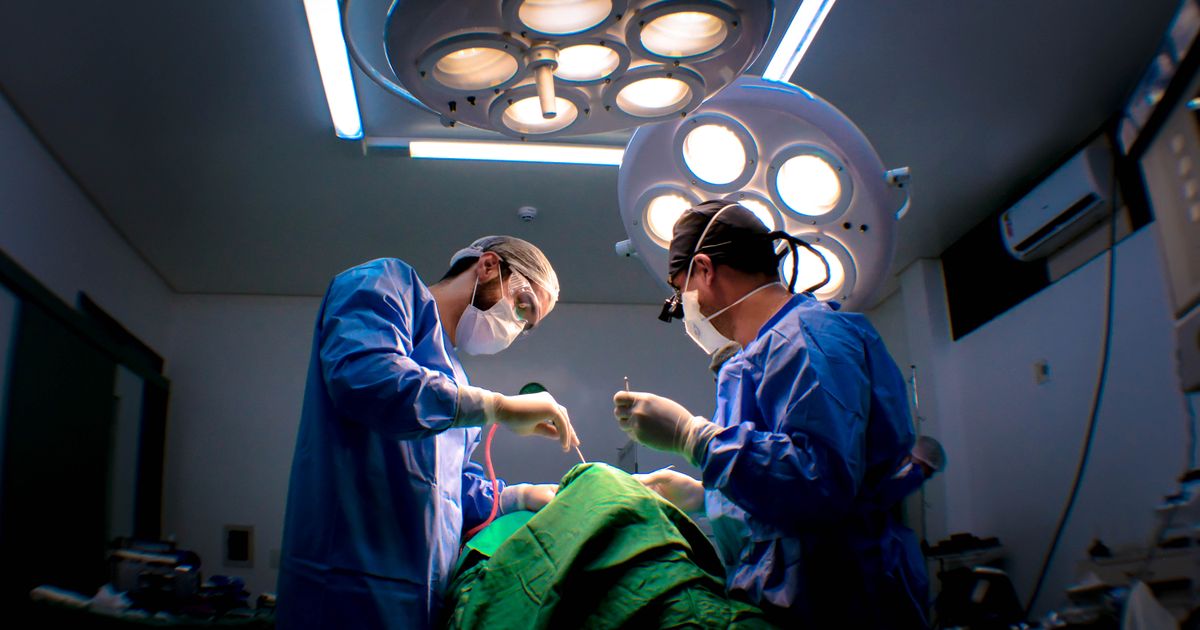
What is pharyngeal flap surgery?
When we speak, the soft palate at the back of the roof of the mouth lifts and meets the back and side walls of the throat. This closes the passage to the nose, called the velopharyngeal port, so that air and sound come out through the mouth.
In velopharyngeal insufficiency the soft palate is too short or does not reach the back of the throat, and a gap remains. Air and sound leak into the nose during speech. The voice sounds nasal, consonants such as p, b, s and k are weak, and air may be heard escaping from the nose. Food or drink may also come out through the nose at times.
In pharyngeal flap surgery the surgeon raises a rectangular flap of lining and muscle from the back wall of the throat, leaving it attached at one end so that it keeps its blood supply, and stitches the free end into the soft palate. The flap forms a permanent bridge across the middle of the gap. An opening is left on each side of the bridge, called a lateral port. These ports stay open for breathing through the nose and are closed during speech by the inward movement of the side walls of the throat.
Other names for pharyngeal flap surgery
- Pharyngeal flap pharyngoplasty
- Posterior pharyngeal flap
- Superiorly based pharyngeal flap
- VPI surgery or speech surgery
- Secondary speech surgery after cleft palate repair
Why is pharyngeal flap surgery done?
The operation is done to improve speech when there is a structural gap that speech therapy alone cannot close. Velopharyngeal dysfunction can result from:
- Remontēts šķelto aukslēju in which the palate remains short or moves poorly. This is the most common reason
- A submucous cleft palate, where the muscles are divided under an intact lining
- A palate that is short, or a throat that is deep, from birth
- 22q11.2 deletion syndrome, also known as DiDžordža sindroms
- Removal of large adenoids in a child whose palate was only just reaching them
- Weakness of the palate from nerve or muscle conditions, in selected cases
Types of surgery for velopharyngeal insufficiency
There is more than one operation for VPI. The team chooses according to the size and shape of the gap and how well the palate and the side walls of the throat move.
| izvēle | Kas ir paveikts | Often chosen when |
|---|---|---|
| Rīkles atloks | A flap from the back wall of the throat is joined to the soft palate, leaving a port on each side | The gap is in the centre or is large, and the side walls of the throat move well |
| Sfinktera faringoplastika | Flaps from each side of the throat are turned and stitched across the back wall to narrow the opening | The side walls move poorly and the gap is wide from side to side |
| Palate lengthening or muscle repair (re-repair or Z-plasty of the palate) | The palate muscles are repositioned and the palate is lengthened | The gap is small and the palate muscles are not in the right position |
| Speech appliance | A removable dental plate that lifts the palate or fills the gap | Surgery is not suitable or is being delayed |
Who is suitable for pharyngeal flap surgery?
A child or adult may be suitable when a specialist speech assessment confirms hypernasal speech from a closure gap, imaging shows the size and pattern of the gap, and the airway is healthy enough to tolerate a narrower passage behind the nose. Surgery is commonly done from around four to six years of age, once a child can cooperate with speech testing, but it can be done later in childhood or in adult life.
Who may not be suitable, or may need another approach
- Cilvēki ar obstruktīva miega apnoja or a small lower jaw, in whom a flap could make blocked breathing worse
- Children with large tonsils or adenoids. These are often removed first, with flap surgery some weeks or months later
- People whose side walls of the throat move very little, for whom a different operation may suit better
- People with 22q11.2 deletion syndrome in whom the neck arteries run close to the midline at the back of the throat. Scans are used to check this before surgery
- Children whose speech difficulty comes mainly from learned habits or from a problem of speech planning such as childhood apraxia of speech, who need therapy first
- People with progressive nerve or muscle disease, such as some causes of dizartrija, where the benefit is less predictable
How to prepare for pharyngeal flap surgery
Testi
- A detailed speech assessment by a speech and language therapist, usually recorded for comparison later
- Deguna endoskopija while speaking, in which a thin flexible camera passed through the nose shows how the palate and throat walls move
- A moving X-ray of speech (videofluoroscopy) in some centres
- A miega pētījums if there is snoring, pauses in breathing or large tonsils
- A dzirdes pārbaude, since ear problems are common in children with cleft palate
- Heart assessment and scans of the neck vessels in children with 22q11.2 deletion syndrome
Apspriežamās zāles
- All regular medicines and any allergies
- Blood thinners and painkillers that affect bleeding, which may need to be stopped beforehand on medical advice
- Any recent cold, cough or fever, as surgery may be postponed
Tajā dienā
- Follow the fasting instructions before anestēziju
- Bring comfort items for your child and plan for a parent to stay
- Stock soft foods at home for the weeks after surgery
How is pharyngeal flap surgery performed?
- Anestēzija: The person is put to sleep with general anaesthesia and a breathing tube is placed through the mouth.
- Pozicionēšana: The neck is gently extended and a mouth gag holds the mouth open. All the surgery is done through the mouth. There are no cuts on the face or neck.
- Raising the flap: The surgeon marks a flap on the back wall of the throat and lifts the lining and underlying muscle, leaving it attached at its upper end.
- Preparing the palate: The soft palate is opened along its back edge or split in the midline to create a bed for the flap.
- Joining the flap: The free end of the flap is stitched into the soft palate with dissolvable stitches, forming the central bridge.
- Setting the side ports: The openings on either side are sized, sometimes around a soft tube, so that they are large enough for breathing and small enough to close in speech.
- Closing the donor site: The area on the back wall from which the flap was taken is closed with stitches or left to heal.
- Atgūšana: The breathing tube is removed once the person is awake, and they are moved to a monitored bed.
Kas notiek pēc operācijas?
Breathing and oxygen levels are monitored closely, especially during sleep on the first night, because swelling can narrow the airway. Some children have a soft tube in one nostril for the first night to keep the airway open. A sore throat and neck stiffness are expected and are treated with pain relief. Fluids are started first, followed by soft food. Most children go home after one to three nights.
Risks and complications of pharyngeal flap surgery
kopīgs
- Throat pain, neck stiffness and reluctance to eat or drink for some days
- krākšana and mouth breathing, which often improve over weeks to months
- Speech that sounds blocked, as if the person has a cold (hyponasal speech), in the early period
Retāk
- Bleeding, which occasionally needs a return to the operating room
- Infekcija
- Partial or complete separation of the flap from the palate, with nasal speech returning
- Persistent hypernasal speech because the side ports are too large, needing revision
- Persistent blocked nasal breathing or obstructive sleep apnoea in children because the ports are too small. This may need treatment and, rarely, revision or division of the flap
Reti, bet nopietni
- Blocked breathing soon after surgery that needs urgent airway support
- Injury to a major blood vessel in people whose neck arteries lie in an unusual position
How well does pharyngeal flap surgery work?
For well chosen patients, pharyngeal flap surgery reduces or corrects hypernasality and nasal air escape in most cases, and speech becomes easier to understand.
The result is not instant and has limits. The final speech outcome is usually judged several months after surgery, once swelling has gone and therapy is under way. Surgery changes the structure. It does not by itself correct speech errors a child has learned, so therapy is often still needed. Some people have nasal speech that persists or returns and need a revision. Results are less predictable in 22q11.2 deletion syndrome and in nerve or muscle conditions.
Recovery after pharyngeal flap surgery
- Diēta: liquids and soft, smooth foods for about two to three weeks, or as advised. Avoid hard, sharp or crunchy foods such as toast, crisps and biscuits
- Objects in the mouth: no straws, hard spoons pushed to the back, toys or fingers in the mouth while healing
- Darbība: quiet play at home for about two weeks. No sports, swimming or rough play until the surgeon agrees
- Skolas: most children return in about two weeks
- miega: raise the head of the bed slightly. Snoring is expected early on, but watch for pauses in breathing
- Runas terapija: usually restarts about four to six weeks after surgery when the surgeon confirms healing
Kad meklēt medicīnisko palīdzību
- Any fresh bleeding from the mouth or nose
- Pauses in breathing, gasping or struggling to breathe during sleep, or unusual sleepiness in the day
- Refusal to drink, very little urine or signs of dehydration
- Drudzis
- A sudden return of very nasal speech or more fluid coming through the nose
Life after pharyngeal flap surgery
- Keep speech therapy appointments and practise at home as shown
- Attend follow up with the cleft or speech team, where speech is recorded again and the flap may be checked with a camera
- Tell the team about loud snoring or restless sleep that continues beyond the first few months. A sleep study may be arranged
- Tell any future anaesthetist or ENT doctor about the flap. Tubes passed through the nose and adenoid surgery need special care afterwards
- Continue regular hearing checks and dental care, which matter for speech too. Persistent dzirdes zaudēšana can hold back speech progress
Benefits of pharyngeal flap surgery
- Less nasal-sounding speech and less air escaping through the nose
- Stronger, clearer consonant sounds
- Speech that others understand more easily
- A physical basis on which speech therapy can build
- No external scars, as all the surgery is inside the mouth
What is the cost of pharyngeal flap surgery in India?
Izmaksas ir atkarīgas no:
- Pilsēta un slimnīca
- The tests needed beforehand, such as speech imaging, a sleep study and heart checks
- Whether tonsil or adenoid surgery is needed first
- The surgeon's and anaesthetist's fees and operating room time
- Length of stay and any time in a high dependency or intensive care bed
- Speech therapy sessions before and after surgery
- Any revision surgery
Izmaksas katram cilvēkam ir atšķirīgas. Lūdzu, sazinieties ar slimnīcu, lai uzzinātu faktiskās cenas.
Insurance cover for surgery related to conditions present from birth differs between policies, so check the terms with your insurer before admission.
Why choose Apollo Hospitals for pharyngeal flap surgery?
- Plastic and reconstructive surgeons and ENT surgeons who treat cleft palate and its speech problems
- Paediatric anaesthesia and monitored beds for the period after surgery
- Access to speech and language therapy and hearing assessment
- Sleep studies for children and adults with suspected blocked breathing
- Cleft and speech services are not the same at every hospital. Availability differs between centres. Please check with the hospital.
To discuss speech surgery, you can book an appointment with a plastic surgeon Apollo slimnīcās, tostarp Deli, Chennai un Hyderabad, or see an LOR speciālists.
Saistītā lasāmviela
- Velopharyngeal dysfunction (VPD)
- Lūpu un aukslēju šķeltnes remonts
- Submucous cleft palate
- Runas traucējumi
- Adenoidektomija
Questions to ask your doctor about pharyngeal flap surgery
- What did the speech assessment and camera test show about the gap?
- Why do you recommend a pharyngeal flap over the other operations?
- Do the tonsils or adenoids need to be removed first?
- Does my child need a sleep study before surgery?
- How will breathing be monitored after the operation?
- How much improvement in speech is realistic?
- When will speech therapy restart, and for how long?
- What is the chance of needing a revision?
Biežāk uzdotie jautājumi
1. What is velopharyngeal insufficiency?
It is a condition in which the soft palate and throat walls cannot fully close the passage between the mouth and nose during speech. Air and sound escape into the nose, making speech sound nasal and consonants weak.
2. Is pharyngeal flap surgery painful?
The operation is done under general anaesthesia. Afterwards a sore throat and stiff neck are usual for one to two weeks and are managed with regular pain relief and soft food.
3. What is the right age for the surgery?
Many children have it between about four and six years, when speech can be tested properly and before school years advance.
4. Will speech be normal straight after surgery?
No. Speech may sound blocked at first because of swelling. Improvement shows over weeks to months, and the result is usually assessed after several months of healing and therapy.
5. Will my child still need speech therapy?
Usually, yes. Surgery gives the ability to close the gap, but therapy teaches correct placement of sounds and removes habits learned earlier.
6. Can speech therapy alone fix the problem?
Not when there is a true structural gap. Therapy cannot lengthen a short palate. It works for learned speech errors and is used alongside surgery or a speech appliance.
7. Will the surgery cause snoring?
Snoring is common in the first weeks and often settles. In some people the passage stays too narrow and causes sleep apnoea, which is the main risk doctors watch for.
8. Can my child breathe through the nose after the surgery?
Yes. The openings on each side of the flap allow nasal breathing.
9. How is a pharyngeal flap different from a sphincter pharyngoplasty?
A pharyngeal flap forms a central bridge with a port on each side and relies on side wall movement. A sphincter pharyngoplasty tightens the opening from the sides and back. The choice depends on the pattern of closure seen on testing.
10. Cik ilgi jāpaliek slimnīcā?
Most people stay one to three nights so that breathing, pain control and drinking can be monitored before going home.
11. What can my child eat after surgery?
Liquids and soft, smooth foods such as curd, soft rice, mashed vegetables, dal and porridge for about two to three weeks. Avoid hard or sharp foods and straws until the surgeon says healing is complete.
12. Can the flap be reversed or adjusted?
Yes. If the ports are too large the flap can be revised, and if they are too small and breathing is affected the ports can be widened or the flap divided.
13. Is the surgery done in adults?
Yes. Adults with nasal speech from an untreated or repaired cleft palate or other causes can have it. The airway and sleep are assessed carefully first, as adults have a higher chance of sleep apnoea.
14. Which doctor performs pharyngeal flap surgery?
It is performed by a plastic and reconstructive surgeon with training in cleft surgery, or by an ENT surgeon or oral and maxillofacial surgeon with the same training. They work with a speech and language therapist and an anaesthetist.
Secinājumi
Pharyngeal flap surgery is a well established operation that helps close the gap between the mouth and nose during speech in people with velopharyngeal insufficiency. It can make speech clearer and less nasal, but it works best when the right patients are chosen after careful speech and airway assessment, and when speech therapy continues afterwards. The main risk to watch is blocked breathing during sleep. A cleft and speech team can advise whether this operation or another option suits you or your child.
Šī lapa ir paredzēta vispārīgai informācijai un neaizstāj ārsta padomu. Lēmumi par ārstēšanu jāpieņem kvalificētam speciālistam, kurš pārzina jūsu slimības vēsturi.
Nesen pievienotās


Plastic and Reconstructive Surgeons at Apollo Hospitals


Atruna:
Šajā lapā sniegtā informācija ir paredzēta tikai vispārīgiem informatīviem un izglītojošiem mērķiem. Lai gan mēs pieliekam saprātīgas pūles, lai nodrošinātu, ka informācija ir precīza, uzticama un regulāri pārskatīta, to nevajadzētu uzskatīt par profesionālas medicīniskās konsultācijas, diagnozes vai ārstēšanas aizstājēju.
Medicīniskās procedūras piemērotība, kā arī tās ieguvumi, riski, sagatavošanās, atveseļošanās, iespējamās komplikācijas un sagaidāmie rezultāti var atšķirties atkarībā no cilvēka. Jūsu veselības aprūpes speciālists noteiks, vai procedūra ir piemērota, pamatojoties uz jūsu individuālo stāvokli un slimības vēsturi.
Pirms pieņemt lēmumu par jebkuru medicīnisku procedūru, lūdzu, konsultējieties ar kvalificētu veselības aprūpes speciālistu, lai saņemtu personalizētu padomu.
Lai iegūtu plašāku informāciju par to, kā tiek veidots, pārskatīts, atjaunināts un uzturēts mūsu medicīniskais saturs, lūdzu, izlasiet mūsu [Redakcijas politiku].




