


Reviewed by Apollo Editorial Team
Quick answer
Tympanoplasty is an operation to repair a hole in the eardrum and, when needed, the tiny hearing bones behind it. The surgeon closes the hole with a small graft of your own tissue taken from near the ear. It is done to stop repeated ear discharge, to protect the middle ear from water and infection, and often to improve hearing. Most people go home the same day or the next day, and the graft heals over several weeks.
| Key facts | Details |
|---|---|
| What it is | Surgical repair of the eardrum, with or without repair of the hearing bones |
| Main reasons | A hole in the eardrum that has not healed, repeated ear discharge, hearing loss |
| Anaesthesia | General anaesthesia, or local anaesthesia with sedation in selected adults |
| Usual duration | About one to two hours, longer if the hearing bones or mastoid are also treated |
| Hospital stay | Day care or one night |
| Graft used | Your own tissue, such as muscle covering (fascia) or cartilage from near the ear |
| Healing time | Several weeks for the graft. Hearing is usually tested at about two to three months. |
| Who performs it | ENT surgeon (otolaryngologist), often one with a special interest in ear surgery |
What is tympanoplasty?
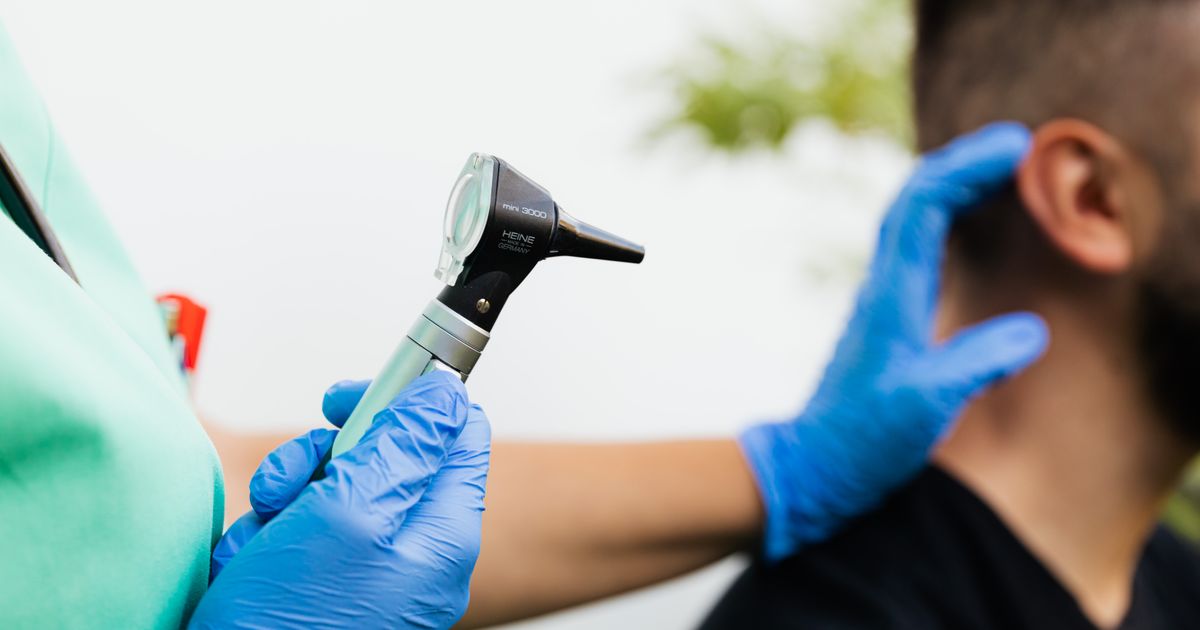
The eardrum, or tympanic membrane, is a thin sheet of tissue that separates the ear canal from the middle ear. Sound makes it vibrate, and three small bones called ossicles carry that vibration to the inner ear. The eardrum also keeps water and germs out of the middle ear.
A hole in the eardrum is called a perforation. Many small perforations heal by themselves within a few weeks. When a hole does not close, the ear may discharge again and again, particularly after a cold or when water enters, and hearing may be reduced. Tympanoplasty closes the hole with a graft, which acts as a scaffold for the eardrum to grow across. If the ossicles are damaged, they can be repaired in the same operation.
Other names for tympanoplasty
- Eardrum repair surgery
- Eardrum patch or perforated eardrum operation
- Tympanic membrane repair
- Myringoplasty (repair of the eardrum alone)
- Tympanomastoid surgery (when combined with mastoid surgery)
Why is tympanoplasty done?
- A perforation that has not healed after about three months, caused by infection, injury, a sudden pressure change, or an ear tube that left a hole
- Chronic otitis media, a long-standing middle ear infection with repeated ear discharge (otorrhoea)
- Conductive hearing loss due to the hole or to damaged ossicles
- To make the ear safe for water, so that bathing and swimming do not set off infections
- A badly retracted eardrum or cholesteatoma, where the eardrum is rebuilt after the disease is removed
In young children with fluid behind an intact eardrum, the usual operation is different: a tiny cut and a ventilation tube. That is explained on our ear tubes (myringotomy and tympanostomy) page.
Types of tympanoplasty
Surgeons classify the operation by how much of the hearing mechanism needs repair.
| Type | What is repaired | When it is used |
|---|---|---|
| Type 1 (myringoplasty) | Eardrum only | A perforation with healthy, mobile ossicles. This is the most common type. |
| Types 2 and 3 | Eardrum plus reconstruction of one or more ossicles | When infection has worn away part of the chain of bones. The bones are reshaped or replaced with a small implant (ossiculoplasty). |
| Types 4 and 5 | More extensive reconstruction of the sound pathway | Rarely needed today, for severe damage |
| Tympanoplasty with mastoidectomy | Eardrum repair together with clearing of the mastoid bone behind the ear | Cholesteatoma or infection that has spread into the mastoid (see mastoidectomy) |
Surgical approaches
- Through the ear canal: No external cut, or a very small one. Suited to smaller holes and wide canals. It can be done with a microscope or with a thin telescope called an endoscope.
- Behind the ear: A cut in the crease behind the ear gives a wide view. It is often chosen for large or front-placed holes and when the mastoid is treated.
- In front of or just above the ear canal opening: A small cut that widens access to the canal.
The graft is usually placed under the remaining eardrum (underlay) and sometimes over it (overlay). Fascia is thin and easy to shape. Cartilage is stiffer and is preferred for large holes, repeat surgery or a retracted drum.
Who is suitable, and who may not be?
You may be suitable if you have a persistent perforation that causes discharge or hearing loss, or if you want a safe, dry ear for swimming or for wearing a hearing aid.
Surgery may be postponed or not advised when:
- The perforation is recent and may still close by itself
- The ear is actively infected and discharging. Most surgeons prefer to treat the infection first, although surgery is sometimes done in a wet ear.
- Nose, sinus or allergy problems are uncontrolled, since poor ventilation of the middle ear lowers the chance of success
- The ear to be operated on is the only hearing ear. Surgery is then considered with great caution.
- A child is very young and still having frequent colds and ear infections. Many surgeons wait until this phase has passed.
- The hole is small, dry and causes no symptoms. Keeping the ear dry and regular checks may be enough.
How to prepare
Tests
- Examination of the ear under a microscope or endoscope
- A hearing test (pure tone audiometry) to record the type and degree of hearing loss in both ears
- Tympanometry in some cases
- A CT scan of the ear bone if cholesteatoma or mastoid disease is suspected
- Routine blood tests and a pre-anaesthetic check-up
Medicines to discuss
Tell your surgeon about all your medicines, including blood thinners, diabetes medicines and herbal supplements. Some may need to be stopped for a few days. Use ear drops only as prescribed.
On the day
- Follow the fasting instructions
- Wash your hair the night before, as you will not be able to wash it normally for a while
- Tell the team if you have a cold, cough or fever. Surgery may be postponed.
- Arrange for someone to take you home
How is tympanoplasty performed?
- Anaesthesia: General anaesthesia is given, or a numbing injection around the ear with sedation.
- Access: The surgeon works through the ear canal or makes a cut behind the ear. A little hair may be shaved.
- Preparing the eardrum: The edges of the hole are freshened so that new tissue can grow, and the remaining eardrum is gently lifted.
- Checking the middle ear: The ossicles are inspected and tested for movement. Any diseased tissue is removed.
- Repairing the ossicles: If needed, a damaged bone is reshaped or replaced with a small implant.
- Harvesting the graft: A small piece of fascia or cartilage is taken through the same cut or a tiny separate one.
- Placing the graft: The graft is positioned to cover the hole and supported with dissolvable sponge. The eardrum is laid back over it.
- Closure: The ear canal is packed with a dressing, any cut is stitched, and a head bandage may be applied overnight.
What happens afterwards?
You recover for a few hours and usually go home the same day or the next morning. Mild pain, a blocked feeling, crackling sounds and slight blood-stained discharge are normal. Hearing is often dull at first because of the packing. Mild dizziness or nausea can occur for a day. You will be given pain relief and sometimes antibiotics or ear drops. The packing is removed or dissolves over one to three weeks, and the surgeon checks the graft at follow-up visits.
Risks and complications
More common
- Temporary pain, ear fullness and blood-stained discharge
- Temporary change in taste on one side of the tongue, because a small taste nerve runs across the eardrum
- Numbness of the upper ear after a cut behind the ear, which usually fades over months
- Short-lived dizziness
Uncommon
- Failure of the graft, with the hole persisting or reopening
- Infection of the ear or wound
- No improvement in hearing, or hearing that is worse than before
- Ringing in the ear (tinnitus) that is new or louder
- Persistent vertigo
- Narrowing of the ear canal or a skin cyst forming behind the new eardrum
Rare
- Severe or total hearing loss in the operated ear
- Weakness of the face on that side from injury to the facial nerve, which is very rare in eardrum repair alone
Results: how well does it work?
In most people the graft takes and the hole closes after a first operation. Results are better for small, dry perforations with healthy ossicles and good nose and sinus health. They are less predictable for very large holes, ears that keep discharging, repeat operations, smokers and ears with poor ventilation.
A closed eardrum gives a dry, safe ear in the majority of people. Hearing improvement varies. It tends to be good when the only problem was the hole, and more modest when the ossicles needed reconstruction. Tympanoplasty does not correct hearing loss that comes from the inner ear or hearing nerve. If the first graft fails, a repeat operation, often with cartilage, is usually possible.
Recovery
- First week: Rest at home. Sleep with your head raised and the operated ear facing up. Change the cotton wool at the ear opening when it is soiled, without disturbing the packing inside.
- One to three weeks: Stitches, if any, are removed or dissolve. Packing is cleared. Many people return to desk work or school after about one to two weeks.
- Up to three months: The graft strengthens. A hearing test is usually repeated at about two to three months.
When to seek medical help
- Fever, or increasing pain, redness or swelling around the ear
- Heavy bleeding or thick, foul-smelling discharge
- Severe spinning dizziness or repeated vomiting
- Sudden drop in hearing or loud new ringing
- Weakness or drooping of the face
Life after tympanoplasty
- Keep the ear dry until your surgeon says it is healed. Use cotton wool lightly coated with a plain greasy ointment at the ear opening when bathing or washing hair.
- Do not blow your nose hard for a few weeks. If you sneeze, do so with your mouth open.
- Avoid straining, heavy lifting and contact sports for the period advised.
- Flying and travel to high altitude should wait until your surgeon clears you, usually after several weeks.
- Swimming and diving need specific clearance, often after two to three months.
- Do not put anything in the ear, including cotton buds and oil.
- Treat colds and allergies early and avoid tobacco smoke, which impairs middle ear health.
Benefits
- Stops or greatly reduces repeated ear discharge
- Often improves hearing
- Allows bathing and swimming without ear plugs once healed
- Lowers the risk of further damage to the middle ear from repeated infections
- Makes it easier to wear a hearing aid if one is still needed
What is the cost of tympanoplasty in India?
The cost depends on:
- Whether only the eardrum is repaired or the ossicles and mastoid are also treated
- The need for an ossicle implant
- Type of anaesthesia and length of surgery
- Day care or overnight stay, and room category
- Tests before surgery, such as audiometry and CT scan
- Follow-up visits and hearing tests
Costs vary from person to person. Please check with the hospital for actual prices.
Tympanoplasty for chronic ear disease is usually covered by health insurance, but confirm this with your insurer.
Why choose Apollo Hospitals for tympanoplasty?
- ENT surgeons who perform eardrum, ossicle and mastoid surgery in adults and children
- Audiology services for hearing assessment before and after surgery
- Operating microscopes for ear surgery and anaesthesia teams experienced in day care procedures
- CT imaging within the hospital network when the ear bone needs to be assessed
- Endoscopic ear surgery is not offered at every hospital. Availability differs between centres. Please check with the hospital.
To have your ear assessed, you can book an appointment with an ENT specialist at Apollo Hospitals.
Related reading
Questions to ask your doctor about tympanoplasty
- Could my perforation still heal without surgery?
- Do my hearing bones need repair as well?
- Will you operate through the ear canal or from behind the ear?
- Which graft will you use, and why?
- How much hearing improvement can I realistically expect?
- What is the chance that the graft will not take in my case?
- When can I wash my hair, fly and swim?
- What happens if the hole reopens?
FAQs
1. What is the difference between tympanoplasty and myringoplasty?
Myringoplasty repairs only the eardrum. Tympanoplasty is the wider term and also covers inspection and repair of the hearing bones. A type 1 tympanoplasty is the same as a myringoplasty.
2. Is tympanoplasty a major surgery?
It is a delicate operation done under magnification, but it is not major in terms of risk to general health. Most people go home within a day.
3. Is the operation painful?
You will not feel pain during surgery. Afterwards, discomfort is usually mild to moderate for a few days and settles with simple pain relief.
4. Will my hearing improve after tympanoplasty?
Often, but not always. Improvement is more likely when the hearing loss was caused by the hole alone. The main aim in many people is a dry, safe ear.
5. How long does the graft take to heal?
The graft usually seals within a few weeks and continues to strengthen for about three months.
6. When can I get the ear wet?
Only after your surgeon confirms that the eardrum has healed. Until then, protect the ear during every bath and hair wash.
7. When can I fly after tympanoplasty?
Pressure changes can disturb the graft. Most surgeons advise waiting several weeks. Ask at your follow-up visit before booking travel.
8. Can tympanoplasty be done in children?
Yes. The timing is decided individually, taking into account the child's age, how often infections occur and the state of the other ear.
9. Can both ears be operated on together?
Usually one ear is done at a time, starting with the worse ear. The second is operated on after the first has healed.
10. Will there be a visible scar?
With the ear canal approach there is no visible scar. A cut behind the ear heals as a fine line hidden in the crease.
11. What if the surgery fails?
If the hole persists or reopens, the ear is allowed to settle and a repeat operation can be planned, often with a cartilage graft.
12. Can a perforated eardrum heal without surgery?
Yes. Many small perforations from injury or a short infection close within weeks. Surgery is considered when the hole has not closed after about three months or keeps causing problems.
13. Can I use a hearing aid after tympanoplasty?
Yes. Once the ear has healed, a hearing aid can be fitted if hearing is still reduced. A dry ear makes hearing aid use easier.
14. Which doctor performs tympanoplasty?
An ENT surgeon (otolaryngologist) performs tympanoplasty. Some ENT surgeons specialise in ear surgery and are called otologists.
Conclusion
Tympanoplasty is a well-established operation for a hole in the eardrum that will not heal. It gives most people a dry, protected ear and often better hearing, though the hearing result depends on the condition of the hearing bones and the inner ear. Careful protection of the ear in the weeks after surgery makes a real difference to the outcome. An ENT surgeon can examine your ear and tell you whether surgery is likely to help.
This page is for general information and does not replace advice from your doctor. Treatment decisions should be made with a qualified specialist who knows your medical history.
Recently Added


ENT Specialists at Apollo Hospitals





Disclaimer:
The information provided on this page is intended for general informational and educational purposes only. While we make reasonable efforts to ensure that the information is accurate, reliable, and regularly reviewed, it should not be considered a substitute for professional medical advice, diagnosis, or treatment.
The suitability of a medical procedure, along with its benefits, risks, preparation, recovery, potential complications, and expected outcomes, may vary from person to person. Your healthcare professional will determine whether a procedure is appropriate based on your individual condition and medical history.
Please consult a qualified healthcare professional for personalized advice before making decisions regarding any medical procedure.
For more information about how our medical content is created, reviewed, updated, and maintained, please read our [Editorial Policy].
Disclaimer: This information is for educational purposes only and not a substitute for professional medical advice. Always consult your doctor for medical concerns.




