


아폴로 편집팀 검토 완료
빠른 답변
Childhood immunisation is the planned series of vaccines given from birth through adolescence to protect children against serious infections such as tuberculosis, polio, diphtheria, whooping cough, tetanus, hepatitis B, measles and others. In India, vaccines are given at birth, at around 6, 10 and 14 weeks, at 9 to 12 months, in the second year, at school entry and again in adolescence. National and paediatric academy schedules are updated from time to time, so follow the schedule given by your paediatrician and keep the vaccination card safe.
| 중요한 사실 | 세부 정보 |
|---|---|
| 그것이 무엇인지 | A schedule of vaccines that builds protection against specific infections |
| 시작할 때 | At birth, with further doses through infancy, childhood and adolescence |
| How vaccines are given | Injection in the thigh or upper arm, or drops by mouth |
| 흔한 부작용 | Mild fever, soreness or swelling at the injection site, fussiness for a day or two |
| 심각한 반응 | Rare; children are observed for a short time after each vaccine |
| 놓친 복용량 | Can usually be caught up without restarting the series |
| Who gives it | Paediatrician or trained nurse at a hospital, clinic or government health centre |
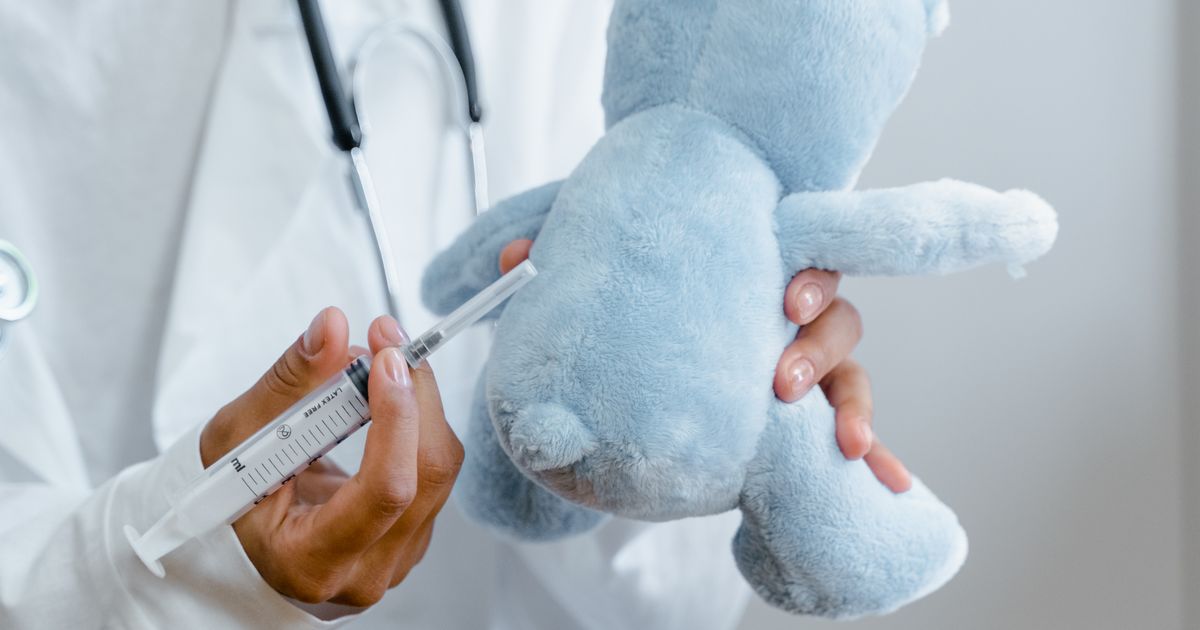
What is childhood immunisation?
Immunisation is the process of protecting a person against an infection by giving a vaccine. A vaccine contains a weakened or killed germ, or a small part of it, that cannot cause the full disease but teaches the body's defence system to recognise the germ. If the child meets the real infection later, the body responds quickly and the illness is prevented or made much milder.
Babies are born with some protection passed on from the mother, but it fades in the first months of life. The vaccination schedule is timed to protect children at the ages when they are most at risk. Several doses are needed for many vaccines because protection builds step by step, and booster doses keep it going.
Other names for childhood immunisation
- Childhood vaccination
- Baby vaccination schedule or vaccination chart
- Routine immunisation
- Universal Immunisation Programme vaccines
- Child vaccine schedule in India
Why is immunisation done? Diseases it prevents
Vaccines in the childhood schedule protect against infections that can cause death or lasting disability. These include:
- 결핵, especially its severe forms in young children (BCG vaccine)
- 소아마비, which can cause paralysis
- B 형 간염, a liver infection that can become lifelong
- 디프테리아, whooping cough (pertussis) 파상풍
- Haemophilus influenzae type b (Hib) and 폐렴 구균 질환, 원인 폐렴 수막염
- 로타 바이러스, a common cause of severe diarrhoea in infants
- 흥역, 유행성 이하선염 and rubella. Rubella in pregnancy can harm the unborn baby (see 선천성 풍진 증후군)
- Japanese encephalitis, a brain infection, in districts where it occurs (see 뇌염)
- A 형 간염, 장티푸스, 수두 영향
- Human papillomavirus (HPV), which can lead to 자궁 경부암 and other cancers later in life
Types of vaccines and the schedule by age
백신의 종류
- Live weakened vaccines: contain a weakened form of the germ. Examples are BCG, oral polio, rotavirus, measles containing vaccines and chickenpox vaccine.
- Inactivated (killed) vaccines: for example injectable polio vaccine and hepatitis A vaccine.
- Toxoid vaccines: protect against the toxin made by the germ, as in diphtheria and tetanus.
- Subunit and conjugate vaccines: contain only parts of the germ, as in hepatitis B, Hib, pneumococcal, typhoid conjugate and HPV vaccines.
- Combination vaccines: several vaccines in one injection, which reduces the number of pricks.
Two schedules in India
India has a national schedule under the Universal Immunisation Programme, with vaccines provided through government health services. The national academy of paediatricians publishes its own recommended schedule, which includes the programme vaccines and some additional ones. The two differ in a few vaccines and timings, and both are revised periodically. Your paediatrician will give you a dated plan for your child.
General schedule by age band
| 연령대 | Vaccines usually given (general guide) |
|---|---|
| 태어날 때 | BCG, first dose of oral polio vaccine and the birth dose of hepatitis B |
| Around 6, 10 and 14 weeks | Primary series against diphtheria, whooping cough, tetanus, hepatitis B and Hib (often as one combined injection), polio vaccine, rotavirus vaccine and pneumococcal vaccine |
| 6 개월부터 | Some schedules add influenza vaccine, repeated yearly, and typhoid conjugate vaccine |
| 9 개월 12 | First dose of a measles containing vaccine (measles and rubella, or measles, mumps and rubella); Japanese encephalitis vaccine in affected districts; some schedules begin hepatitis A vaccine after the first birthday |
| Second year (about 15 to 24 months) | Booster doses of the diphtheria, whooping cough and tetanus vaccine and polio vaccine; second dose of measles containing vaccine; some schedules add chickenpox vaccine and further doses of other vaccines |
| 4 ~ 6 년 | School entry boosters, including diphtheria, whooping cough and tetanus, with other doses as per the schedule followed |
| 9 ~ 16 년 | Tetanus and diphtheria boosters at around 10 and 16 years; HPV vaccine, usually started between 9 and 14 years |
This table is a broad guide only. Exact ages, the number of doses and the choice of vaccine depend on the schedule being followed, the products used and your child's health. Always go by the dates written on your child's vaccination card.
Who should be immunised, and who may need a change of plan?
Every child should receive the recommended vaccines unless there is a specific medical reason not to. Premature and low birth weight babies are generally vaccinated according to their actual age from birth, with any adjustments decided by the baby's doctor (see 조산).
Who may not be suitable, or may need a delay
- A child who had a severe allergic reaction (see 과민증) to an earlier dose of the same vaccine or to one of its ingredients should not receive that vaccine again.
- Children with a severely weakened immune system, for example from certain inherited conditions, cancer treatment or high dose steroid treatment, may not be able to have live vaccines. Other vaccines are usually still given.
- A child with a moderate or severe illness, or high fever, is usually vaccinated after recovery.
A mild cold, mild cough, mild diarrhoea, breastfeeding, a family history of allergy or a previous mild reaction such as fever are not reasons to postpone vaccination.
How to prepare for your child's vaccination
Things to check and bring
- Bring the vaccination card or record book to every visit.
- No blood tests or scans are routinely needed before vaccination.
- Note any reaction after earlier vaccines and tell the doctor.
Medicines and conditions to discuss
- Any known allergies, including to foods or previous vaccines
- Any long term illness, seizures or immune problems in the child, or in close family members living in the same home
- Medicines the child is taking, especially steroids or treatment that affects immunity
- Whether to use a fever reducing medicine afterwards; do not give one beforehand unless the doctor advises it
당일
- Feed your baby as usual. Breastfeeding during or just after the injection can comfort the baby.
- Dress the child in loose clothes that give easy access to the thighs or upper arms.
- Bring a favourite toy, and tell older children honestly that there will be a brief prick.
How is immunisation carried out?
- Record check: the nurse or doctor checks the child's age and vaccination card to see which vaccines are due.
- 건강 검진: the doctor asks about recent illness, allergies and previous reactions, checks growth and examines the child if needed.
- 설명 : you are told which vaccines will be given, what they protect against and what side effects to expect.
- Checking the vaccine: the name, batch and expiry date are checked. Vaccines are kept cold in monitored refrigerators until use.
- Giving the vaccine: you hold the child securely on your lap. Injections are given in the outer thigh in babies and the upper arm in older children. Oral vaccines are given as drops into the mouth. BCG is given into the skin of the upper arm.
- 관측: you are asked to wait at the clinic for a short time, often about half an hour, so that any immediate reaction can be treated.
- 녹음: the vaccine, batch number and date are written on the card, along with the date of the next visit.
그 이후에는 무슨 일이 일어나나요?
Most children are back to normal within a day or two. The injection site may be red, swollen or tender. A mild fever and irritability are common, and some babies feed a little less or sleep more. After a measles containing vaccine, a mild fever or faint rash can appear about a week later. After BCG, a small raised spot forms at the site some weeks later, may ooze and then heals to leave a small scar. This is expected and needs no treatment; keep it clean and dry and do not apply creams.
Risks and side effects of vaccines
흔하고 경미함
- Pain, redness or swelling where the injection was given
- 온화한 열
- Fussiness, drowsiness or reduced appetite for a day or two
- Loose stools after rotavirus vaccine
흔하지 않거나 드문
- High fever, sometimes with a fit caused by fever (see 열성 경련), which is frightening but usually harmless
- Prolonged crying for a few hours
- Severe allergic reaction, which is very rare and is treated immediately at the clinic
- A form of bowel blockage called intussusception, very rarely, after rotavirus vaccine
- Swollen glands or an abscess near the BCG site
The risk of serious harm from vaccines is far lower than the risk from the diseases they prevent. Large studies have found no link between vaccines and 자폐성.
Results: how well does immunisation work?
Vaccines are among the most effective tools in child health. Smallpox has been eradicated worldwide and India has been certified free of polio, both through vaccination. No vaccine protects every child completely, and protection differs between vaccines. BCG, for example, protects young children mainly against severe forms of tuberculosis and does not prevent all tuberculosis. A vaccinated child who does catch an infection usually has a milder illness. Completing all doses on time gives the fullest protection.
가정에서의 회복 및 관리
- Offer extra breastfeeds or fluids.
- Use a clean, cool, damp cloth on a sore injection site. Do not rub or massage it.
- Dress the child lightly if there is fever.
- Give a fever reducing medicine only in the dose advised by your doctor.
의학적 도움을 구할 때
- Difficulty breathing, wheezing, swelling of the face or lips, or widespread rash
- The child is limp, very pale, unusually drowsy or hard to wake
- A fit or seizure
- High fever, or any fever in a baby under three months
- Crying that cannot be soothed for more than three hours
- Repeated vomiting, blood in the stool or severe tummy pain, especially after rotavirus vaccine
- Redness or swelling at the site that keeps spreading after two days
Life after vaccination: keeping your child on schedule
- Keep the vaccination card safely and carry a photo of it on your phone. It is needed for school admission and travel.
- Note the next due date before leaving the clinic and set a reminder.
- If a dose is missed, see the doctor as soon as you can. In most cases the series continues from where it stopped.
- Ask about vaccines needed before travel abroad, during outbreaks or for children with long term illness.
- Remember adolescent doses; these are easily forgotten once regular baby visits end.
Benefits of childhood immunisation
- Protects the child against serious and sometimes fatal infections
- Reduces hospital admissions, disability and time lost from school
- Protects newborns, pregnant women and people with weak immunity by reducing spread
- Prevents some cancers later in life, through hepatitis B and HPV vaccines
What is the cost of childhood immunisation in India?
Vaccines in the national programme are provided free of charge at government health facilities. In private hospitals and clinics the cost depends on several factors:
- Which vaccines are due at the visit, and whether additional vaccines outside the national programme are chosen
- Whether combination vaccines are used
- The brand and manufacturer
- Consultation and administration charges
- 병원과 도시
비용은 개인마다 다릅니다. 정확한 가격은 병원에 문의하십시오.
Some health insurance policies with maternity and newborn cover include vaccination in the first year; check your policy for details.
Why choose Apollo Hospitals for childhood immunisation?
- Vaccines are given by paediatricians and trained nurses after a health check.
- Vaccines are stored under temperature controlled conditions.
- Each vaccine is recorded with batch details, and the next due date is given.
- Paediatric emergency care is available on site should a reaction occur.
- 각 센터별로 이용 가능 여부가 다릅니다. 병원에 문의해 주십시오.
To plan your child's vaccines, you can book an appointment with a paediatrician 아폴로 병원에서.
관련 독서
Questions to ask your doctor about your child's vaccines
- Which schedule are you following for my child?
- Which vaccines are due today, and what do they protect against?
- Are there additional vaccines you recommend, and why?
- Can some of today's vaccines be given as a combination?
- What side effects should I expect, and how should I manage fever?
- My child missed a dose; how do we catch up?
- Does my child's medical condition change which vaccines can be given?
- When is the next visit?
자주 묻는 질문
1. Why do babies need so many vaccines so early?
Young babies are the most likely to become seriously ill from these infections, and the protection they receive from the mother fades within months. Early doses protect them during this period.
2. Is it safe to give several vaccines on the same day?
Yes. A child's immune system handles many germs every day, and giving recommended vaccines together does not overload it or reduce their effect. It also means fewer clinic visits.
3. What should I do if my child misses a vaccine?
See your paediatrician as soon as possible. In most cases the missed dose is given and the series continues; it does not have to be started again.
4. Can my child be vaccinated with a cold or mild fever?
Yes, a mild illness is not a reason to delay. If the child has a high fever or is clearly unwell, the doctor may postpone the vaccine until recovery.
5. Is fever after vaccination normal?
A mild fever for a day or two is common and shows the body is responding. Seek advice if the fever is high, lasts beyond two to three days or the child seems very unwell.
6. What is the difference between the government schedule and the paediatric academy schedule?
The government programme provides a core set of vaccines free of charge. The paediatric academy schedule includes these and recommends some additional vaccines. Your doctor can explain both.
7. Are painless vaccines as good as regular ones?
So called painless vaccines use a different whooping cough component that causes less fever and soreness. Both types protect against the disease. Your paediatrician can explain the differences and help you choose.
8. Is the scar after BCG vaccine normal?
Yes. A small spot appears some weeks after the injection, may form a small sore and heals to leave a scar. If no scar forms, ask your doctor; it does not always mean the vaccine failed.
9. Do vaccines cause autism?
No. Large studies involving many children have found no link between vaccines and autism.
10. Can premature babies be vaccinated on time?
In general, yes. Premature babies are usually vaccinated at the same age after birth as other babies, because they are at higher risk from infections. The baby's doctor will advise on any changes.
11. My child had oral polio drops in a campaign. Are routine doses still needed?
Yes. Campaign doses are extra doses and do not replace the routine schedule.
12. Do older children and teenagers need vaccines?
Yes. Booster doses against tetanus and diphtheria are given at around 10 and 16 years, and HPV vaccine is recommended from 9 years. Catch up doses of other vaccines may also be advised.
13. Can a child with allergies be vaccinated?
Most children with allergies, asthma or eczema can receive all vaccines. Tell the doctor about any severe allergic reaction in the past so that the right precautions are taken.
14. Which doctor gives childhood immunisation?
Vaccines are advised and given by a paediatrician, or by a trained nurse under the paediatrician's supervision. Government health centres also provide routine vaccines.
맺음말
Childhood immunisation protects children from infections that were once common causes of death and disability. Vaccines are given in a planned sequence from birth to adolescence, side effects are usually mild, and serious reactions are rare. Schedules are updated from time to time, so follow the plan given by your paediatrician, keep the vaccination record safe and make up any missed doses promptly.
이 페이지는 일반적인 정보를 제공하기 위한 것이며 의사의 진료를 대체할 수 없습니다. 치료 결정은 환자의 병력을 잘 아는 자격을 갖춘 전문의와 상의하여 내려야 합니다.
최근에 추가


Paediatricians at Apollo Hospitals


부인 성명:
이 페이지에 제공된 정보는 일반적인 정보 제공 및 교육 목적으로만 사용됩니다. 당사는 정보의 정확성, 신뢰성 및 정기적인 검토를 위해 합리적인 노력을 기울이지만, 전문적인 의료 조언, 진단 또는 치료를 대신하는 것으로 간주해서는 안 됩니다.
의료 시술의 적합성, 이점, 위험, 준비 과정, 회복 과정, 잠재적 합병증 및 예상 결과는 개인마다 다를 수 있습니다. 의료 전문가는 환자의 개별적인 상태와 병력을 바탕으로 시술이 적절한지 여부를 판단할 것입니다.
어떠한 의료 시술과 관련된 결정을 내리기 전에 반드시 자격을 갖춘 의료 전문가와 상담하여 개인적인 조언을 받으시기 바랍니다.
저희 의료 콘텐츠의 제작, 검토, 업데이트 및 관리 방식에 대한 자세한 내용은 [편집 정책] 을 참조하십시오.




