





Could not find what you are looking for?
Cerebral Palsy - Causes, Symptoms, Types, Risks, Diagnosis, Treatment and Prevention

Cerebral palsy (CP) refers to a group of neurological disorders that appear in infancy or the early childhood and permanently affect the body movement, muscle tone, posture and coordination. Cerebral palsy (CP) is caused by abnormalities inside or damage to the developing brain which disrupt the ability of our brain to control the movement and maintain posture as wells balance. The term cerebral refers to the brain; palsy refers to the loss or impairment of motor function.
Cerebral Palsy Causes
Cerebral palsy is mostly caused due to a disruption in the development of the brain during birth. However, the cause of this disruption or abnormality is not known. Several factors that lead to the condition include:
- Random mutation in the genes controlling development of brain.
- Maternal infection affecting the development of fetus.
- Infant infection causing brain inflammation.
- Traumatic head injury including birth injuries.
- Fetal stroke leading to disruption in blood flow, thus hampering development of brain.
- Lack of oxygen
Cerebral Palsy Symptoms
Cerebral palsy symptoms vary and can be found in early childhood. The ones affected by cerebral palsy may face movement problems such as:
- Stiff and floppy muscles
- Rigidity in movement of muscles
- Involuntary movements
- Excessive swallowing or drooling
- Difficulty in speaking
- Difficulty in holding objects
- Difficulty in walking
- Difficulty in writhing movements
Other abnormalities with cerebral palsy lead to neurological problems. Persons having cerebral palsy may also suffer from:
- Blindness
- Deafness
- Oral problems
- Intellectual disability
- Seizures
- Psychiatric health problems
What are the types of cerebral palsy?
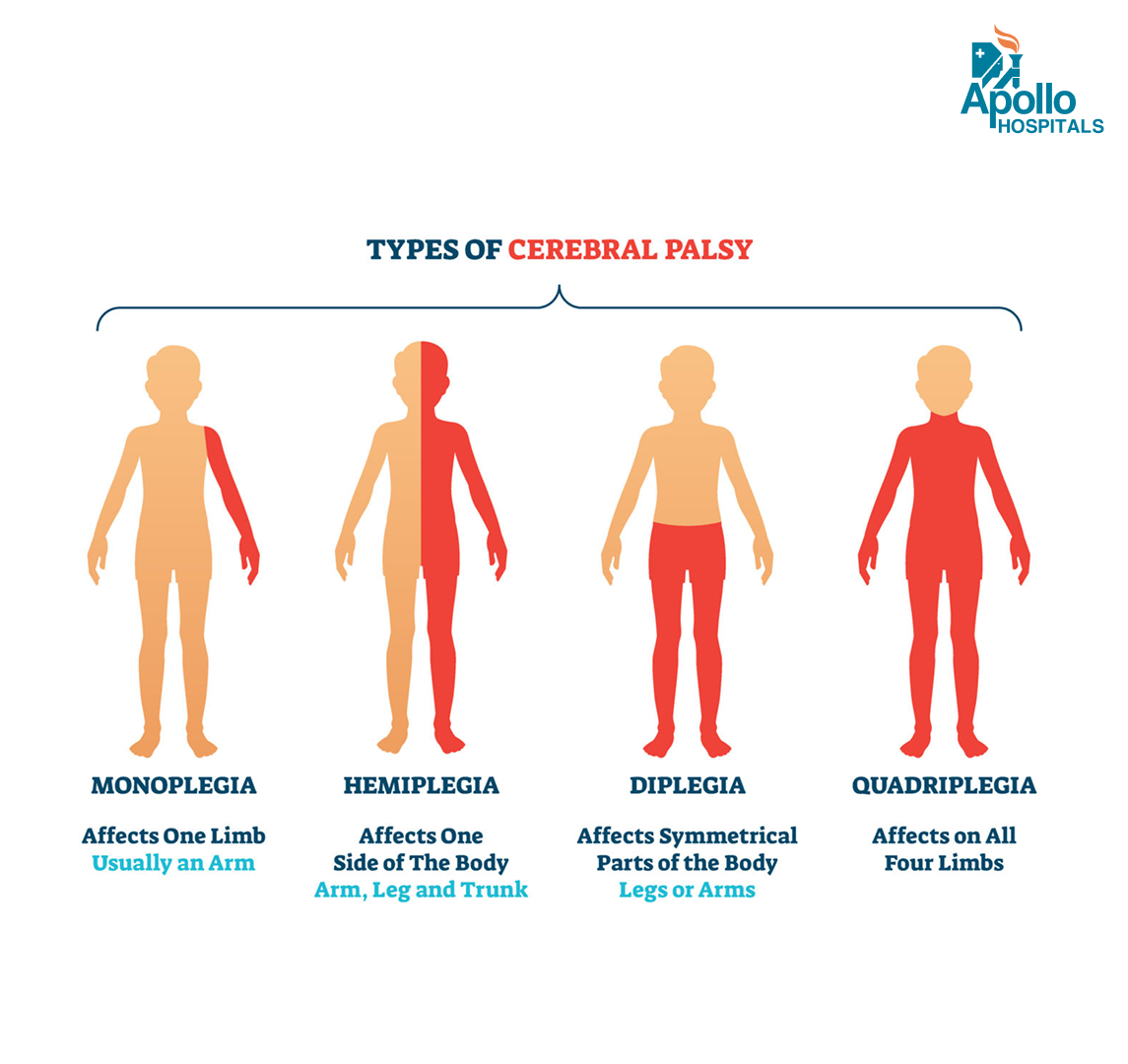
CP is divided into four main types, depending on the movement involved.
Spastic cerebral palsy
Spastic cerebral palsy is the most common type of CP that causes muscle stiffness or spasm that can cause trouble while walking, speech problems, and seizures.
Spastic cerebral palsy is divided into three groups:
- Spastic diplegia – leads to muscle stiffness in the legs
- Spastic hemiplegia – affects the half side of the body
- Spastic quadriplegia – affects all four limbs, along with the torso and the face
Dyskinetic cerebral palsy

Dyskinetic cerebral palsy can cause the muscle to either tighten or loosen. If the face or mouth muscles are impacted, it can cause speech problems, frowning, and drooling.
Dyskinetic cerebral palsy is divided into three groups:
- Athetoid – twisted, slow, and curvy movements
- Choreoathetoid – aimless and uncontrolled movements
- Dystonic – muscle tone is not normal
Ataxic cerebral palsy
Ataxic cerebral palsy is an unusual type of CP that impacts coordination and balance. That can cause body shakiness, making it difficult to do tasks that require steadiness.
Mixed cerebral palsy
Mixed cerebral palsy occurs when more than one type of symptom is present. Mostly mixed CP is a combination of spastic and dyskinetic types.
Associated Impairments

Cerebral palsy primarily affects movement and posture, but many individuals also experience additional challenges known as associated impairments. These impairments vary in severity and may impact several areas of development, daily functioning, and overall health. Identifying and addressing these conditions is essential for creating a well-rounded treatment plan and improving the individual’s quality of life.
Common Associated Impairments
- Sleep Disorders: Difficulty falling asleep or staying asleep is common and may be linked to pain, seizures, or breathing issues.
- Behavior Disorders: Challenges with emotional regulation, hyperactivity, or social behavior may be present.
- Intellectual Impairment: Some children may experience learning difficulties or developmental delays.
- Vision Impairment: Strabismus (crossed eyes), poor depth perception, or partial vision loss can occur.
- Breathing Difficulties: Weak chest muscles and poor posture can make breathing less efficient.
- Saliva Control Problems: Difficulty in managing saliva may result in drooling, increasing the risk of skin irritation and infection.
- Bladder Control Problems: Some individuals may have difficulty with urinary continence.
- Unable to Talk: Speech and language delays or impairments may make verbal communication difficult.
- Unable to Walk: Motor impairments may prevent independent walking.
- Epilepsy: Seizure disorders are more common in individuals with cerebral palsy.
Early diagnosis and intervention for these associated impairments can significantly enhance the effectiveness of therapy and improve long-term outcomes. A multidisciplinary approach involving neurologists, speech and occupational therapists, psychologists, and other specialists is often required to address these challenges comprehensively.
Cerebral Palsy Diagnosis
A doctor specializing in treating brain and nerves disorder (neurologist) will recommend tests to diagnose cerebral palsy. These tests include:
- MRI (Magnetic resonance imaging): It helps in identifying abnormalities and lesions.
- Cranial ultrasound: It helps in primary examination of brain.
- CT (Computerized tomography) scan: It helps in identifying abnormalities.
- Electroencephalogram (EEG): If the person suffers from seizures and epilepsy, EEG test helps in determining cerebral palsy.
Doctor may recommend more tests to diagnose conditions such as blood clotting, vision and hearing impairment, intellectual disabilities, etc.
When should you see a doctor?
It’s crucial to get an immediate diagnosis if you notice a movement disorder or delay in your child’s development. Visit a doctor if you have concerns regarding swallowing difficulties, abnormal muscle tone, impaired coordination, or developmental issues.
If the doctor or pediatrician suspects CP, he will check the signs and symptoms, monitor growth and development, review the child’s medical history, and conduct a physical examination. The doctor might recommend several tests like brain scans, electroencephalogram (EEG), blood test, urine test, or skin test.
Call 1860-500-1066 to book an appointment
What are the risk factors related to cerebral palsy?
Several risk factors increase the chance of developing CP, include:
- Maternal health: Specific infections, or toxic exposures at the time of pregnancy can greatly increase the risk of CP for the baby. Examples of infections include cytomegalovirus, German measles, herpes simplex, syphilis, toxoplasmosis, and Zika virus infection. Certain conditions, such as thyroid problems, intellectual disabilities or seizures, and exposure to toxins, also increase the risk.
- Infant illness: Illnesses in a newborn infant that can greatly increase the risk of CP include bacterial meningitis, viral encephalitis, bleeding into the brain and severe jaundice.
- Additional factors with increased CP risk include breech presentation, low birth weight, and premature birth.
What are the treatments for cerebral palsy?
Along with a pediatrician and a pediatric neurologist, children and adults with CP require long-term medical care under the supervision of a therapist and mental health specialists.
Several treatment options are available to support children with CP to live productive lives:
- Medications: Medicines that help reduce muscle tightness might be used to enhance functional abilities, treat pain, and manage complications related to spasticity or other CP symptoms.
- Injections: At times, medical experts recommend muscle or nerve injections to treat the tightening of a specific muscle. The shot is generally given every three months. The side effects of these injections include mild flu-like symptoms to more serious effects like difficulty in breathing and swallowing.
Therapies:
- Physical therapy. Muscle training and exercises help the child develop strength, flexibility, balance, motor development, and mobility. Supportive equipment such as braces or splints is often recommended to improve walking, and to stretch the stiff muscles.
- Occupational therapy. Occupational therapists work to help the child gain independence in daily activities and routines at home, school, and community. Therapists also recommend adaptive equipment, including walkers, electric wheelchairs, quadrupedal canes, or seating systems.
- Speech and language therapy. Speech-language pathologists train the child to speak audibly or to communicate using sign language. They also help children learn to operate communication devices, such as computer and voice synthesizers. Speech therapists can also tackle problems with eating and swallowing.
- Recreational therapy. Adaptive recreational or sports activities like swimming, dance, craft, etc. can help improve the child’s motor skills, speech, and overall well-being.
Surgical Procedures: In certain cases, surgery may be recommended to reduce spasticity or to correct related bone abnormalities. These treatments include:
- Orthopedic surgery. It is usually performed to place the deformed arms, hips, or legs in their correct positions to improve mobility, along with strengthening the muscles and tendons that are shortened by contractures.
- Cutting nerve fibers. In this procedure, the nerves connecting the spastic muscles are surgically cut to reduce pain.
What are the measures to prevent cerebral palsy?
Generally, cases of CP can’t be prevented, but the risk can be lessened. Follow these steps to stay healthy and minimize pregnancy complications:
- Getting vaccinated against infections
- Maintain a healthy lifestyle and diet
- Seek early and continuous prenatal care
- Avoid alcohol and tobacco
- Also, practice safety measures to prevent head injuries to the newborn
- Can cerebral palsy accelerate aging?
CP condition puts an enormous amount of strain on the body, which can intensify with age, leading to premature aging. Physical challenges such as increased spasticity, fatigue, loss of strength, and declining mobility also increase stress and anxiety levels that accelerate the aging process. Therefore, it is important to build a positive attitude and relaxation techniques to cope with the condition.
Conclusion
Living with CP can be challenging and different for every child. There’s currently no medical treatment that can cure CP, but medications and therapies can help every child grow and develop to his or her greatest potential.

 Best Hospital Near me Chennai


