


Yawunikidwa ndi Gulu Lolemba la Apollo
Yankho lofulumira
Lung cancer screening is a yearly low-dose CT scan of the chest for people who feel well but have a high risk of lung cancer, mainly because of long-term heavy smoking. The aim is to find cancer early, when it is small and can often be removed. The scan takes a few minutes, needs no injection and is painless. Screening lowers the chance of dying from lung cancer in high-risk people, but it also produces false alarms and uses a small amount of radiation, so it is not advised for everyone.
| Mfundo zazikuluzikulu | tsatanetsatane |
|---|---|
| Mayeso ogwiritsidwa ntchito | Low-dose CT (LDCT) scan of the chest |
| Ndi yandani | Adults at high risk, mainly older current or former heavy smokers, with no symptoms |
| Mochuluka motani | Usually once a year while you remain eligible |
| Nthawi yatengedwa | A few minutes on the scanner |
| Kukonzekera | No fasting, no injection, no contrast dye |
| Mafunde | Much lower than a standard chest CT, higher than a chest X-ray |
| Choyipa chachikulu | Many small spots are found that are not cancer and need follow-up |
| Ordered by | A pulmonologist or physician after a risk assessment |
What is lung cancer screening?
Screening means testing people who have no symptoms in order to find a disease before it causes trouble. Matenda a khansa often causes no symptoms until it has grown or spread, and by then treatment is less likely to cure it. Screening tries to find it earlier.
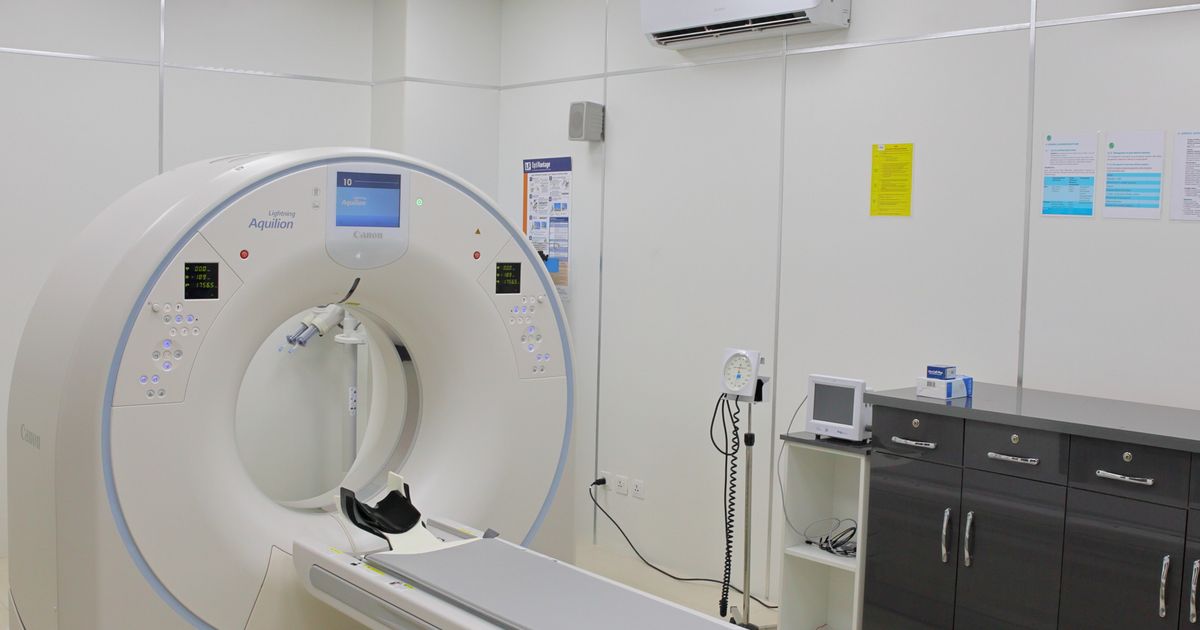
The only test recommended for lung cancer screening is a low-dose CT scan. A CT scan uses X-rays and a computer to make detailed pictures of the lungs in thin slices. The low-dose version uses far less radiation than a routine CT and can still show spots (nodules) only a few millimetres across. Screening is not a one-time test. It works as a programme of yearly scans, with clear rules for following up anything that is found.
Other names for lung cancer screening
- Low-dose CT scan (LDCT)
- Low-dose CT chest or LDCT thorax
- Lung screening CT
- Lung health check
- CT screening for lung cancer
- Smoker's lung scan (informal)
Why is lung cancer screening done?
- To find cancer early: early-stage lung cancer can often be treated with surgery or focused radiotherapy with the aim of cure.
- To lower deaths from lung cancer: large trials in heavy smokers have shown fewer deaths from lung cancer in people screened with low-dose CT than in people who were not screened or who had chest X-rays.
- To offer help with stopping smoking: a screening visit is a good time to get support to quit, which protects the lungs and heart more than any scan.
Screening does not prevent lung cancer. It does not find every cancer, and it does not replace seeing a doctor when you have symptoms.
Ndani ayenera kuyesedwa?
Screening helps only when the risk of lung cancer is high enough to outweigh the harms of testing. International guidelines generally advise screening for people who meet all of the following:
- Age: roughly 50 to 80 years. The exact range differs between guidelines.
- Heavy smoking history: often defined as 20 pack-years or more. One pack-year is equal to smoking one pack of cigarettes a day for one year. Your doctor will work this out with you, including bidi and other forms of smoked tobacco.
- Current smoker, or stopped within about the last 15 years.
- Fit enough for treatment: well enough to have surgery or other treatment if a cancer is found.
Your doctor may also take into account other risk factors, such as COPD or emphysema, lung scarring (pulmonary fibrosis), long exposure to asbestos (see asbestosis) or other workplace dusts and fumes, a close relative with lung cancer, or an earlier cancer. India does not have a single national screening programme for lung cancer at present, so the decision is made individually with your doctor.
Who may not benefit from screening
- People who have never smoked and have no other strong risk factor. The benefit of screening in this group is unproven, even though lung cancer does occur in non-smokers.
- People younger than the advised age range.
- People with serious illness who could not have, or would not want, treatment for lung cancer.
- People who had a chest CT recently for another reason.
- People who already have symptoms. They need diagnostic tests, not screening.
Screening tests compared
Low-dose CT is the only method shown to reduce deaths from lung cancer. A X-ray pachifuwa and sputum tests miss too many early cancers and are not recommended for screening. Blood tests for lung cancer screening are still being studied and are not proven.
| mbali | CT yotsika mtengo | Pesi X-ray | Standard chest CT |
|---|---|---|---|
| Use in screening | Recommended for high-risk people | Zosavomerezeka | Not used for screening |
| tsatanetsatane | Shows very small nodules | Misses small or hidden nodules | Highest detail |
| Mafunde | Low | Otsika kwambiri | Pamwamba |
| Kulowetsa kosiyana kwa zinthu | Ayi | Ayi | Nthawi zambiri inde |
| Cholinga chachikulu | Yearly check in people without symptoms | First test for chest symptoms | Working out a known problem |
How to prepare for a low-dose CT scan
Musanayambe buku
Screening should start with a conversation, often called shared decision-making. Your doctor will review your smoking history and health, explain the possible benefits and harms, and check that you are willing to return for yearly scans and any follow-up tests.
Zinthu zoti muuze dokotala wanu
- Any new cough, coughing up blood, breathlessness, chest pain or weight loss.
- A recent chest infection. The scan is usually delayed for some weeks after chibayo or a bad chest infection, because infection can leave temporary shadows.
- Past tuberculosis or other lung disease, and where earlier chest scans were done, so that old and new pictures can be compared.
- If you could be pregnant.
- All medicines you take. They do not normally need to be stopped for this scan.
Patsikulo
- Eat and drink as usual.
- Wear comfortable clothes without metal around the chest. You may be asked to change into a gown and remove jewellery.
- Bring earlier scans and reports.
Kodi sikaniyo imachitika bwanji?
- Lembetsani: staff confirm your details and that you have no symptoms of a chest infection.
- Kuyika: you lie on your back on a narrow table with your arms raised above your head.
- Moving into the scanner: the table slides through a short, open ring. It is not an enclosed tunnel.
- Kugwira mpweya: you are asked to breathe in and hold your breath for a few seconds while the pictures are taken. Keeping still gives clear images.
- Kumaliza: the table slides out. No needle or dye is used.
- lipoti: a radiologist studies the pictures, measures any nodules and compares them with earlier scans.
The scan itself is over in under a minute, and the whole visit is short. You feel nothing during the scan.
Kodi chimachitika ndi chiyani pambuyo pa scan?
You can go home, eat, drive and work straight away. The report is usually sent to your doctor within a few days. Ask how you will receive the result and make sure you have a follow-up appointment to discuss it.
Kodi zotsatira zimatanthauza chiyani?
Radiologists use a standard scoring system to grade what they see and to advise the next step.
- Negative or normal: no nodules, or only nodules with clearly harmless features. Next scan in one year.
- Probably harmless: a small nodule with a very low chance of being cancer. A repeat low-dose CT is advised after some months to confirm that it is not growing.
- Zokayikitsa: a larger or growing nodule, or one with worrying features. More tests are advised, such as a standard CT, a PET-CT scan kapena biopsy.
- Zina zomwe zapezeka: the scan may also show emphysema, calcium in the heart arteries, enlarged glands or changes in other organs. Some need attention and many do not.
Kupeza pulmonary nodules is very common, and the large majority are not cancer. Most are small scars from old infections or harmless benign growths. A nodule that stays the same size over time is very unlikely to be cancer.
If a biopsy is needed, it may be done with a needle through the chest wall under CT guidance (Kufufuza motsogozedwa ndi CT), through the airways (bronchoscopy or endobronchial ultrasound), or by keyhole surgery (VATS).
Risks and limits of screening
Zowonjezereka kwambiri
- Zabwino zabodza: the scan shows something that looks suspicious but turns out not to be cancer. This leads to extra scans and sometimes to a biopsy, with worry while you wait. In India, old tuberculosis and other infections leave scars and nodules in many people, which can make false positives more frequent.
- Zomwe zapezeka mwadzidzidzi: unrelated findings that lead to further tests, some of which turn out to be unnecessary.
- nkhawa while waiting for results or repeat scans.
Zochepa kwambiri
- Complications of follow-up tests: a lung biopsy can cause bleeding or a mapapu ogwa. A few people have surgery for a nodule that proves harmless.
- Kuzindikira matenda mopitirira muyeso: finding a slow-growing cancer that would never have caused harm in the person's lifetime, which is then treated.
- False negatives: a cancer can be missed, or can appear and grow between yearly scans.
- Magetsi: see below.
Radiation dose in plain terms
Every CT scan uses X-rays. A low-dose screening CT uses only a fraction of the radiation of a standard chest CT, and it is in the same range as the natural background radiation everyone receives from the environment over some months. It is more than a single chest X-ray. Any radiation carries a very small theoretical risk of causing cancer many years later, and this adds up with repeated scans. For people at high risk of lung cancer, this small risk is outweighed by the benefit of finding cancer early. For people at low risk, it is one reason why screening is not advised.
How well does screening work?
In large studies of older heavy smokers, yearly low-dose CT screening lowered the number of deaths from lung cancer compared with no screening or chest X-ray. Cancers found by screening are more often at an early stage. These results apply to high-risk people who attend every year and have nodules managed by an experienced team. Screening has not been shown to help people at low risk.
Screening is not a guarantee. Some cancers are found late in spite of screening, and a normal scan this year does not rule out cancer in the future.
After your result: follow-up and warning signs
- Keep your yearly appointment. The benefit comes from regular scans, not from a single one.
- If you are asked to return early for a repeat scan, do attend. It is usually a precaution.
- Keep copies of all reports and images so that scans can be compared, even if you change hospitals.
- Screening usually stops when you pass the upper age limit, have been smoke-free for about 15 years, or develop a health problem that would rule out treatment.
Nthawi yoti mupite kuchipatala
Do not wait for your next screening scan if you notice any of the following. See a doctor promptly.
- A cough that lasts more than three weeks or changes in character
- Kutsokomola magazi
- Breathlessness that is new or getting worse
- Chest or shoulder pain that does not go away
- Unexplained weight loss, loss of appetite or tiredness
- A hoarse voice that persists
- Matenda a pachifuwa omwe amabwereranso mobwerezabwereza
Living well between scans
- Lekani kusuta. This is the single most effective step. Risk begins to fall after you quit and keeps falling over the years. Counselling and stop-smoking treatments improve your chances.
- Avoid second-hand smoke, and reduce exposure to indoor smoke from cooking fuels where possible.
- Use protective equipment if you work with dust, asbestos or chemical fumes.
- Stay active and eat a balanced diet with plenty of vegetables and fruit.
- Ask about flu and pneumonia vaccines.
- If you have a long-term lung condition, spirometry and regular review help keep it under control.
Benefits of lung cancer screening
- Finds lung cancer at an earlier, more treatable stage in high-risk people
- Lowers the risk of dying from lung cancer in this group
- Quick, painless and needs no injection
- May allow smaller operations, such as keyhole lobectomy, when cancer is found early
- Creates a chance to get help with stopping smoking and to pick up other lung and heart problems
What is the cost of lung cancer screening in India?
Mtengo wake umadalira:
- The city and the hospital or scan centre
- The type of CT scanner used
- Whether a doctor's consultation and risk assessment are included
- Whether the scan is part of a health check package
- Follow-up scans or tests if a nodule is found
Mitengo imasiyana malinga ndi munthu aliyense. Chonde funsani kuchipatala kuti mudziwe mitengo yeniyeni.
Many health insurance policies do not pay for screening tests in people without symptoms, so check your policy or any preventive health benefit with your insurer.
Why choose Apollo Hospitals for lung cancer screening?
- Pulmonologists assess your risk and discuss the benefits and harms before a scan is ordered.
- Radiologists report nodules using standard criteria and compare them with earlier scans.
- If something is found, pulmonologists, thoracic surgeons and oncologists plan the next steps together.
- Biopsy, PET-CT and treatment services are available within the hospital network.
- Low-dose CT protocols and screening packages are not the same at every unit. Availability differs between centres. Please check with the hospital.
To find out whether screening is right for you, book an appointment with a pulmonologist ku Apollo Hospitals.
Kuwerenga kogwirizana
Questions to ask your doctor about lung cancer screening
- Am I at high enough risk to benefit from screening?
- How do you work out my pack-years?
- What are the chances of a false alarm in my case?
- If a nodule is found, what happens next?
- How often will I need a scan, and for how many years?
- How much radiation is involved?
- How and when will I get my result?
- What help is available to stop smoking?
- Do my past tuberculosis or other lung problems affect the result?
Ibibazo
1. What is a low-dose CT scan for lung cancer?
It is a CT scan of the chest that uses a reduced amount of radiation to look for small spots in the lungs. It is the recommended screening test for people at high risk of lung cancer.
2. Who should get screened for lung cancer?
Mainly adults aged about 50 to 80 with a heavy smoking history who still smoke or stopped in the last 15 years or so, and who are fit for treatment. Your doctor will confirm whether you qualify.
3. Should non-smokers have lung cancer screening?
Routine screening is not currently advised for people who have never smoked, because the benefit is unproven and false alarms are common. If you have other strong risk factors, discuss them with your doctor.
4. Is a low-dose CT scan painful?
No. You lie still on a table and hold your breath for a few seconds. There are no needles.
5. How long does the scan take?
The scan takes less than a minute, and you are usually in the scan room for only a few minutes.
6. Do I need to fast before the scan?
No. You can eat, drink and take your regular medicines as usual.
7. Is the radiation from a low-dose CT harmful?
The dose is low, well below that of a standard chest CT. The risk from it is very small, but because scans are repeated yearly, screening is advised only for people whose risk of lung cancer is high.
8. What does it mean if a nodule is found?
Most nodules are not cancer. Small ones are usually watched with a repeat scan to check that they are not growing. Larger or growing nodules need further tests.
9. What is a false positive result?
It is a result that looks suspicious but turns out not to be cancer after more tests. False positives are a known drawback of screening and are more likely in people with scars from past lung infections.
10. How often should the scan be repeated?
Once a year, as long as you remain eligible and well enough for treatment. Some findings need an earlier repeat scan.
11. Can a chest X-ray be used to screen for lung cancer?
No. Chest X-rays miss many small cancers, and screening with X-rays has not been shown to reduce deaths from lung cancer.
12. Does a normal scan mean I can keep smoking?
No. A normal scan only shows that no cancer is visible now. Smoking continues to raise your risk of lung cancer, heart disease, stroke and COPD. Stopping remains the best protection.
13. Can a low-dose CT scan detect other diseases?
Yes. It may show emphysema, lung scarring, calcium in the heart arteries or other findings. Your doctor will tell you which of these need action.
14. Which doctor performs lung cancer screening?
A pulmonologist or physician assesses your risk and orders the scan, a radiographer carries it out, and a radiologist reports it. If a nodule needs further tests, a pulmonologist or thoracic surgeon will guide you.
Kutsiliza
Yearly low-dose CT screening can find lung cancer early and lower the risk of dying from it in people with a long history of heavy smoking. It also brings false alarms, extra tests and a small radiation dose, and its benefit in low-risk people is unproven. The decision to be screened is a personal one, best made after an honest discussion with your doctor about your own risk. Whatever you decide, stopping smoking does more for your lungs than any scan.
Tsamba ili ndi loti mudziwe zambiri ndipo sililowa m'malo mwa uphungu wochokera kwa dokotala wanu. Zisankho za chithandizo ziyenera kupangidwa ndi katswiri wodziwa bwino mbiri yanu yachipatala.
Zangowonjezedwa posachedwa


Pulmonologists at Apollo Hospitals


Chodzikanira:
Zomwe zaperekedwa patsamba lino cholinga chake ndi kupereka chidziwitso ndi maphunziro okha. Ngakhale tikuyesetsa kuonetsetsa kuti chidziwitsocho ndi cholondola, chodalirika, komanso chowunikidwa nthawi zonse, sichiyenera kuonedwa ngati cholowa m'malo mwa upangiri wa akatswiri azachipatala, matenda, kapena chithandizo.
Kuyenerera kwa njira yachipatala, pamodzi ndi ubwino wake, zoopsa zake, kukonzekera, kuchira, mavuto omwe angakhalepo, ndi zotsatira zomwe zingayembekezeredwe, zingasiyane malinga ndi munthu aliyense. Katswiri wanu wazachipatala adzasankha ngati njirayo ndi yoyenera kutengera momwe mulili komanso mbiri yanu yachipatala.
Chonde funsani katswiri wodziwa bwino ntchito zachipatala kuti akupatseni upangiri musanapange chisankho chokhudza njira iliyonse yachipatala.
Kuti mudziwe zambiri za momwe zinthu zathu zachipatala zimapangidwira, kuunikidwanso, kusinthidwa, ndi kusamalidwa, chonde werengani [Ndondomeko Yolemba] yathu.




