


Anmeldt av Apollos redaksjonsteam
Raskt svar
Shoulder replacement surgery removes the worn or broken surfaces of the shoulder joint and replaces them with artificial parts made of metal and medical-grade plastic. It is mainly offered for severe arthritis, large rotator cuff tears with arthritis, and some fractures, when pain continues despite other treatment. There are several types, and the right one depends mostly on the condition of your rotator cuff and bone.
| Nøkkelord | Detaljer |
|---|---|
| Hva det er | Surgery to replace damaged parts of the shoulder joint with an implant |
| Hovedtyper | Total (anatomic), reverse, and partial (hemiarthroplasty) |
| Hvem utfører det | Ortopedisk kirurg |
| anestesi | General anaesthesia, often with a nerve block to numb the arm |
| Sykehusopphold | Vanligvis noen få dager |
| Gjenoppretting | Sling for some weeks, then several months of guided physiotherapy |
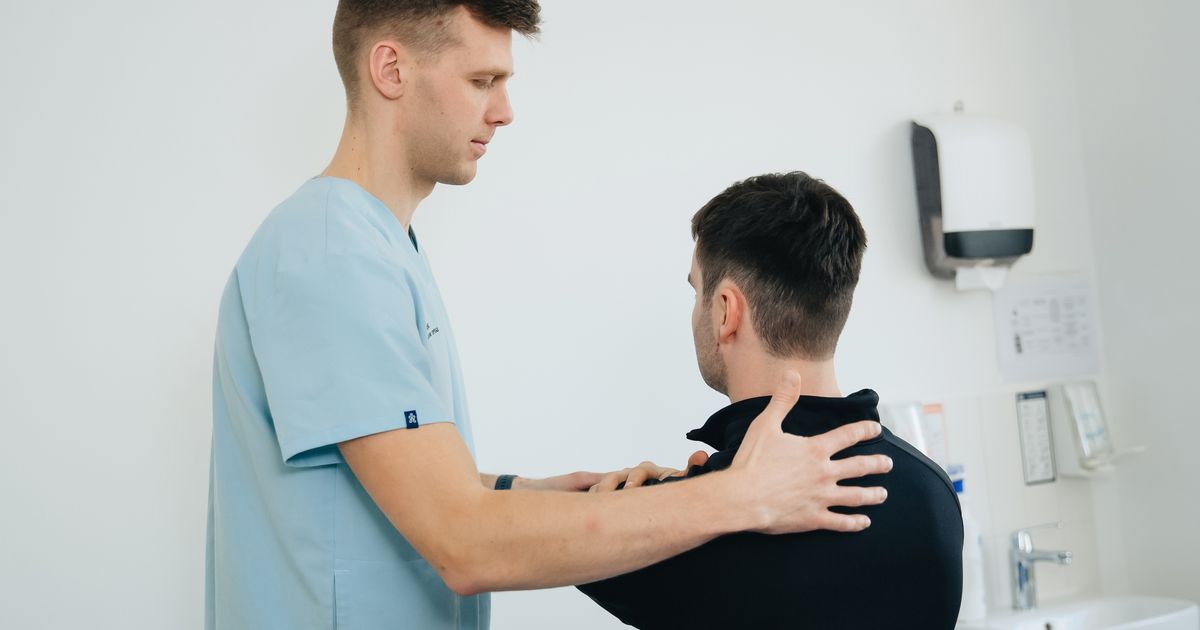
What is shoulder replacement surgery?
The shoulder is a ball and socket joint. The ball is the rounded top of the upper arm bone (humerus) and the socket is a shallow cup on the shoulder blade (glenoid). Both are covered with smooth cartilage, and a group of muscles and tendons called the rotator cuff holds the ball in place and helps lift the arm. When the cartilage wears away or the bone is badly broken, movement becomes painful and limited. In shoulder replacement surgery, the surgeon removes the damaged surfaces and fixes artificial parts in their place so the joint can glide again.
Other names for shoulder replacement surgery
- Artroplastikk i skulderen
- Skifte av skulderledd
- Total skulderprotese
- Artificial shoulder joint surgery
Types of shoulder replacement surgery
Your surgeon chooses the type after examining you and reviewing X-rays and scans. Each type has its own detailed page.
| typen | Hva det er | Når den brukes |
|---|---|---|
| Total skuldererstatning | Both the ball and the socket are replaced, keeping the normal shape of the joint | Arthritis with a rotator cuff that still works well |
| Omvendt skulderprotese | The positions of the ball and socket are switched, so the deltoid muscle lifts the arm instead of the rotator cuff | Arthritis with a large rotator cuff tear that cannot be repaired, some complex fractures, and some failed earlier replacements |
| Reverse total shoulder arthroplasty | The medical name for the reverse design, explained step by step | The same situations as reverse shoulder replacement |
| Skulderhemiartroplastikk | Only the ball is replaced and the natural socket is kept | Some fractures of the upper arm bone, or damage limited to the ball |
Why is shoulder replacement surgery done?
The main aim is to relieve pain. Better movement and strength usually follow, but pain relief is the most reliable benefit. Your doctor may suggest it for:
- Skulderartritt caused by wear and tear (artrose)
- Inflammatory joint disease such as revmatoid artritt
- Arthritis that develops after a long-standing rotator mansjettskade
- En alvorlig skulderbrudd that cannot be fixed reliably with plates and screws
- Loss of blood supply to the ball of the joint (avascular necrosis)
- A previous shoulder replacement that has failed
Surgery is usually considered only after medicines, physiotherapy, activity changes and joint injections have not given enough relief. Smaller problems may be treated with skulderartroskopi or reparasjon av rotatormansjett instead. It may not be suitable if there is an active infection or a health condition that makes anaesthesia unsafe.
How is shoulder replacement surgery done?
Before surgery you will have blood tests, X-rays and often a CT or MRI scan, along with an anaesthesia check. Tell your team about all your medicines, especially blood thinners. The general steps are:
- Anestesi: You are given general anaesthesia, often with a nerve block that keeps the arm numb for some hours afterwards.
- Snitt: The surgeon makes a cut at the front of the shoulder to reach the joint.
- Removing damaged bone: The worn ball is removed and the socket is prepared if it is being replaced.
- Placing the implant: The new parts are fixed to the bone and the joint is checked for movement and stability.
- Lukking: The wound is closed and the arm is placed in a sling.
The exact steps differ between types and are explained on each type's page.
Risks of shoulder replacement surgery
Most people recover without serious problems, but every operation carries risk. These include:
- Infeksjon i såret eller rundt implantatet
- Bleeding or a blood clot
- Stiffness, or less movement than hoped for
- Dislocation or instability of the new joint
- Injury to nerves or blood vessels near the shoulder
- A break in the bone around the implant
- Loosening or wear of the implant over the years, which may need repeat surgery
- Risikoer knyttet til anestesi
Recovery after shoulder replacement surgery
You will usually start gentle hand, wrist and elbow movements soon after surgery. A physiotherapist will guide your shoulder exercises in stages: first assisted movement, then active movement, and later strengthening. Many people manage light daily tasks within about six weeks, while driving, lifting and overhead work take longer and need your surgeon's clearance. Strength and movement can keep improving for up to a year.
Når skal du søke medisinsk hjelp
- Feber eller frysninger
- Økende rødhet, hevelse eller utflod ved såret
- Sudden severe pain, or a feeling that the shoulder has slipped out of place
- New numbness or weakness in the arm or hand
- Chest pain, breathlessness, or pain and swelling in the calf
What is the cost of shoulder replacement surgery in India?
Kostnaden avhenger av flere faktorer:
- The type of replacement and the implant chosen
- Byen, sykehuset og romtypen
- The length of hospital stay
- Tests, scans and anaesthesia needs
- Other health conditions that need care during your stay
- Fysioterapi etter utskrivelse
Kostnadene varierer fra person til person. Sjekk med sykehuset for faktiske priser.
Many health insurance policies cover joint replacement surgery, so check your policy terms with your insurer.
Why choose Apollo Hospitals for shoulder replacement surgery?
- Orthopaedic surgeons with experience in shoulder and joint replacement surgery
- Imaging, anaesthesia, physiotherapy and medical specialists in the same hospital
- Assessment that includes non-surgical options before surgery is advised
- Structured physiotherapy and follow-up after discharge
Availability differs between centres. Please check with the hospital. To discuss your shoulder problem, you can bestill time hos en ortopedisk kirurg ved Apollo sykehus.
Questions to ask your doctor about shoulder replacement surgery
- Which type of shoulder replacement do you recommend for me, and why?
- Are there non-surgical options I have not yet tried?
- How much pain relief and movement can I realistically expect?
- How long will I need a sling and physiotherapy?
- Når kan jeg kjøre bil, jobbe og løfte igjen?
- How long is the implant likely to last in my case?
Spørsmål og svar
1. How do I know which type of shoulder replacement I need?
Your surgeon decides after examining your shoulder and reviewing your scans. A working rotator cuff usually suits a total replacement, while a torn cuff that cannot be repaired often needs a reverse design.
2. Is shoulder replacement a major surgery?
Yes. It is a major operation done under general anaesthesia, with a hospital stay and a long period of physiotherapy.
3. How long does a shoulder replacement last?
Many implants last for many years, but this varies with your age, activity, bone quality and the type of implant. Your surgeon can explain what to expect in your case.
4. Hvor smertefull er rekonvalesensen?
Pain is expected in the first few weeks and is managed with a nerve block, pain relief medicines and ice. Tell your team if the pain is getting worse instead of better.
5. Will I get full movement back?
Most people gain useful movement for daily tasks, but the shoulder may not move as freely as a healthy joint. The result depends on the type of replacement, your muscles and how well you follow physiotherapy.
6. When can I drive after shoulder replacement?
Usually only after you are out of the sling and can control the vehicle safely without pain, which often takes several weeks. Ask your surgeon first.
7. Are there alternatives to shoulder replacement?
Yes. Medicines, physiotherapy, activity changes, joint injections and, for some problems, keyhole surgery may help. Replacement is usually advised when these no longer control the pain.
8. Which doctor performs shoulder replacement surgery?
An orthopaedic surgeon performs it, often one who focuses on shoulder or joint replacement surgery.
Konklusjon
Shoulder replacement surgery can relieve long-standing pain and improve arm function when arthritis, a rotator cuff problem or a fracture has damaged the joint beyond repair. The choice between total, reverse and partial replacement depends on your shoulder, so read the page for the type suggested to you and discuss the expected result and risks with your surgeon.
Denne siden er kun for generell informasjon og erstatter ikke råd fra legen din. Behandlingsbeslutninger bør tas sammen med en kvalifisert spesialist som kjenner din sykehistorie.
Nylig lagt til


Ortopediske kirurger ved Apollo Hospitals




Ansvarsfraskrivelse:
Informasjonen på denne siden er kun ment for generell informasjon og pedagogiske formål. Selv om vi gjør rimelige anstrengelser for å sikre at informasjonen er nøyaktig, pålitelig og regelmessig gjennomgås, bør den ikke anses som en erstatning for profesjonell medisinsk rådgivning, diagnose eller behandling.
Egnetheten til en medisinsk prosedyre, sammen med fordeler, risikoer, forberedelser, rekonvalesens, potensielle komplikasjoner og forventede resultater, kan variere fra person til person. Helsepersonell vil avgjøre om en prosedyre er passende basert på din individuelle tilstand og sykehistorie.
Rådfør deg med kvalifisert helsepersonell for personlig rådgivning før du tar avgjørelser angående noen medisinsk prosedyre.
Hvis du vil ha mer informasjon om hvordan vårt medisinske innhold opprettes, gjennomgås, oppdateres og vedlikeholdes, kan du lese vår [redaksjonelle policy].




