


アポロ編集チームによるレビュー
素早い回答
His bundle pacing is a way of fitting a pacemaker so that its lead stimulates the heart's own electrical wiring instead of the heart muscle alone. Together with left bundle branch area pacing, it is known as conduction system pacing. The aim is a heartbeat that spreads through the lower chambers in a near natural pattern, which may protect the pumping function in people who need pacing most of the time. It is technically harder than a standard pacemaker implant and is not suitable for everyone.
| 主な事実 | Details |
|---|---|
| それは何ですか | A pacemaker lead placed on the His bundle or the left bundle branch area, the heart's natural conduction pathway |
| 主目的 | To treat a slow heartbeat or heart block while keeping the lower chambers beating in step |
| 誰がそれを実行するか | A cardiologist trained in heart rhythm procedures (cardiac electrophysiologist) |
| 麻酔 | Usually a numbing injection with light sedation |
| 入院 | Often one to two days, depending on your condition |
| 正当な補償 | Light activity within days; arm movement on the implant side is limited for a few weeks |
| 主な制限 | Longer and more demanding procedure; the lead cannot always be placed, and the energy needed to pace can rise over time |
| ファローアップ | Regular device checks for life |
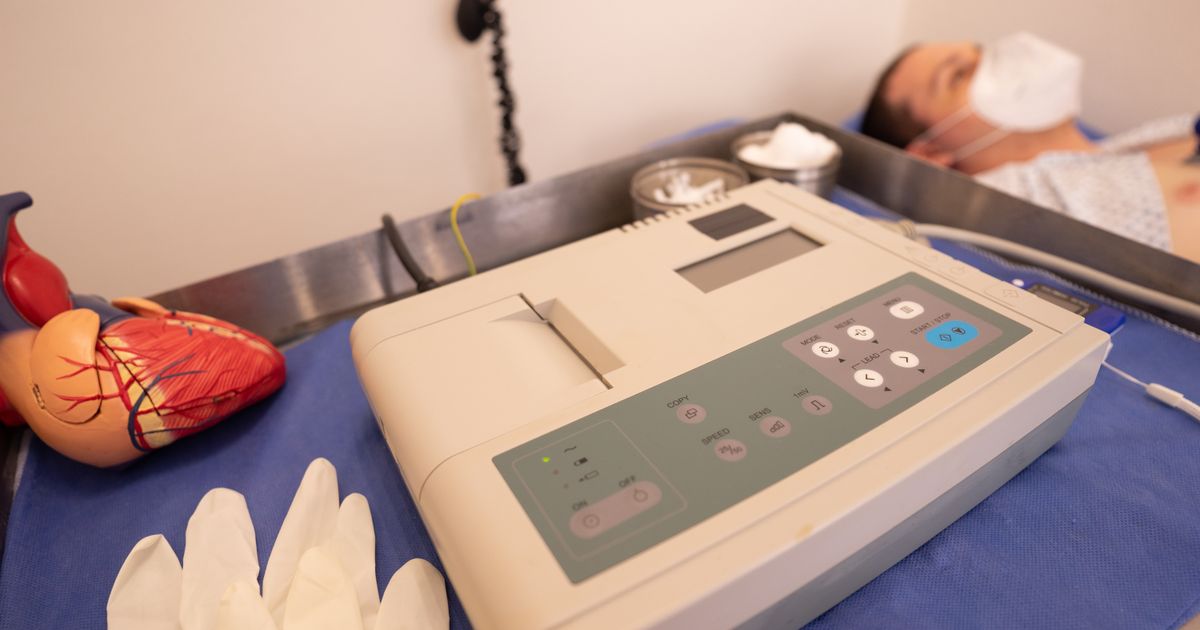
What is His bundle pacing?
Every heartbeat starts as an electrical signal in the upper chambers of the heart. It passes through the AV node into the bundle of His, a short cable of specialised fibres, then divides into right and left bundle branches and spreads through both lower chambers (ventricles) so that they squeeze together.
A standard pacemaker lead is fixed into the muscle of the right ventricle. It works well, but the signal then travels slowly from muscle cell to muscle cell, and the two ventricles contract slightly out of step. In His bundle pacing, the tip of the lead is screwed directly onto the bundle of His, so the signal travels down the natural wiring.
Left bundle branch area pacing is a newer, closely related method in which the lead is screwed a little deeper into the wall between the ventricles to reach the left bundle branch. Both methods are called conduction system pacing. Many centres now prefer left bundle branch area pacing because it is usually easier to achieve and the readings tend to be more stable.
Other names for His bundle pacing
- HBP
- Conduction system pacing (CSP)
- Physiological pacing
- Left bundle branch area pacing (LBBAP) or left bundle branch pacing (LBBP), the related method
- His bundle pacemaker
Why is His bundle pacing done?
The reasons are the same as for any pacemaker: a heartbeat that is too slow or unreliable. The difference is the wish to avoid the out-of-step contraction of standard pacing, which in a minority of people paced for most of their heartbeats can weaken the heart muscle over the years (pacing-induced cardiomyopathy). Conduction system pacing may be considered for:
- 心臓ブロック: 配合工業用化学製品の 完全な心ブロック, where the ventricles are expected to depend on the pacemaker for most beats.
- Slow heart rhythms: など 徐脈 or 洞不全症候群 when frequent ventricular pacing is likely.
- Atrial fibrillation treated by AV node ablation: 一部の人々 心房細動 have the AV node blocked by カテーテルアブレーション and then rely fully on a pacemaker.
- Heart failure with a conduction delay: selected people with 心不全 (NAIST) と 左脚ブロック, usually when cardiac resynchronisation therapy (CRT) is not possible or has not worked.
- Weakening of the heart after years of standard pacing: an existing pacemaker system may be upgraded.
The evidence is still growing. Studies so far are encouraging, but large long-term trials are still under way. Standard pacemakers and CRT remain well-proven treatments.
Types of pacing and how they compare
Conduction system pacing uses ordinary pacemaker generators; only the lead position differs. It can be part of a 単腔ペースメーカー 二腔式ペースメーカー or, in selected cases, a CRT or defibrillator system.
| 方法 | Where the lead sits | 強み | 製品制限 |
|---|---|---|---|
| Standard right ventricular pacing | Muscle of the right ventricle | Quick, reliable, decades of experience | Ventricles contract out of step; may weaken the heart in some people paced most of the time |
| 彼の荷物の歩き方 | On the bundle of His | Closest to natural activation | Small target, harder to place; more energy often needed; readings can change over time; cannot correct every block |
| Left bundle branch area pacing | Deep in the wall between the ventricles | Easier to achieve than His pacing; low, stable energy needs in most people | Newer method; long-term data and lead removal experience are still limited |
| CRT (biventricular pacing) | Right ventricle plus a vein on the left ventricle | Strong evidence in heart failure with conduction delay | Depends on suitable veins; not everyone responds |
適任者は誰で、適任でない可能性のある者は誰でしょうか?
You may be suitable if you need a pacemaker and are expected to be paced for most of your heartbeats, if your pumping function is already reduced, or if CRT has not worked.
It may be less suitable, or the plan may change during the procedure, if:
- The electrical block lies far down the conduction system, where His bundle pacing cannot bypass it.
- The wall between the ventricles is heavily scarred or very thick, which can make lead fixation difficult.
- You need a pacemaker only as an occasional backup, in which case a standard lead position is usually enough.
Your doctor may also discuss whether you need an 植込み型除細動器 (ICD).
How to prepare for His bundle pacing
Tests before the procedure
- An 心電図 そして多くの場合 ホルターモニター recording to document the rhythm problem.
- An 心エコー図 to measure pumping function and wall thickness.
- 血液検査。
- 時には 心臓MRI または 電気生理学研究 to locate the level of block or scarring.
話し合うべき薬
Tell your doctor about every medicine and supplement you take. Blood thinners and diabetes medicines may need to be adjusted. Do not stop any medicine on your own. Mention any allergy, especially to contrast dye or antibiotics.
当日に
- You will usually be asked not to eat for about six hours beforehand; follow the timing given by your hospital.
- Arrange for someone to take you home and stay with you for the first night.
How is His bundle pacing performed?
The procedure is done in a cardiac catheterisation or electrophysiology laboratory.
- 準備: ECG stickers and monitoring are attached, a drip is placed in your arm and antibiotics are given to lower the risk of infection.
- Numbing and sedation: the skin below the collarbone, usually on the left, is numbed. Light sedation keeps you relaxed.
- Making the pocket: a small cut is made and a pocket is created under the skin for the pacemaker.
- Reaching the heart: a vein under the collarbone is entered and a shaped guiding tube is passed into the heart under X-ray guidance.
- Finding the conduction system: the lead is moved in small steps while the team watches electrical signals from its tip and the ECG pattern to locate the His bundle or the left bundle branch area.
- Fixing the lead: the lead is screwed into place. For left bundle branch area pacing it is advanced deeper into the wall between the ventricles.
- テスト: the team measures the energy needed to pace and checks the ECG. If the readings are not good enough, the lead is repositioned or a standard position is used.
- 閉鎖: the leads are connected to the pacemaker, which is placed in the pocket. The wound is closed with stitches or skin glue and covered with a dressing.
手順の後に何が起こりますか?
Your heart rhythm, blood pressure and wound are checked on the ward. A chest X-ray and a device check usually confirm the lead position before you go home. Mild soreness and bruising around the pocket are common for a few days. You will be given a device identity card, wound care instructions and a date for your first pacemaker check.
リスクと合併症
Most people have no serious problems, but every device implant carries some risk. Our page on complications with pacemakers covers the general risks in more detail.
より一般的な
- Bruising, swelling or soreness at the implant site
- A rise in the energy needed to pace (the pacing threshold), seen more often with His bundle leads, which can shorten battery life
- Failure to place the lead on the conduction system, so that a standard lead position is used
アンコモン
- Lead movement or loss of conduction system capture, which may need a repeat procedure
- Infection of the pocket or leads
- Bleeding or a collection of blood in the pocket
- Air leak around the lung (pneumothorax)
- The lead passing through the wall between the ventricles, or injury to a small artery in that wall, during left bundle branch area pacing
- Fluid or blood around the heart
結果:効果はどの程度あるのか?
When the lead is placed successfully, the ECG usually shows a narrower, more natural beat. Studies suggest this can help preserve pumping function in people paced most of the time, and can improve it in some whose heart has weakened because of a conduction delay or earlier pacing.
His bundle pacing cannot be achieved in every patient, and in some the readings worsen over time so that the lead has to be revised. Left bundle branch area pacing is placed successfully more often, but its very long-term performance is still being studied. No pacing method cures the underlying heart condition.
Recovery after His bundle pacing
- 最初の週 keep the wound clean and dry as instructed. Short walks are encouraged.
- First four to six weeks: avoid lifting the arm on the implant side above shoulder height and heavy lifting, so that the lead can settle.
- 運転と仕事: ask your doctor when you may drive and return to work.
- First device check: usually within a few weeks, when the settings are fine-tuned.
いつ医療支援を求めるべきか
- Redness, increasing swelling, warmth, discharge or opening of the wound
- 発熱または悪寒
- Dizziness, fainting or a return of your earlier symptoms
- Breathlessness, chest pain or a persistent cough
- Hiccups that do not stop, or twitching of the chest or tummy muscles
Life after His bundle pacing
- Attend every device check. Thresholds are watched closely, especially in the first year.
- Carry your device card and show it at airport or building security.
- Keep mobile phones and headphones at least 15 cm away from the pacemaker, and avoid lingering near strong magnets or large industrial equipment.
- Tell every doctor and scan centre that you have a pacemaker. Whether MRI is allowed must be confirmed for your device.
- The battery typically lasts several years. When it runs low, the generator is replaced in a smaller procedure.
Benefits of His bundle pacing
- Uses the heart's own wiring, so the ventricles contract in a near normal sequence
- May lower the chance of the heart weakening from long-term pacing
- Can be an alternative when a CRT lead cannot be placed or CRT has not helped
What is the cost of His bundle pacing in India?
コストはいくつかの要因によって異なります。
- The type of device (single chamber, dual chamber, CRT or defibrillator) and its features
- The special leads and guiding tubes used
- The length and difficulty of the procedure
- Room category and length of hospital stay
- 都市と病院
費用は個人によって異なります。正確な料金については病院にお問い合わせください。
Many health insurance policies cover medically necessary pacemaker implantation; confirm the details with your insurer.
Why choose Apollo Hospitals for His bundle pacing?
- Heart rhythm specialists who implant pacemakers, CRT devices and defibrillators and can discuss which option suits you
- Cardiac catheterisation and electrophysiology laboratories with the recording equipment needed to locate the conduction system
- Device clinics for long-term checks and programming
- 施設によって利用状況が異なります。病院にお問い合わせください。
To discuss whether conduction system pacing is right for you, book an appointment with a cardiologist アポロ病院にて。
関連する読書
- Dual chamber pacemaker implantation
- Single chamber pacemaker implantation
- 心臓再同期療法(CRT)
- リードレスペースメーカー植え込み
- 左脚ブロック
Questions to ask your doctor about His bundle pacing
- Why do you recommend conduction system pacing instead of a standard pacemaker for me?
- Will you aim for His bundle pacing or left bundle branch area pacing, and why?
- What happens if the lead cannot be placed on the conduction system?
- Do I need CRT or a defibrillator as well?
- How often will my device need to be checked?
- How long is the battery expected to last in my case?
- Will I be able to have an MRI scan with this device?
- When can I drive, travel and return to work?
よくあるご質問
1. Is His bundle pacing better than a normal pacemaker?
Not for everyone. A standard pacemaker is safe, proven and enough for many people. Conduction system pacing may offer an advantage when you are expected to be paced most of the time or your pumping function is already reduced.
2. What is the difference between His bundle pacing and left bundle branch area pacing?
Both stimulate the heart's own wiring. In His bundle pacing the lead sits on the first part of the pathway. In left bundle branch area pacing it is screwed deeper into the wall between the ventricles. The second method is usually easier to achieve and needs less energy.
3. Is His bundle pacing a major operation?
No. It is done through a small cut below the collarbone under a numbing injection and sedation, and the chest is not opened. It does take longer than a standard implant and needs specific training.
4. 手続きにかかる時間は?
It varies. Finding and fixing the lead on the conduction system takes extra time, so it is usually longer than a standard pacemaker implant. Your doctor can give you an estimate.
5. 手術は痛みを伴いますか?
You may feel pressure and pushing but should not feel sharp pain. The site is sore for a few days afterwards, and this usually settles with simple pain relief.
6. Can the lead always be placed on the His bundle?
No. If the lead cannot be fixed securely or the readings are poor, the doctor may use left bundle branch area pacing or a standard lead position in the same sitting.
7. What does it mean if my pacing threshold rises?
The threshold is the least energy needed to make the heart beat. If it rises, the battery drains sooner. A small rise is managed by reprogramming; a large rise may mean the lead has to be repositioned or replaced. This happens more often with His bundle leads.
8. Can His bundle pacing replace CRT in heart failure?
Sometimes, but CRT has the longest record of evidence. Conduction system pacing is generally considered when a CRT lead cannot be placed or CRT has not helped. Research comparing the two is continuing.
9. バッテリーはどのくらい持続しますか?
Generally several years. It depends on how often you are paced and how much energy each beat needs. Battery level is measured at every device check, so replacement can be planned in advance.
10. Can I have an MRI scan after His bundle pacing?
Many modern systems allow MRI under specific conditions, depending on the generator and leads used. Show your device card and check with your cardiologist before any scan.
11. いつから通常の活動に戻れますか?
Most people return to light daily activities within a few days. Avoid raising the arm on the implant side above the shoulder and heavy lifting for about four to six weeks.
12. Can an existing pacemaker be changed to His bundle pacing?
Sometimes. A conduction system lead can be added in an upgrade procedure, depending on your veins, existing leads and general health.
13. Will I feel the pacemaker working?
Most people do not. You may notice that tiredness, dizziness or breathlessness improve. Report muscle twitching, hiccups or palpitations, as the settings may need adjustment.
14. Which doctor performs His bundle pacing?
A cardiologist trained in heart rhythm disorders and device implantation, called a cardiac electrophysiologist. Not every centre offers the technique, so ask about the team's experience.
結論
His bundle pacing and left bundle branch area pacing place the pacemaker lead on the heart's own conduction pathway so that the ventricles beat in a near natural sequence. The procedure is more demanding, the lead cannot always be placed and thresholds can rise over time, so careful selection and regular follow-up matter. Discuss the options with a heart rhythm specialist who knows your condition.
このページは一般的な情報提供を目的としており、医師の診察に代わるものではありません。治療に関する決定は、あなたの病歴を把握している資格のある専門医と相談の上で行ってください。
最近追加された


Heart Specialists at Apollo Hospitals








お断り:
このページに掲載されている情報は、一般的な情報提供および教育目的のみを意図したものです。情報の正確性、信頼性、定期的な更新に努めておりますが、専門的な医学的助言、診断、治療に代わるものではありません。
医療処置の適性、その利点、リスク、準備、回復、起こりうる合併症、そして期待される結果は、人によって異なります。担当の医療専門家は、あなたの個々の状態と病歴に基づいて、その処置が適切かどうかを判断します。
医療処置に関する決定を下す前に、必ず資格のある医療専門家にご相談の上、個別の助言を受けてください。
医療コンテンツの作成、レビュー、更新、および維持管理方法の詳細については、[編集方針]をお読みください。




