


아폴로 편집팀 검토 완료
빠른 답변
Tympanoplasty is an operation to repair a hole in the eardrum and, when needed, the tiny hearing bones behind it. The surgeon closes the hole with a small graft of your own tissue taken from near the ear. It is done to stop repeated ear discharge, to protect the middle ear from water and infection, and often to improve hearing. Most people go home the same day or the next day, and the graft heals over several weeks.
| 중요한 사실 | 세부 정보 |
|---|---|
| 그것이 무엇인지 | Surgical repair of the eardrum, with or without repair of the hearing bones |
| 주요 이유 | A hole in the eardrum that has not healed, repeated ear discharge, hearing loss |
| 마취 | General anaesthesia, or local anaesthesia with sedation in selected adults |
| 일반적인 기간 | About one to two hours, longer if the hearing bones or mastoid are also treated |
| 입원 | 어린이집 또는 하룻밤 숙박 |
| Graft used | Your own tissue, such as muscle covering (fascia) or cartilage from near the ear |
| 치유 시간 | Several weeks for the graft. Hearing is usually tested at about two to three months. |
| 누가 수행합니까? | ENT surgeon (otolaryngologist), often one with a special interest in ear surgery |
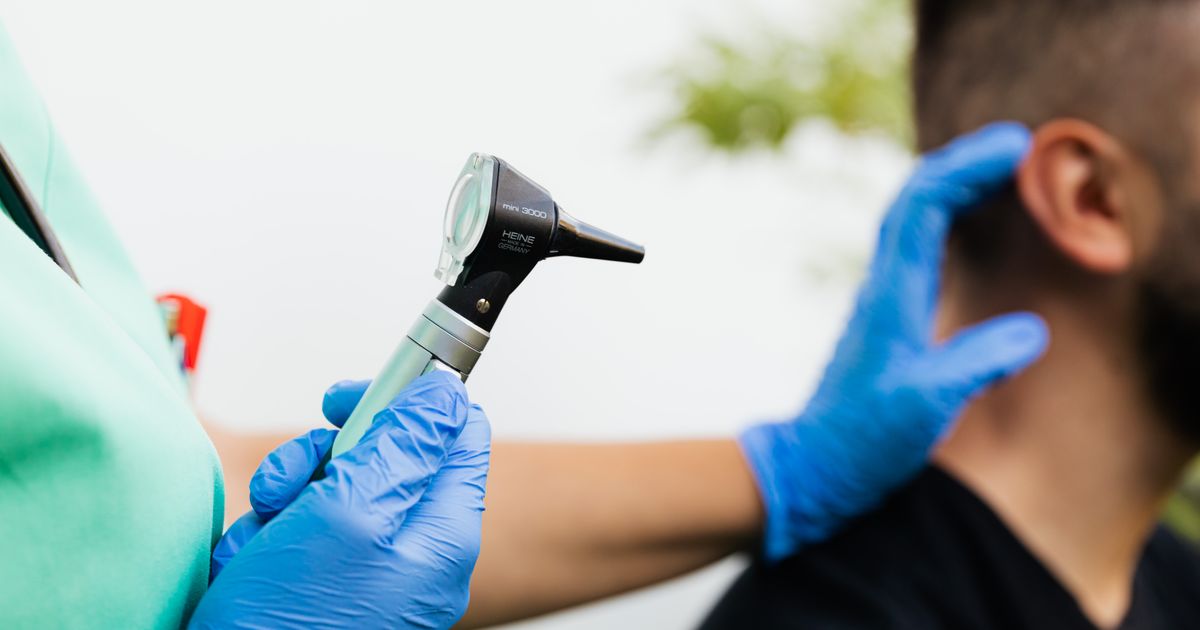
고막 성형술이란 무엇입니까?
The eardrum, or tympanic membrane, is a thin sheet of tissue that separates the ear canal from the middle ear. Sound makes it vibrate, and three small bones called ossicles carry that vibration to the inner ear. The eardrum also keeps water and germs out of the middle ear.
A hole in the eardrum is called a perforation. Many small perforations heal by themselves within a few weeks. When a hole does not close, the ear may discharge again and again, particularly after a cold or when water enters, and hearing may be reduced. Tympanoplasty closes the hole with a graft, which acts as a scaffold for the eardrum to grow across. If the ossicles are damaged, they can be repaired in the same operation.
Other names for tympanoplasty
- Eardrum repair surgery
- Eardrum patch or perforated eardrum operation
- Tympanic membrane repair
- 고막성형술 (repair of the eardrum alone)
- Tympanomastoid surgery (when combined with mastoid surgery)
Why is tympanoplasty done?
- A perforation that has not healed after about three months, caused by infection, injury, a sudden pressure change, or an ear tube that left a hole
- 만성병 환자 중이염, a long-standing middle ear infection with repeated ear discharge (otorrhoea)
- 전도성 청력 손실 due to the hole or to damaged ossicles
- To make the ear safe for water, so that bathing and swimming do not set off infections
- A badly retracted eardrum or 진주 종, where the eardrum is rebuilt after the disease is removed
In young children with fluid behind an intact eardrum, the usual operation is different: a tiny cut and a ventilation tube. That is explained on our ear tubes (myringotomy and tympanostomy) 페이지를 확인하시기 바랍니다.
Types of tympanoplasty
Surgeons classify the operation by how much of the hearing mechanism needs repair.
| 타입 | What is repaired | 사용 시 |
|---|---|---|
| Type 1 (myringoplasty) | Eardrum only | A perforation with healthy, mobile ossicles. This is the most common type. |
| 2형과 3형 | Eardrum plus reconstruction of one or more ossicles | When infection has worn away part of the chain of bones. The bones are reshaped or replaced with a small implant (이골 성형술). |
| 4형과 5형 | More extensive reconstruction of the sound pathway | Rarely needed today, for severe damage |
| Tympanoplasty with mastoidectomy | Eardrum repair together with clearing of the mastoid bone behind the ear | Cholesteatoma or infection that has spread into the mastoid (see 유양돌기절제술) |
외과적 접근법
- Through the ear canal: No external cut, or a very small one. Suited to smaller holes and wide canals. It can be done with a microscope or with a thin telescope called an endoscope.
- 귀 뒤쪽: A cut in the crease behind the ear gives a wide view. It is often chosen for large or front-placed holes and when the mastoid is treated.
- In front of or just above the ear canal opening: A small cut that widens access to the canal.
The graft is usually placed under the remaining eardrum (underlay) and sometimes over it (overlay). Fascia is thin and easy to shape. Cartilage is stiffer and is preferred for large holes, repeat surgery or a retracted drum.
누가 적합하고, 누가 적합하지 않을까요?
You may be suitable if you have a persistent perforation that causes discharge or hearing loss, or if you want a safe, dry ear for swimming or for wearing a hearing aid.
Surgery may be postponed or not advised when:
- The perforation is recent and may still close by itself
- The ear is actively infected and discharging. Most surgeons prefer to treat the infection first, although surgery is sometimes done in a wet ear.
- Nose, sinus or allergy problems are uncontrolled, since poor ventilation of the middle ear lowers the chance of success
- The ear to be operated on is the only hearing ear. Surgery is then considered with great caution.
- A child is very young and still having frequent colds and ear infections. Many surgeons wait until this phase has passed.
- The hole is small, dry and causes no symptoms. Keeping the ear dry and regular checks may be enough.
준비 방법
테스트
- Examination of the ear under a microscope or endoscope
- A 청력 테스트 (pure tone 청력 측정) to record the type and degree of hearing loss in both ears
- 고실 측정 일부 경우에
- A CT 스캔 of the ear bone if cholesteatoma or mastoid disease is suspected
- Routine blood tests and a pre-anaesthetic check-up
논의할 약
Tell your surgeon about all your medicines, including blood thinners, diabetes medicines and herbal supplements. Some may need to be stopped for a few days. Use ear drops only as prescribed.
당일
- 단식 지침을 따르세요
- Wash your hair the night before, as you will not be able to wash it normally for a while
- Tell the team if you have a cold, cough or fever. Surgery may be postponed.
- 누군가 당신을 집까지 데려다 줄 수 있도록 준비해 두세요.
How is tympanoplasty performed?
- 마취: General anaesthesia is given, or a numbing injection around the ear with sedation.
- 액세스 : The surgeon works through the ear canal or makes a cut behind the ear. A little hair may be shaved.
- Preparing the eardrum: The edges of the hole are freshened so that new tissue can grow, and the remaining eardrum is gently lifted.
- Checking the middle ear: The ossicles are inspected and tested for movement. Any diseased tissue is removed.
- Repairing the ossicles: If needed, a damaged bone is reshaped or replaced with a small implant.
- Harvesting the graft: A small piece of fascia or cartilage is taken through the same cut or a tiny separate one.
- Placing the graft: The graft is positioned to cover the hole and supported with dissolvable sponge. The eardrum is laid back over it.
- 폐쇄 : The ear canal is packed with a dressing, any cut is stitched, and a head bandage may be applied overnight.
그 이후에는 무슨 일이 일어나나요?
You recover for a few hours and usually go home the same day or the next morning. Mild pain, a blocked feeling, crackling sounds and slight blood-stained discharge are normal. Hearing is often dull at first because of the packing. Mild dizziness or nausea can occur for a day. You will be given pain relief and sometimes antibiotics or ear drops. The packing is removed or dissolves over one to three weeks, and the surgeon checks the graft at follow-up visits.
위험과 합병증
일반적인
- Temporary pain, ear fullness and blood-stained discharge
- Temporary change in taste on one side of the tongue, because a small taste nerve runs across the eardrum
- Numbness of the upper ear after a cut behind the ear, which usually fades over months
- Short-lived dizziness
드문
- Failure of the graft, with the hole persisting or reopening
- Infection of the ear or wound
- No improvement in hearing, or hearing that is worse than before
- Ringing in the ear (이명) that is new or louder
- 지속성있는 선회
- Narrowing of the ear canal or a skin cyst forming behind the new eardrum
드문
- Severe or total hearing loss in the operated ear
- Weakness of the face on that side from injury to the facial nerve, which is very rare in eardrum repair alone
결과: 얼마나 효과적인가?
In most people the graft takes and the hole closes after a first operation. Results are better for small, dry perforations with healthy ossicles and good nose and sinus health. They are less predictable for very large holes, ears that keep discharging, repeat operations, smokers and ears with poor ventilation.
A closed eardrum gives a dry, safe ear in the majority of people. Hearing improvement varies. It tends to be good when the only problem was the hole, and more modest when the ossicles needed reconstruction. Tympanoplasty does not correct hearing loss that comes from the inner ear or hearing nerve. If the first graft fails, a repeat operation, often with cartilage, is usually possible.
회복
- 첫번째 주: Rest at home. Sleep with your head raised and the operated ear facing up. Change the cotton wool at the ear opening when it is soiled, without disturbing the packing inside.
- 1~3주: Stitches, if any, are removed or dissolve. Packing is cleared. Many people return to desk work or school after about one to two weeks.
- Up to three months: The graft strengthens. A hearing test is usually repeated at about two to three months.
의학적 도움을 구할 때
- Fever, or increasing pain, redness or swelling around the ear
- Heavy bleeding or thick, foul-smelling discharge
- Severe spinning dizziness or repeated vomiting
- Sudden drop in hearing or loud new ringing
- Weakness or drooping of the face
Life after tympanoplasty
- Keep the ear dry until your surgeon says it is healed. Use cotton wool lightly coated with a plain greasy ointment at the ear opening when bathing or washing hair.
- Do not blow your nose hard for a few weeks. If you sneeze, do so with your mouth open.
- Avoid straining, heavy lifting and contact sports for the period advised.
- Flying and travel to high altitude should wait until your surgeon clears you, usually after several weeks.
- 수영과 다이빙 need specific clearance, often after two to three months.
- Do not put anything in the ear, including cotton buds and oil.
- Treat colds and allergies early and avoid tobacco smoke, which impairs middle ear health.
장점
- Stops or greatly reduces repeated ear discharge
- 청력을 향상시키는 경우가 많습니다.
- Allows bathing and swimming without ear plugs once healed
- Lowers the risk of further damage to the middle ear from repeated infections
- Makes it easier to wear a hearing aid if one is still needed
What is the cost of tympanoplasty in India?
비용은 다음에 따라 달라집니다.
- Whether only the eardrum is repaired or the ossicles and mastoid are also treated
- The need for an ossicle implant
- Type of anaesthesia and length of surgery
- 주간 돌봄 또는 숙박, 그리고 객실 유형
- Tests before surgery, such as audiometry and CT scan
- Follow-up visits and hearing tests
비용은 개인마다 다릅니다. 정확한 가격은 병원에 문의하십시오.
Tympanoplasty for chronic ear disease is usually covered by health insurance, but confirm this with your insurer.
Why choose Apollo Hospitals for tympanoplasty?
- ENT surgeons who perform eardrum, ossicle and mastoid surgery in adults and children
- Audiology services for hearing assessment before and after surgery
- Operating microscopes for ear surgery and anaesthesia teams experienced in day care procedures
- CT imaging within the hospital network when the ear bone needs to be assessed
- Endoscopic ear surgery is not offered at every hospital. Availability differs between centres. Please check with the hospital.
To have your ear assessed, you can 이비인후과 전문의와 진료 예약을 하세요 아폴로 병원에서.
관련 독서
Questions to ask your doctor about tympanoplasty
- Could my perforation still heal without surgery?
- Do my hearing bones need repair as well?
- Will you operate through the ear canal or from behind the ear?
- Which graft will you use, and why?
- How much hearing improvement can I realistically expect?
- What is the chance that the graft will not take in my case?
- When can I wash my hair, fly and swim?
- What happens if the hole reopens?
자주 묻는 질문
1. What is the difference between tympanoplasty and myringoplasty?
Myringoplasty repairs only the eardrum. Tympanoplasty is the wider term and also covers inspection and repair of the hearing bones. A type 1 tympanoplasty is the same as a myringoplasty.
2. Is tympanoplasty a major surgery?
It is a delicate operation done under magnification, but it is not major in terms of risk to general health. Most people go home within a day.
3. Is the operation painful?
You will not feel pain during surgery. Afterwards, discomfort is usually mild to moderate for a few days and settles with simple pain relief.
4. Will my hearing improve after tympanoplasty?
Often, but not always. Improvement is more likely when the hearing loss was caused by the hole alone. The main aim in many people is a dry, safe ear.
5. How long does the graft take to heal?
The graft usually seals within a few weeks and continues to strengthen for about three months.
6. When can I get the ear wet?
Only after your surgeon confirms that the eardrum has healed. Until then, protect the ear during every bath and hair wash.
7. When can I fly after tympanoplasty?
Pressure changes can disturb the graft. Most surgeons advise waiting several weeks. Ask at your follow-up visit before booking travel.
8. Can tympanoplasty be done in children?
Yes. The timing is decided individually, taking into account the child's age, how often infections occur and the state of the other ear.
9. Can both ears be operated on together?
Usually one ear is done at a time, starting with the worse ear. The second is operated on after the first has healed.
10. 눈에 띄는 흉터가 남을까요?
With the ear canal approach there is no visible scar. A cut behind the ear heals as a fine line hidden in the crease.
11. What if the surgery fails?
If the hole persists or reopens, the ear is allowed to settle and a repeat operation can be planned, often with a cartilage graft.
12. Can a perforated eardrum heal without surgery?
Yes. Many small perforations from injury or a short infection close within weeks. Surgery is considered when the hole has not closed after about three months or keeps causing problems.
13. Can I use a hearing aid after tympanoplasty?
Yes. Once the ear has healed, a hearing aid can be fitted if hearing is still reduced. A dry ear makes hearing aid use easier.
14. Which doctor performs tympanoplasty?
An ENT surgeon (otolaryngologist) performs tympanoplasty. Some ENT surgeons specialise in ear surgery and are called otologists.
맺음말
Tympanoplasty is a well-established operation for a hole in the eardrum that will not heal. It gives most people a dry, protected ear and often better hearing, though the hearing result depends on the condition of the hearing bones and the inner ear. Careful protection of the ear in the weeks after surgery makes a real difference to the outcome. An ENT surgeon can examine your ear and tell you whether surgery is likely to help.
이 페이지는 일반적인 정보를 제공하기 위한 것이며 의사의 진료를 대체할 수 없습니다. 치료 결정은 환자의 병력을 잘 아는 자격을 갖춘 전문의와 상의하여 내려야 합니다.
최근에 추가


아폴로 병원 이비인후과 전문의





부인 성명:
이 페이지에 제공된 정보는 일반적인 정보 제공 및 교육 목적으로만 사용됩니다. 당사는 정보의 정확성, 신뢰성 및 정기적인 검토를 위해 합리적인 노력을 기울이지만, 전문적인 의료 조언, 진단 또는 치료를 대신하는 것으로 간주해서는 안 됩니다.
의료 시술의 적합성, 이점, 위험, 준비 과정, 회복 과정, 잠재적 합병증 및 예상 결과는 개인마다 다를 수 있습니다. 의료 전문가는 환자의 개별적인 상태와 병력을 바탕으로 시술이 적절한지 여부를 판단할 것입니다.
어떠한 의료 시술과 관련된 결정을 내리기 전에 반드시 자격을 갖춘 의료 전문가와 상담하여 개인적인 조언을 받으시기 바랍니다.
저희 의료 콘텐츠의 제작, 검토, 업데이트 및 관리 방식에 대한 자세한 내용은 [편집 정책] 을 참조하십시오.




