


Geprüft vom Apollo-Redaktionsteam
Schnelle Antwort
Pelvic floor therapy is a programme of assessment, exercises and other techniques, guided by a specially trained physiotherapist, to improve how the pelvic floor muscles work. It is a first-line treatment for urine leakage on coughing or exertion and is also used for bladder urgency, mild prolapse, bowel control problems, pelvic pain and recovery after childbirth or pelvic surgery. It has very few risks, but it works only with regular practice over several weeks to months. It does not correct every problem, and some people still need medicines, a pessary or surgery.
| Key facts | Details |
|---|---|
| Was es ist | Physiotherapy for the muscles that support the bladder, bowel and, in women, the womb and vagina |
| Wer stellt es bereit? | A physiotherapist trained in pelvic health, usually after referral from a doctor |
| Häufige Gründe | Urine leakage, urgency, prolapse symptoms, bowel problems, pelvic pain, pregnancy and after childbirth |
| Who can have it | Women and men, and in some centres children with bladder or bowel problems |
| Typischer Verlauf | Several sessions over about three months, plus daily home exercises |
| Anästhesie | None. It is not surgery |
| Risiken | Very low; temporary muscle soreness can occur |
| Hauptgrenze | Results depend on correct technique and regular practice |
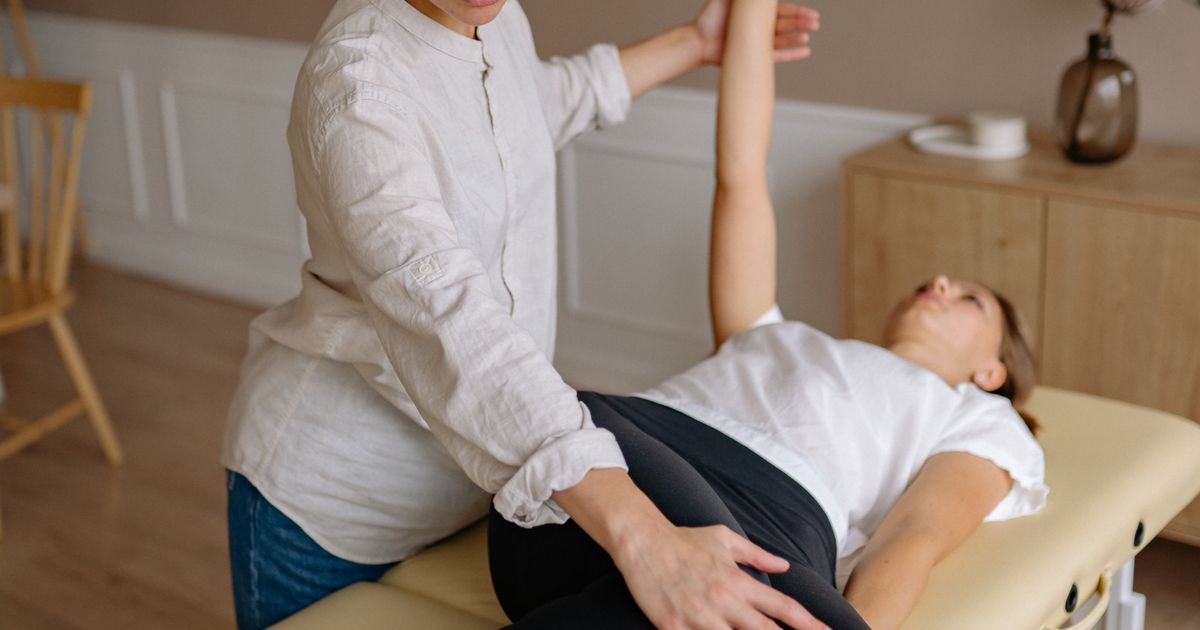
What is pelvic floor therapy?
The pelvic floor is a hammock of muscles and connective tissue stretching from the pubic bone at the front to the tailbone at the back. It supports the bladder and bowel, and in women the womb and vagina. These muscles tighten to keep urine, wind and stool in, relax to let them out, and play a part in sexual function and in steadying the spine and pelvis.
Problems arise when the muscles are weak, slow to react, poorly coordinated or, in some people, too tight and unable to relax. Pelvic floor therapy starts by finding out which of these applies to you and then uses targeted exercises, education and sometimes devices to correct it. It is not the same for everyone. A person with leakage needs strengthening, while a person with pelvic pain may need to learn to relax the same muscles.
Other names for pelvic floor therapy
- Beckenbodenphysiotherapie
- Physiotherapie Beckenboden
- Beckenbodenmuskeltraining
- Beckenbodenrehabilitation
- Pelvic health physiotherapy
- Kegel exercises (one part of therapy)
Why is pelvic floor therapy done?
Doctors refer people for pelvic floor therapy for a range of conditions:
- Urine leakage: Stressinkontinenz (leaks with coughing, sneezing, laughing or exercise), urgency leaks and mixed types. See also Harninkontinenz bei Frauen.
- Dringlichkeit und Häufigkeit: as part of the treatment of an überaktive Blase, along with bladder training.
- Beckenorganprolaps: mild bis mäßig Zystozele, Uterusprolaps or Rektozele, to reduce symptoms such as heaviness.
- Pregnancy and after childbirth: to prevent and treat leakage, and to help recovery after a Dammriss or separation of the abdominal muscles (Rektusdiastase).
- Darmprobleme: leakage of wind or stool, and Verstopfung caused by muscles that tighten instead of relaxing during a bowel movement.
- Pelvic and sexual pain: long-lasting pelvic pain linked to tight muscles, schmerzhafter Verkehr, Vaginismus and some cases of Steißbeinschmerzen.
- Before and after surgery: prolapse or continence surgery in women, and prostate surgery such as Prostatektomie bei Männern.
- Nach den Wechseljahren: when falling hormone levels weaken pelvic tissues. See Wechseljahre.
Types and methods used in pelvic floor therapy
- Ausbildung: learning where the muscles are, how the bladder and bowel work, and which habits make symptoms worse.
- Pelvic floor muscle training: a planned set of squeezes, holds and quick contractions to build strength, endurance and timing.
- Biofeedback: a small sensor shows your muscle activity on a screen so that you can see whether you are tightening or relaxing correctly.
- Elektrische Stimulation: a gentle current through a small probe or skin pads makes very weak muscles contract. It is used when a person cannot produce a contraction on their own.
- Relaxation and manual therapy: breathing techniques, stretches and hands-on release for muscles that are overactive or painful.
- Vaginal trainers (dilators): graded smooth devices used at your own pace for vaginismus and painful sex.
- Blasentraining: gradually lengthening the time between toilet visits and learning ways to calm urgency.
- Bowel retraining: toilet posture, timing and techniques to empty without straining.
Which approach suits which problem?
| Aufgabenstellung: | Main focus of therapy | Konkret erwartet dich: |
|---|---|---|
| Leaks with coughing or exercise | Strength, endurance and tightening just before a cough or lift | Good evidence of benefit, especially when mild to moderate |
| Harndrang und häufiges Wasserlassen | Bladder training, urge control techniques, fluid habits | Often helpful; medicines may be added by the doctor |
| Leichte bis mittelschwere Prolaps | Strength and support, avoiding straining | Can ease symptoms; does not reverse a large prolapse |
| Pelvic pain or painful sex | Relaxation, release, graded trainers | Benefit varies; often part of a wider treatment plan |
| Bowel leakage or difficult emptying | Coordination, biofeedback, toilet habits | Helpful for many; depends on the cause |
Who is suitable for pelvic floor therapy?
Most adults with the problems listed above are suitable, including pregnant women, older adults and men. It is usually tried before surgery because it is safe and often effective.
Who may not be suitable, or may need changes to the plan
- People with symptoms that have not yet been assessed by a doctor, such as blood in the urine or stool, unexplained bleeding, a pelvic mass or sudden changes in bladder or bowel control. These need medical tests first.
- Anyone with an active urine, vaginal or pelvic infection. Internal assessment waits until this is treated.
- Women in the first weeks after childbirth or pelvic surgery. Internal examination is usually delayed until the doctor confirms healing, often at about six weeks. Gentle exercises may start earlier if advised.
- Electrical stimulation is avoided in pregnancy and needs medical advice for people with a pacemaker or similar implanted device.
- People with nerve damage affecting the pelvic muscles, or memory problems that make it hard to follow a programme, may gain less benefit and need an adapted plan.
Wie man sich vorbereitet
Tests and records
No special tests are needed for the therapy itself. Your doctor may already have arranged a urine test, a scan or urodynamische Untersuchungen. Bring these reports and any surgery or delivery records. You may be asked to keep a bladder diary for a few days, noting what you drink, when you pass urine and when leaks happen.
Zu besprechende Medikamente
Therapy does not require you to stop any medicine. Tell the physiotherapist what you take, because some medicines, such as water tablets, affect how often you pass urine.
An dem Tag
- Tragen Sie bequeme Kleidung.
- You do not need to fast. Come with a comfortably full bladder only if the clinic asks.
- You may bring someone with you, and you can ask for a chaperone.
How is pelvic floor therapy performed?
- Geschichte: the physiotherapist asks about your bladder, bowel and sexual symptoms, pregnancies, surgery, general health, daily activities and what you hope to achieve. The discussion is private.
- Erklärung und Zustimmung: the assessment is explained, including any internal examination. You can agree, decline or stop at any point. Therapy can proceed without an internal examination, although it gives less information.
- External assessment: posture, breathing, abdominal muscles, hips and lower back are checked.
- Pelvic floor assessment: with consent, the physiotherapist feels the muscles with a gloved finger in the vagina or rectum while you squeeze, hold and relax. This shows strength, endurance, coordination and any tender areas. Some clinics use a sensor or ultrasound on the skin instead.
- Individueller Plan: you are taught how to contract and relax the correct muscles without holding your breath or tightening the buttocks and thighs. A typical strengthening plan includes slow holds of a few seconds, built up gradually, and sets of quick squeezes, repeated several times a day.
- Adding techniques: biofeedback, stimulation, trainers, bladder or bowel retraining are added as needed.
- Home programme: you practise daily at home.
- Überprüfungssitzungen: follow-up visits, often every one to three weeks at first, check technique and progress the exercises into standing, walking, lifting and exercise.
- Neubewertung: after about three months the result is reviewed. You then move to a maintenance routine or are referred back to the doctor if more treatment is needed.
Was passiert danach?
You can go straight back to work or home after each session. The muscles may feel tired or mildly sore for a day, as after any new exercise. Improvement is gradual. Many people notice a change within several weeks, while full benefit commonly takes about three months of regular practice.
Risiken und Komplikationen
Common and minor
- Muscle tiredness or mild aching
- Brief discomfort or embarrassment during internal assessment
- Light spotting after an internal examination in some women, particularly after menopause
Ungewöhnlich
- A temporary flare of pain or urgency, especially if exercises are overdone
- Worsening of symptoms when strengthening exercises are given to someone whose muscles are already too tight. This is why assessment comes first.
- Delay in diagnosing another condition if symptoms were not medically assessed first
Ergebnisse: Wie gut funktioniert es?
Supervised pelvic floor muscle training has good research support for stress incontinence in women and is recommended as the first treatment. Many women improve and some become dry. It also helps mixed and urgency leakage, though usually alongside bladder training.
For prolapse, therapy can reduce symptoms and may slow worsening in mild to moderate cases, but it does not lift a large prolapse back into place. A pessary or an operation such as Zystozele-Reparatur may then be discussed.
During and after pregnancy, exercises lower the chance of leakage for many women. In men, training around the time of prostate surgery may help bladder control return sooner, although studies show mixed results. For pelvic pain and bowel problems, benefit varies with the cause, and therapy is usually one part of a wider plan.
The benefit lasts only if you keep exercising. If leakage remains troublesome after a proper course, doctors may suggest other treatment such as a sling procedure for stress incontinence or sacral nerve stimulation for certain bladder problems.
Recovery and progress
There is no recovery period in the surgical sense. Progress depends on how regularly you practise.
- Do the exercises as often as you were taught. More is not better, and overtraining can cause soreness.
- Do not practise by stopping the flow of urine midstream. It can interfere with normal emptying.
- Tell the physiotherapist if an exercise causes pain.
Wann sollte man medizinische Hilfe suchen?
- Blut im Urin oder Stuhl
- Burning when passing urine, fever or foul-smelling discharge
- Being unable to pass urine
- Sudden loss of bladder or bowel control, or numbness around the genitals or anus, especially with back pain or leg weakness. This needs emergency care.
- A bulge that is getting larger or cannot be pushed back
- Pain that keeps getting worse despite therapy
Life after pelvic floor therapy
- Continue a short maintenance routine in the long term, as advised.
- Tighten the pelvic floor just before you cough, sneeze or lift.
- Keep to a healthy weight. Extra weight adds pressure on the pelvic floor.
- Avoid straining on the toilet. Sit with your feet supported and knees higher than your hips, and take your time.
- Drink enough fluid. Cutting fluids too much makes urine concentrated and can worsen urgency. Limit caffeine if it triggers urgency.
- Get a long-lasting cough treated and stop smoking.
Benefits of pelvic floor therapy
- No surgery, no anaesthesia and very few side effects.
- Can reduce or stop urine leakage and urgency for many people.
- May ease prolapse symptoms and delay or avoid the need for surgery in some women.
- Supports recovery after childbirth and pelvic surgery.
- Can improve sexual comfort and confidence in daily activities.
What is the cost of pelvic floor therapy in India?
Die Kosten hängen ab von:
- Die Anzahl der Sitzungen, die Sie benötigen
- Whether biofeedback, electrical stimulation or other equipment is used
- City and hospital or clinic
- Whether sessions are individual or in a group
- Doctor consultations and tests done alongside
Die Kosten variieren je nach Person. Bitte erkundigen Sie sich im Krankenhaus nach den genauen Preisen.
Outpatient physiotherapy is covered by some health insurance policies and not by others, so check with your insurer.
Why choose Apollo Hospitals for pelvic floor therapy?
- Physiotherapy departments that work alongside gynaecologists, urologists and colorectal surgeons, so that medical causes are assessed first.
- Individual assessment and a written home programme, with reviews to check technique.
- Privacy, clear consent and the option of a chaperone for internal assessment.
- Pelvic health physiotherapy and equipment such as biofeedback are not offered at every location. Availability differs between centres. Please check with the hospital.
Nutze einfach das book an appointment with a physiotherapist and ask for one trained in pelvic health. If your symptoms have not been assessed yet, start with a Gynäkologe oder die Urologe.
Verwandte lesen
- Urinary incontinence: causes, symptoms and prevention
- Stressinkontinenz
- Uterusprolaps
- Urinary incontinence in older adults
- Zystozelenreparatur
Questions to ask your doctor or physiotherapist about pelvic floor therapy
- What is causing my symptoms, and are my muscles weak, tight or poorly coordinated?
- Do I need any tests before starting?
- Is an internal examination needed, and what are the alternatives?
- Wie viele Sitzungen werde ich voraussichtlich benötigen?
- How often and for how long should I do the exercises at home?
- Would biofeedback or stimulation help me?
- How will we measure progress?
- What happens if I do not improve after three months?
Häufig gestellte Fragen
1. Is pelvic floor therapy just Kegel exercises?
No. Kegel exercises are one part. Therapy begins with an assessment and may include relaxation, biofeedback, bladder and bowel retraining and advice on daily habits. For some people, relaxing the muscles matters more than strengthening them.
2. Is an internal examination compulsory?
No. It gives the most accurate picture of how the muscles are working, but it is done only with your consent. You can decline, and the physiotherapist can use external methods instead.
3. Is pelvic floor therapy painful?
It should not be. You may feel mild muscle aching after sessions. If you have pelvic pain, the physiotherapist works gently and within your comfort. Tell them if anything hurts.
4. Wie lange dauert es, bis ich Ergebnisse sehe?
Many people notice some improvement within several weeks. A fair trial is about three months of regular practice with supervision.
5. Wie viele Sitzungen benötige ich?
It varies. A common pattern is several sessions spread over about three months.
6. Can I just do the exercises on my own?
You can, but many people squeeze the wrong muscles or push down instead of lifting. At least one assessment to confirm your technique makes home practice more useful.
7. Can I have pelvic floor therapy during pregnancy?
Yes. Pelvic floor exercises are safe in a normal pregnancy and can reduce leakage. Electrical stimulation is not used. Check with your obstetrician if your pregnancy has complications.
8. How soon after delivery can I start?
Gentle pelvic floor contractions can usually start within days of birth if comfortable, including after a caesarean. A full assessment is usually done after the six-week check. Follow your doctor's advice if you had a significant tear.
9. Does pelvic floor therapy work for men?
Yes. Men have pelvic floor muscles too. Therapy is used for leakage after prostate surgery, dribbling after urination, bowel control and some types of pelvic pain.
10. Can therapy cure prolapse?
It can reduce symptoms of mild to moderate prolapse and help prevent worsening. It cannot put a large prolapse back. Your doctor may discuss a pessary or surgery in that case.
11. Will I need to keep exercising for life?
A short maintenance routine is advised in the long term, because muscles lose strength when they are not used.
12. Am I too old to benefit?
No. Older adults can strengthen pelvic floor muscles, although progress may be slower.
13. Do exercise devices and apps sold online work?
Some can help with motivation or feedback, but they do not replace an assessment. A device will not help if you are contracting incorrectly or if your muscles are too tight. Ask your physiotherapist before buying one.
14. Which doctor performs pelvic floor therapy?
It is provided by a physiotherapist with training in pelvic health, not by a surgeon. Gynaecologists, urologists and colorectal surgeons assess the underlying condition and refer you for therapy.
Fazit
Pelvic floor therapy is a safe, non-surgical treatment that retrains the muscles supporting the bladder, bowel and pelvic organs. It is the recommended first step for stress urine leakage and is useful for urgency, mild prolapse, bowel control, pelvic pain and recovery after childbirth or surgery. It needs correct technique and steady practice, and it has limits when the problem is severe. A doctor can rule out other causes, and a pelvic health physiotherapist can build a plan that fits you.
Diese Seite dient allgemeinen Informationen und ersetzt nicht die Beratung durch Ihren Arzt. Behandlungsentscheidungen sollten in Absprache mit einem qualifizierten Facharzt getroffen werden, der Ihre Krankengeschichte kennt.
Kürzlich Hinzugefügt


Haftungsausschluss:
Die Informationen auf dieser Seite dienen ausschließlich allgemeinen Informations- und Bildungszwecken. Obwohl wir angemessene Anstrengungen unternehmen, die Richtigkeit, Zuverlässigkeit und regelmäßige Überprüfung der Informationen zu gewährleisten, ersetzen diese keine professionelle medizinische Beratung, Diagnose oder Behandlung.
Die Eignung eines medizinischen Eingriffs sowie dessen Nutzen, Risiken, Vorbereitung, Genesung, mögliche Komplikationen und zu erwartende Ergebnisse können von Person zu Person variieren. Ihr Arzt wird anhand Ihres individuellen Zustands und Ihrer Krankengeschichte entscheiden, ob ein Eingriff für Sie geeignet ist.
Bitte konsultieren Sie vor jeder Entscheidung bezüglich eines medizinischen Eingriffs einen qualifizierten Arzt oder eine qualifizierte Ärztin, um eine individuelle Beratung zu erhalten.
Weitere Informationen darüber, wie unsere medizinischen Inhalte erstellt, geprüft, aktualisiert und gepflegt werden, finden Sie in unseren [Redaktionellen Richtlinien].




