


Geprüft vom Apollo-Redaktionsteam
Schnelle Antwort
Laparoscopic gastric plication is a keyhole weight loss operation in which the stomach is folded in on itself and stitched to make it smaller, without cutting or removing any part of it. It limits how much you can eat at one time. It can produce meaningful weight loss, but long term evidence is more limited than for sleeve gastrectomy and gastric bypass, and weight regain or a second operation is reported more often. It is offered only to selected people after a full discussion of the alternatives.
| Key facts | Details |
|---|---|
| Was es ist | Folding and stitching of the stomach to reduce its volume |
| Art der Operation | Laparoscopic (keyhole), restrictive weight loss procedure |
| Stomach removed | None; no stapling and no implant |
| Anästhesie | Vollnarkose |
| Krankenhausaufenthalt | Normalerweise ein paar Tage |
| Beweisbar | Short and medium term results available; long term data are limited compared with sleeve gastrectomy and gastric bypass |
| Wer führt es durch | Bariatric (weight loss) surgeon |
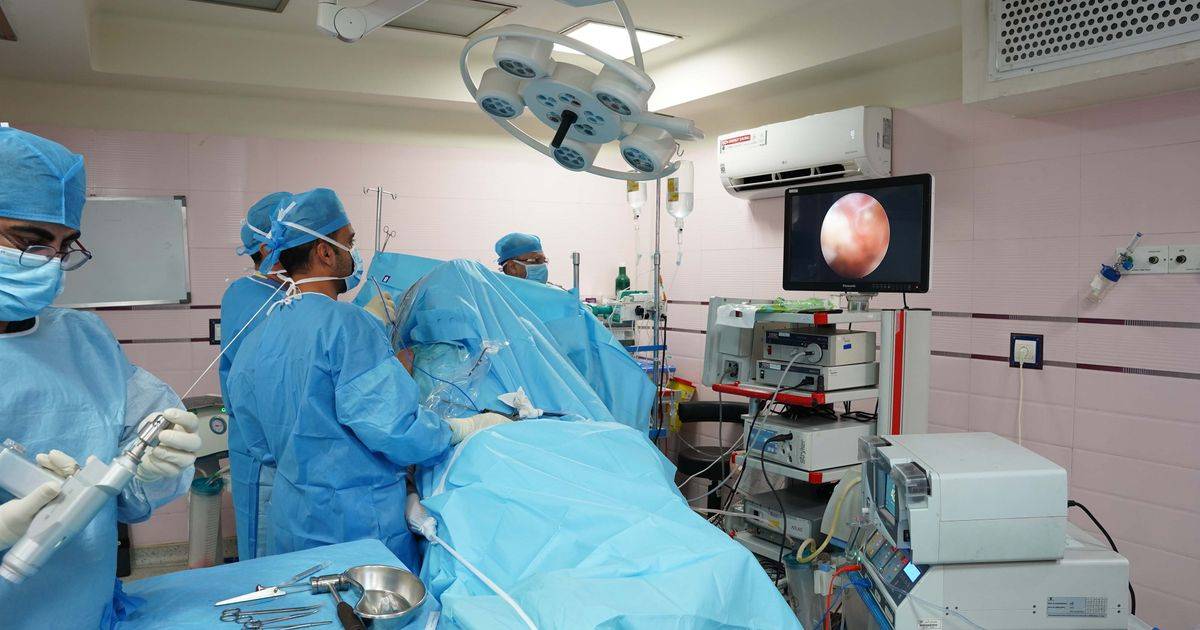
What is laparoscopic gastric plication?
Gastric plication is a weight loss operation that makes the stomach smaller by folding its wall inwards and holding the folds in place with rows of permanent stitches. The most common form folds the long outer curve of the stomach, so it is also called greater curvature plication. The result is a narrow, tube shaped stomach that fills quickly, so you feel full after a small meal.
Im Gegensatz zu Hülsengastrektomie, no part of the stomach is cut away. Unlike Magenbypass, the intestine is not rerouted, so food is absorbed in the normal way. It is done by laparoskopische Chirurgie through a few small cuts.
It is important to be clear about its place. Sleeve gastrectomy and gastric bypass have been studied in large numbers of people over many years. Gastric plication has been studied in fewer people and for shorter periods, and several professional bodies have regarded it as a procedure that still needs more long term data. Many centres therefore do not offer it as a routine first choice.
Other names for laparoscopic gastric plication
- Laparoscopic greater curvature plication (LGCP)
- Gastric imbrication
- Stomach folding surgery
- Gastric plication surgery for weight loss
- Laparoscopic gastric sleeve plication
Why is gastric plication done?
The aim is to help people with Fettleibigkeit lose weight when diet, exercise and medical treatment have not been enough. Weight loss after bariatric surgery can improve or reduce the risk of conditions linked to excess weight, such as:
- Typ 2 Diabetes und Prädiabetes
- Bluthochdruck
- Obstruktive Schlafapnoe
- Raised blood fats (Hyperlipidämie)
- Fettige Lebererkrankung
- Joint pain from Arthrose
- Hormonal problems such as PCO-Syndrom
Some people ask about plication because they do not want part of the stomach removed, or do not want a device placed in the body. These are understandable preferences, but they need to be weighed against the stronger evidence for other operations.
Types of gastric plication and how it compares
- Greater curvature plication: the outer curve of the stomach is freed and folded inwards in one or two layers. This is the standard technique.
- Anterior plication: only the front wall is folded. It reduces the volume less and is used less often.
- Plication with a gastric band: the stomach is folded and an einstellbares Band is placed around its upper part. This is uncommon today.
- Endoskopischer Zugang: endoskopische Schlauchmagenplastik also folds the stomach with stitches but is done from inside through the mouth. It is a different procedure with its own evidence.
| Funktion | Magenplikation | Hülsengastrektomie | Magenbypass |
|---|---|---|---|
| Was ist getan | Stomach folded and stitched | Large part of the stomach removed | Small stomach pouch made and joined to the small intestine |
| Stomach tissue removed | Nein | Ja | No, but it is divided |
| Effect on absorption | Keine Präsentation | Wenig | Reduced for some nutrients |
| Kann es rückgängig gemacht werden? | Possible in principle, especially early; harder later | Nein | Schwierig |
| Long term evidence | Begrenzt | Umfassendem | Umfassendem |
| Weight regain or revision | Reported more often | Kann auftreten | Kann auftreten |
Zu den weiteren etablierten Optionen gehören: Mini-Magenbypass. Your surgeon should explain all of them before you decide.
Who is suitable for gastric plication?
Suitability for any weight loss operation is based on body mass index, weight related health conditions and previous attempts to lose weight, using current guidelines. In general, a person may be considered if they:
- Have obesity at a level where bariatric surgery is recommended, or a lower level together with conditions such as type 2 diabetes
- Have tried supervised diet, activity and medical treatment without lasting success
- Understand that evidence for plication is more limited and still prefer it after hearing the alternatives
- Are fit for general anaesthesia
- Are willing to follow a strict diet plan and attend long term follow up
Wer ist möglicherweise nicht geeignet?
- Menschen mit schweren Saurem Reflux oder ein großes Hiatushernie, in whom another operation may be better
- People with very high body mass index or poorly controlled diabetes, for whom procedures with stronger evidence are usually advised
- Women who are pregnant or planning pregnancy in the near future
- People with untreated eating disorders, uncontrolled psychiatric illness or alcohol or substance dependence
- People with previous major stomach surgery, or stomach conditions found on endoscopy that need treatment first
- People whose medical conditions make anaesthesia unsafe
How to prepare for gastric plication
Tests und Beurteilungen
- Blutuntersuchungen, einschließlich a komplettes Blutbild, sugar, kidney, liver and thyroid tests and vitamin levels
- An EKG and chest and heart assessment as advised
- Ein oberer Endoskopie to look at the food pipe and stomach
- Ein Bauch Ultraschall to check the liver and look for Gallensteine
- A Schlafstudie if sleep apnoea is suspected
- Meetings with a dietitian, a psychologist or counsellor and the anaesthetist
Zu besprechende Medikamente
- Blood thinners, which may need to be stopped or changed for a few days
- Diabetes medicines and insulin, as doses often need to be reduced around surgery
- Blood pressure medicines, hormone tablets, pain relief tablets and herbal supplements
Before and on the day
- A low calorie diet is often advised for one to two weeks beforehand to shrink the liver and make surgery safer.
- Stop smoking as early as possible.
- Do not eat or drink for the number of hours you are told.
- Arrange for someone to take you home and help for the first few days.
How is laparoscopic gastric plication performed?
- Anästhesie: you are given general anaesthesia and are asleep throughout.
- Small cuts: the surgeon makes four or five small cuts in the upper abdomen and fills the abdomen with gas to create working space. A camera and fine instruments are passed through the cuts.
- Freeing the stomach: the fatty tissue and blood vessels attached to the outer curve of the stomach are divided so that this part of the stomach can be moved.
- Größe: a soft tube is passed through the mouth into the stomach to act as a guide, so the remaining passage is not made too narrow.
- Folding and stitching: the outer curve is folded inwards and fixed with a row of non absorbable stitches. A second row is usually added over the first to secure the fold.
- Kontrollen: the surgeon checks for bleeding and may test the stomach with dye or air to confirm there is no leak.
- Verschluss: the guide tube and instruments are removed, the gas is released and the cuts are closed.
The operation usually takes one to two hours.
Was passiert nach dem Eingriff?
You wake up in the recovery area and are moved to the ward. Nausea, retching and a feeling of tightness in the upper abdomen are common in the first few days because the folded stomach wall is swollen. Anti sickness medicines, fluids through a drip and pain relief are given. You are encouraged to walk the same day or the next day to lower the risk of blood clots. Sips of water are started first, followed by clear liquids. Most people go home within a few days, once they can drink enough.
Risks and complications of gastric plication
gemeinsam
- Nausea and vomiting in the first days or weeks
- Pain at the cut sites and shoulder tip pain from the gas
- Difficulty swallowing solid food early on
- Säurereflux oder Sodbrennen
- Constipation and tiredness while on a liquid diet
Uncommon but serious
- Blockage of the stomach if the fold swells, slips or pushes out between the stitches; this may need a repeat operation
- Leak from the stitch line, which can cause a serious infection in the abdomen
- Blutung
- Blood clots in the legs or lungs (see tiefe Venenthrombose)
- Infection of the wounds or chest
- Risiken der Allgemeinanästhesie
Längerfristig
- Stretching of the stomach or loosening of the folds, with weight regain
- Need for conversion to sleeve gastrectomy or gastric bypass
- Vitamin and mineral shortage if the diet is poor
- Gallstones, which can form during rapid weight loss after any bariatric procedure
Results: how well does gastric plication work?
Studies show that many people lose a meaningful amount of excess weight in the first one to two years, and that blood sugar, blood pressure and sleep apnoea can improve as weight falls. However, the available comparisons suggest that average weight loss is lower than after sleeve gastrectomy, and that weight regain and repeat surgery are more frequent as time passes. Results beyond five years are available for far fewer people than for sleeve gastrectomy or gastric bypass.
No weight loss operation works by itself. The result depends on eating habits, physical activity and regular follow up. Your surgeon can share the results from their own practice and help you compare the options honestly.
Recovery after gastric plication
Most people return to desk work in one to two weeks and to more physical work in about four weeks, as advised by the surgeon. The diet is moved forward in stages over several weeks: clear liquids, full liquids, pureed food, soft food and then normal textured food in small portions. Moving too quickly to solid food can cause vomiting, which strains the stitches.
Wann sollte man medizinische Hilfe suchen?
- Vomiting that does not settle, or inability to drink fluids
- Severe or increasing abdominal pain
- Fever, a fast heartbeat or breathlessness
- Bluterbrechen oder schwarzer Stuhlgang
- Redness, swelling or discharge from a wound
- Pain or swelling in one leg, or chest pain
- Dizziness, very dark urine or passing very little urine
Life after gastric plication
- Essen: eat slowly, chew well and stop at the first feeling of fullness. Have three small meals and planned snacks.
- Protein zuerst: include protein at every meal to protect muscle.
- Flüssigkeiten: sip water through the day, but avoid drinking with meals. Avoid fizzy and sugary drinks.
- Zuschläge: take the vitamin and mineral supplements advised by your team.
- Aktivität: start with walking and build up to regular exercise, including strength training once cleared.
- Schwangerschaft: women are usually advised to avoid pregnancy for a period after bariatric surgery; discuss contraception and timing with your doctor.
- Nachverfolgen: attend reviews with the surgeon and dietitian, with blood tests as advised.
Benefits of gastric plication
- No part of the stomach is removed and the intestine is not rerouted
- No stapling and no implanted device
- Normal absorption of food is kept
- Keyhole surgery with small scars
- Can be converted to another bariatric procedure if needed
These points should be balanced against the limited long term evidence described above.
What is the cost of laparoscopic gastric plication in India?
Die Kosten hängen von mehreren Faktoren ab:
- The hospital, city and type of room
- Tests and specialist assessments needed before surgery
- Operating theatre time, anaesthesia and materials used
- Length of hospital stay and any intensive care
- Treatment of other health conditions or complications
- Follow up visits, dietitian support and supplements
Die Kosten variieren je nach Person. Bitte erkundigen Sie sich im Krankenhaus nach den genauen Preisen.
Insurance cover for bariatric surgery differs between policies and may not extend to less established procedures, so confirm this with your insurer in advance.
Why choose Apollo Hospitals for gastric plication?
- Bariatric surgeons work with physicians, dietitians, psychologists and anaesthetists in assessing each person.
- Established options such as sleeve gastrectomy and gastric bypass are discussed alongside plication, so you can make an informed choice.
- Laparoscopic surgery, endoscopy and intensive care services are available.
- Structured diet and follow up programmes support long term weight control.
- Availability differs between centres. Please check with the hospital.
Um Ihre Optionen zu besprechen, können Sie book an appointment with a bariatric surgeon in den Apollo-Krankenhäusern.
Verwandte lesen
- Hülsengastrektomie
- Roux en Y gastric bypass
- Mini-Magenbypass
- Endoskopische Schlauchmagenplastik
- Fettleibigkeit
Questions to ask your doctor about gastric plication
- Why would plication suit me more than sleeve gastrectomy or gastric bypass?
- How many plication operations have you performed, and what results have you seen?
- How much weight can I reasonably expect to lose?
- What is the chance that I will need another operation later?
- What happens if I regain weight?
- How long will nausea and vomiting last after surgery?
- What diet will I follow in the first weeks?
- Which supplements and blood tests will I need?
- Will my insurance cover this procedure?
Häufig gestellte Fragen
1. Is gastric plication the same as sleeve gastrectomy?
No. Both make the stomach narrow, but in sleeve gastrectomy a large part of the stomach is cut away and removed, while in plication the stomach is folded and stitched and nothing is removed.
2. Is gastric plication a proven weight loss surgery?
It has been shown to produce weight loss in the short and medium term. Long term evidence is more limited than for sleeve gastrectomy and gastric bypass, and many centres do not use it as a routine first choice.
3. How much weight can I lose?
This varies widely from person to person. On average, studies report less weight loss than with sleeve gastrectomy. Your surgeon can give a realistic estimate based on your weight, health and habits.
4. Is gastric plication reversible?
In principle the stitches can be released, particularly in the early period. With time, scar tissue forms between the folds and reversal becomes harder. It should not be chosen on the assumption that it can simply be undone.
5. Can the weight come back?
Yes. The folds can loosen or the stomach can stretch, and eating habits matter a great deal. Weight regain is reported more often after plication than after the more established operations.
6. Why is vomiting common after plication?
The folded stomach wall swells for the first few days, which narrows the passage. This usually settles with anti sickness medicines and a liquid diet. Vomiting that continues needs prompt review.
7. How long will I stay in hospital?
Most people stay a few days. You can go home once you are drinking enough fluids, pain is controlled and there are no signs of complications.
8. Will I need vitamin supplements?
Absorption is not changed, but you will be eating much less, so supplements are usually advised, at least for the first year, with blood tests to guide them.
9. Can plication be converted to another operation?
Yes. If weight loss is not enough or a problem develops, it can usually be converted to sleeve gastrectomy or gastric bypass, although repeat surgery carries a higher risk than a first operation.
10. Does gastric plication cure diabetes?
Weight loss often improves blood sugar control, and some people need less medicine. It should not be described as a cure. For people whose main aim is control of type 2 diabetes, operations with stronger evidence are usually preferred.
11. When can I return to work and exercise?
Desk work is often possible in one to two weeks. Walking starts straight away. Heavy lifting and strenuous exercise are usually delayed for about four weeks or as your surgeon advises.
12. Can I become pregnant after gastric plication?
Pregnancy is possible, but it is usually advised to wait until weight has stabilised. Speak to your surgeon and obstetrician about timing and nutrition.
13. Will the scars be visible?
There are four or five small scars on the upper abdomen, which usually fade over several months.
14. Which doctor performs laparoscopic gastric plication?
It is performed by a bariatric surgeon, who is a general or gastrointestinal surgeon with training in laparoscopic weight loss surgery, supported by a dietitian, physician, psychologist and anaesthetist.
Fazit
Laparoscopic gastric plication reduces the size of the stomach by folding and stitching it, without removing tissue or rerouting the intestine. It can help with weight loss, but it has less long term evidence than sleeve gastrectomy and gastric bypass, and weight regain and repeat surgery are more often reported. If you are considering it, ask your bariatric surgeon to compare all the options for your situation before deciding.
Diese Seite dient allgemeinen Informationen und ersetzt nicht die Beratung durch Ihren Arzt. Behandlungsentscheidungen sollten in Absprache mit einem qualifizierten Facharzt getroffen werden, der Ihre Krankengeschichte kennt.
Kürzlich Hinzugefügt


Bariatric Surgeons at Apollo Hospitals



 Verfügbar am Sonntag

Verfügbar am Sonntag




Haftungsausschluss:
Die Informationen auf dieser Seite dienen ausschließlich allgemeinen Informations- und Bildungszwecken. Obwohl wir angemessene Anstrengungen unternehmen, die Richtigkeit, Zuverlässigkeit und regelmäßige Überprüfung der Informationen zu gewährleisten, ersetzen diese keine professionelle medizinische Beratung, Diagnose oder Behandlung.
Die Eignung eines medizinischen Eingriffs sowie dessen Nutzen, Risiken, Vorbereitung, Genesung, mögliche Komplikationen und zu erwartende Ergebnisse können von Person zu Person variieren. Ihr Arzt wird anhand Ihres individuellen Zustands und Ihrer Krankengeschichte entscheiden, ob ein Eingriff für Sie geeignet ist.
Bitte konsultieren Sie vor jeder Entscheidung bezüglich eines medizinischen Eingriffs einen qualifizierten Arzt oder eine qualifizierte Ärztin, um eine individuelle Beratung zu erhalten.
Weitere Informationen darüber, wie unsere medizinischen Inhalte erstellt, geprüft, aktualisiert und gepflegt werden, finden Sie in unseren [Redaktionellen Richtlinien].




