


Examiné par l'équipe éditoriale d'Apollo
Réponse rapide
Pyeloplasty is surgery to repair a blockage where the kidney joins the ureter, the tube that carries urine to the bladder. The surgeon removes or widens the narrow part and rejoins the tube so that urine drains freely. It can be done through an open cut, by laparoscopic (keyhole) surgery or with robotic assistance. It is done in babies, children and adults, and it relieves the blockage in most people.
| Faits marquants | DÉTAILS |
|---|---|
| Ce que c'est | Repair of a blockage at the junction of the kidney and the ureter |
| Raison principale | Ureteropelvic junction (UPJ or PUJ) obstruction causing a swollen kidney |
| Types principaux | Open, laparoscopic and robotic |
| Anesthésie | Anesthésie générale |
| Séjour à l'hôpital | About one to a few days, depending on the method and age |
| Stent | A soft internal tube is usually left in place for a few weeks |
| Récupération | Around two to six weeks, depending on the method |
| Interprété par | Urologist or paediatric urologist |
Qu’est-ce que la pyéloplastie ?
Urine made by the kidney collects in a funnel-shaped area called the renal pelvis and then flows down the ureter. If the point where they meet is too narrow, urine backs up and the kidney swells. This is called obstruction de la jonction urétéro-pelvienne, and the swelling is called hydronéphrose.
In pyeloplasty, the surgeon reshapes this junction. In the most common technique, the narrow segment is cut out and the healthy ureter is stitched back to the renal pelvis with a wide opening.
Other names for pyeloplasty
- PUJ repair or UPJ repair
- Pyéloplastie démembrée
- Anderson-Hynes pyeloplasty
- Kidney blockage surgery
- Surgery for PUJ obstruction
Types of pyeloplasty
The repair inside the body is similar in all three methods. What differs is how the surgeon reaches the kidney. Each method has its own detailed page.
| Type | Ce que c'est | Lorsqu'il est couramment utilisé | Lire la suite |
|---|---|---|---|
| Ouvrez | The repair is done through one cut in the side or upper abdomen | Often in babies and small children, after earlier kidney surgery, or when keyhole surgery is not suitable | Pyéloplastie ouverte |
| Laparoscopique | Chirurgie mini-invasive par quelques petites incisions, à l'aide d'une caméra et d'instruments fins. | Older children and adults who are fit for keyhole surgery | Pyéloplastie laparoscopique |
| Robotique | Keyhole surgery in which the surgeon controls robotic instruments from a console | Similar cases to laparoscopic surgery; the instruments can make the fine stitching easier | Pyéloplastie robotisée |
For children, see also the page on paediatric surgery for PUJ obstruction.
Pourquoi fait-on une pyéloplastie ?
Not every swollen kidney needs surgery. Mild cases, especially in babies found on pregnancy scans, are often watched with repeat scans. Pyeloplasty is usually advised when:
- Scans show that the kidney is draining poorly or losing function
- The swelling is getting worse over time
- There is repeated pain in the side or back, sometimes after drinking a lot of fluid
- There are repeated infections rénales or calculs rénaux linked to the blockage
The blockage is most often present from birth. In some people a blood vessel crossing the ureter presses on it, and less often scarring from stones, infection or earlier surgery is the cause. If the kidney is in severe pain or infected, a temporary drain such as a percutaneous nephrostomy may be placed first. If a kidney has already lost almost all its function, removal (néphrectomie) may be discussed instead.
How is pyeloplasty done in general?
Before surgery, the kidney is assessed with a échographie rénale , l’aspect économique scintigraphie rénale that shows how well each kidney works and drains. Some people also need a Scanographie, along with blood and urine tests. Any urine infection is treated first.
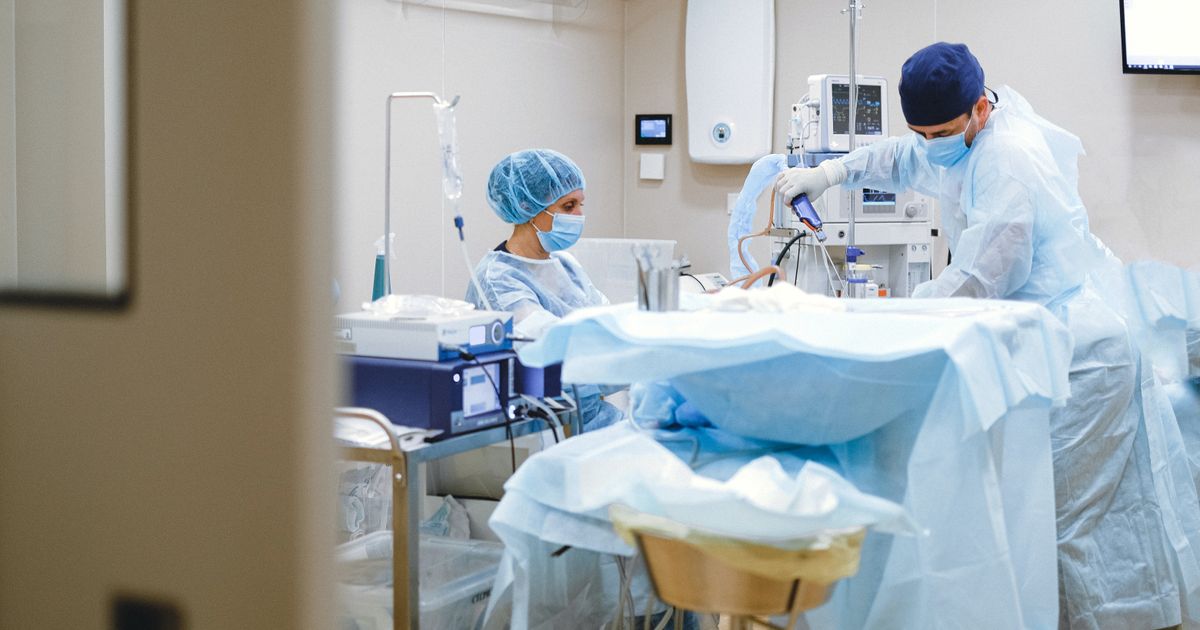
L'opération est réalisée sous contrôle général anesthésie. The surgeon reaches the kidney through an open cut or by trou de la serrure or robotique surgery, removes the narrow segment and joins the ureter to the renal pelvis with fine stitches. A soft tube called a stent is usually placed inside the ureter to protect the join while it heals. The stent is removed some weeks later, usually through a short telescope procedure.
Risks of pyeloplasty
- Urine leaking from the new join, which usually settles with drainage
- Urinary infection or wound infection
- Saignement
- Stent discomfort, such as urgency, frequent urination or blood-tinged urine, until the stent is removed
- The blockage returning, which may need a further procedure
- Injury to nearby organs or blood vessels, which is uncommon
- A keyhole operation being changed to an open one for safety
- Hernia at a wound site, blood clots and reactions to anaesthesia
Recovery after pyeloplasty
Most people go home within one to a few days. After laparoscopic or robotic surgery, many return to light work in two to three weeks. After open surgery in adults, recovery often takes four to six weeks. Drink plenty of fluids unless told otherwise, walk daily, and avoid heavy lifting and contact sports until your surgeon agrees. Do not miss the appointment to remove the stent, because a stent left in too long can cause stones and infection. A follow-up ultrasound and renal scan a few months later check that the kidney is draining well.
Quand demander de l'aide médicale
- Fièvre ou frissons
- Severe pain in the side or abdomen that is not eased by the prescribed pain relief
- Saignements abondants ou présence de caillots dans les urines
- Émission d'urine très peu ou pas du tout
- Redness, swelling or leaking fluid from a wound
- Vomissements répétés
- Pain or swelling in one leg, or breathlessness
What is the cost of pyeloplasty in India?
Le coût dépend de plusieurs facteurs :
- The method used (open, laparoscopic or robotic)
- The age of the patient and any other health conditions
- Scans and tests needed before and after surgery
- Durée du séjour à l'hôpital et type de chambre
- Stent placement and its later removal
- La ville et l'hôpital
Les coûts varient d'une personne à l'autre. Veuillez vous renseigner auprès de l'hôpital pour connaître les tarifs exacts.
Health insurance usually covers medically necessary kidney surgery. Check your policy terms before admission.
Why choose Apollo Hospitals for pyeloplasty?
- Urologists experienced in open and keyhole kidney reconstruction
- Paediatric urology and paediatric anaesthesia for babies and children
- Ultrasound, CT and nuclear medicine scans for assessment and follow-up
- Robotic surgery at selected centres. Availability differs between centres. Please check with the hospital.
To discuss a blocked or swollen kidney, you can prendre rendez-vous avec un urologue aux hôpitaux Apollo.
Questions to ask your doctor about pyeloplasty
- Does my kidney, or my child's kidney, need surgery now, or can it be watched?
- Which type of pyeloplasty do you recommend, and why?
- How well is the affected kidney working at present?
- How long will the stent stay, and how will it be removed?
- What follow-up scans will be needed?
- What happens if the blockage comes back?
FAQ
1. La pyéloplastie est-elle une intervention chirurgicale majeure ?
Yes, it is a reconstructive operation on the kidney done under general anaesthesia. With keyhole and robotic methods the cuts are small and recovery is usually quicker than with open surgery.
2. Which type of pyeloplasty is best?
All three methods aim for the same repair. The choice depends on age, body size, previous surgery, the anatomy of the kidney and what is available at the hospital.
3. How successful is pyeloplasty?
Pyeloplasty relieves the blockage in the large majority of patients. A small number have a narrowing again and need further treatment.
4. Why is a stent needed after pyeloplasty?
The stent keeps the new join open and lets urine drain while the tissues heal. It is temporary and is usually removed after a few weeks.
5. Can babies and children have pyeloplasty?
Yes. PUJ obstruction is often found before or soon after birth. Many babies only need monitoring, but those with poor drainage or falling kidney function are treated with pyeloplasty by a paediatric urologist.
6. Combien de temps dure la récupération ?
Most adults return to light activity in two to three weeks after keyhole or robotic surgery and in four to six weeks after open surgery.
7. Can the blockage come back after pyeloplasty?
It is uncommon, but scar tissue can narrow the join again. A repeat blockage can usually be treated with an endoscopic procedure or a second repair.
8. Which doctor performs pyeloplasty?
A urologist performs pyeloplasty in adults. In babies and children it is done by a paediatric urologist or paediatric surgeon.
Conclusion
Pyeloplasty repairs a blockage at the outlet of the kidney and protects kidney function. It can be done by open, laparoscopic or robotic surgery, and the right method depends on the patient and the surgeon's advice. Read the page for the type suggested to you and discuss the plan with your urologist.
Cette page est fournie à titre informatif et ne remplace pas l'avis de votre médecin. Les décisions relatives à votre traitement doivent être prises en concertation avec un spécialiste qualifié connaissant vos antécédents médicaux.
Pyeloplasty at Apollo Hospitals near you
Choisissez votre ville pour consulter les médecins, les installations et les modalités de réservation de cet hôpital.
Récemment Ajouté


Urologues des hôpitaux Apollo



Avis de non-responsabilité :
Les informations présentées sur cette page sont fournies à titre informatif et éducatif uniquement. Bien que nous mettions tout en œuvre pour garantir l'exactitude, la fiabilité et la mise à jour régulière de ces informations, elles ne sauraient se substituer à un avis, un diagnostic ou un traitement médical professionnel.
L’opportunité d’une intervention médicale, ainsi que ses avantages, ses risques, sa préparation, sa convalescence, ses complications potentielles et ses résultats attendus, peuvent varier d’une personne à l’autre. Votre professionnel de santé déterminera si une intervention est appropriée en fonction de votre état de santé et de vos antécédents médicaux.
Veuillez consulter un professionnel de la santé qualifié pour obtenir des conseils personnalisés avant de prendre toute décision concernant une intervention médicale.
Pour plus d'informations sur la manière dont notre contenu médical est créé, examiné, mis à jour et maintenu, veuillez lire notre [Politique éditoriale].




