


Ndị otu nchịkọta akụkọ Apollo nyochachara ya
Azịza ngwa ngwa
Vitiligo surgery moves healthy pigment cells from normally coloured skin to white patches, using small skin grafts or a liquid suspension of cells. It is considered only when vitiligo has been stable, with no new or spreading patches, usually for at least a year, and when creams and light treatment have not restored colour. Many people gain useful repigmentation, but results vary with the body site and type of vitiligo, colour match is not always exact, and surgery does not prevent new patches in the future.
| Eziokwu eziokwu | Details |
|---|---|
| Ihe ọ bụ | Transfer of pigment cells or thin skin from normal skin to stable white patches |
| Onye ọ bụ maka | People with stable vitiligo that has not responded to medical treatment |
| Ụzọ isi | Punch grafts, suction blister grafts, thin split skin grafts, cell suspension transplant |
| Ahụhụ | Usually local anaesthesia |
| Staylọ ọgwụ nọrọ | Day procedure in most cases |
| When colour appears | Starts within weeks and continues to improve over several months |
| Limits | Results vary, and it does not cure the tendency to vitiligo |
| Onye na-eme ya | A dermatologist or dermatosurgeon, sometimes a plastic surgeon |
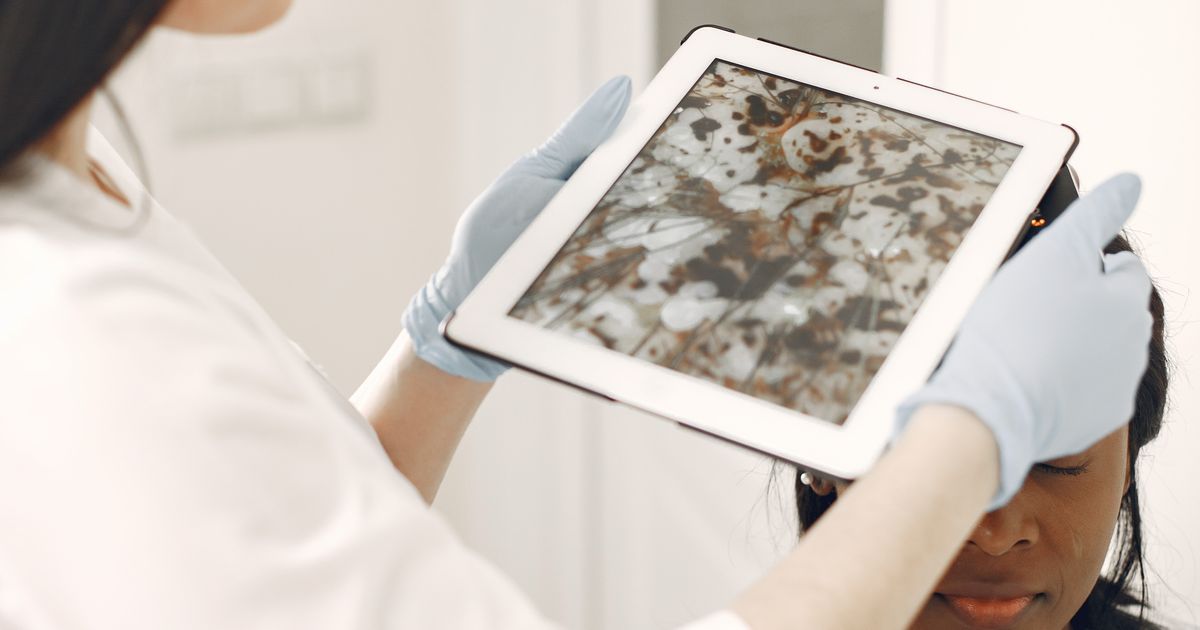
What is vitiligo surgery?
Vitiligo is a condition in which the cells that give skin its colour, called melanocytes, are lost from areas of skin, leaving white patches. It is thought to be an Ọnọdụ autoimmune. It is not infectious, it cannot be passed on by touch, and it does not harm general health. It is different from albinism, in which pigment is reduced from birth. Many people live comfortably with it and choose not to treat it, while others find it distressing and want treatment. Both are reasonable.
Medical treatment, such as creams that calm the local immune response and light treatment (phototherapy), works by encouraging the remaining pigment cells to multiply and spread. Where no pigment cells are left in a patch, these treatments may not work. Vitiligo surgery fills that gap. It brings pigment cells from the person's own normally coloured skin, usually from the thigh or buttock, and places them in the white patch so that they can settle and produce colour.
Other names for vitiligo surgery
- Vitiligo grafting
- Melanocyte transplant or melanocyte transfer
- Skin grafting for vitiligo
- Leucoderma surgery or white patch surgery
- Cell suspension transplant for vitiligo
Why is vitiligo surgery done?
The goal is to restore colour to patches that have stopped changing and have not responded to other treatment. It may be considered for:
- Segmental vitiligo: patches on one side of the body in a band, which usually stabilise early and respond well to surgery.
- Focal vitiligo: one or a few small stable patches.
- Stable generalised vitiligo: patches on both sides of the body that have been inactive for a long time, where a few stubborn areas remain after medical treatment.
- Patches with white hairs, where the pigment reserve in the hair roots is lost and medical treatment is unlikely to work.
- Stable white patches from other causes, such as after a burn or injury, in selected cases.
Surgery treats individual patches. It does not correct the underlying tendency, so new patches can still appear later in life.
Types of vitiligo surgery
There are two families of technique. Tissue grafts move small pieces of skin. Cellular grafts move a suspension of cells prepared from a small piece of skin.
Tissue grafting methods
- Miniature punch grafting: tiny circles of normal skin, one to one and a half millimetres across, are placed in matching holes made in the white patch. Colour spreads outwards from each graft.
- Suction blister grafting: gentle suction raises blisters on normal skin over one to two hours. The thin roof of each blister, which contains the pigment cells, is laid on the prepared patch.
- Thin split skin grafting: a very thin sheet of normal skin is shaved off and laid over the patch. It is related to the grafting described under split thickness skin grafting, but the sheet used is much thinner.
- Hair follicle grafting: single hair roots, which are rich in pigment cells, are placed in small hair bearing patches.
Cellular grafting methods
- Non-cultured epidermal cell suspension: a small thin piece of normal skin is treated in the procedure room to separate its cells, which are then spread as a liquid over the prepared patch. One small donor piece can treat an area several times its own size.
- Cultured melanocyte transplant: pigment cells are grown in a laboratory for some weeks to increase their number before being applied.
Vitiligo surgery methods compared
| Method | Kacha mma dabara na | uru | -agaghị emeli |
|---|---|---|---|
| Ịkụnye ihe n'ime ọkpọkọ | Small patches, difficult sites such as fingers | Simple, needs little equipment | Can leave a pebbled surface, slower for large areas |
| Suction blister grafting | Small to medium patches, lips, eyelids | Very good colour match, little scarring | Time consuming, limited area per session |
| Thin split skin grafting | Medium to larger patches | Covers an area quickly, even colour | Needs skill to cut evenly, edges can show |
| Cell suspension transplant | Larger areas | Small donor area treats a wide patch, smooth finish | Needs trained staff and laboratory style equipment |
Ònye kwesịrị ekwesị, ònyekwa nwere ike ọ gaghị adabara?
Stability is the single most important condition. Vitiligo is generally called stable when, for at least one year, there have been no new patches, no growth of existing patches, and no white patches forming at sites of minor injury such as scratches.
You may be suitable if your vitiligo is stable, medical treatment has been given a fair trial, your expectations are realistic, and you are willing to follow aftercare, which often includes light treatment.
Vitiligo surgery is usually not advised if:
- The vitiligo is active or has changed within the past year. Grafting during activity often fails and can trigger new patches at the donor site.
- You form keloid or thick raised scars.
- You have a bleeding disorder or an active skin infection at the site.
- Very large areas of the body are involved, where there is too little normal skin to act as a donor.
- The patches are over the fingertips, toes, or bony points such as knuckles and ankles, where results are less predictable. Surgery can still be tried at these sites, but the chance of success is lower.
- The person is a young child who cannot stay still under local anaesthesia. Surgery is usually postponed until the child is older and wishes to have it.
How to prepare for vitiligo surgery
Nyocha na ule
- A detailed history of when patches appeared and whether any have changed, often with photographs to confirm stability.
- Examination of the skin, sometimes under a special ultraviolet lamp that makes the patches easier to map.
- Nnwale ọbara dịka ọbara zuru ezu, blood sugar and clotting tests, and screening for infections before the procedure.
- Ihe nyocha ọrụ gị may be advised, because thyroid conditions are more common in people with vitiligo.
- A biopsy akpụkpọ ahụ is rarely needed, only when the diagnosis is in doubt.
Ọgwụ ndị a ga-atụle
Tell your doctor about all medicines and supplements. Blood thinners may need to be adjusted. Mention any allergy to numbing injections, dressings or tapes. Do not stop any prescribed medicine without advice.
N'ụbọchị
Have a bath and wear loose, comfortable clothing that will not rub the treated and donor areas. Arrange for someone to accompany you home, and plan to rest the treated part for about a week.
How is vitiligo surgery performed?
The steps below describe a cell suspension transplant. Other methods follow the same broad sequence of taking donor skin, preparing the patch and transferring the pigment cells.
- Marking and cleaning: the white patches and the donor area, usually on the thigh or buttock, are marked and cleaned with antiseptic.
- Ọnụ: a numbing cream or injection is given at both sites. Large areas or anxious patients may need sedation or, rarely, general anaesthesia.
- Taking donor skin: a very thin shaving of normal skin is taken.
- Preparing the cells: the donor skin is treated in a solution that loosens the cells, the top layer is separated, and the pigment cells and other skin cells are collected into a small volume of liquid.
- Preparing the patch: the top layer of the white patch is gently removed with a fine abrading tool or a laser until pinpoint bleeding is seen, which gives the cells a bed to settle on.
- Applying the cells: the liquid is spread evenly over the prepared area.
- Uwe: a non stick dressing and padding are applied and secured to keep the cells in place.
The procedure takes from one to a few hours, depending on the area and the method. You go home the same day in most cases.
Gịnị ga-eme ma e mechaa?
You will be asked to keep the treated part still and dry. Dressings are usually removed after about a week. The treated skin looks pink or red at first. Colour does not appear immediately. Brown specks or a light tan usually begin to show within a few weeks, then spread and merge over the following months. Your doctor may advise light treatment or controlled sun exposure to stimulate the transplanted cells.
Ihe egwu na nsogbu
More common and usually minor
- Temporary redness, swelling or soreness at both sites
- Colour that is slightly lighter or darker than the surrounding skin, which often evens out with time
- Incomplete or patchy repigmentation, sometimes with a pale rim at the edge of the patch
- Small white cysts (milia) on the treated skin
- Temporary darkening or lightening of the donor area
Ihe na-adịkarịghị
- Failure of the graft to take, so that little or no colour develops
- Ofufe ọrịa
- Scarring or a change in skin texture at the donor or treated site
- A pebbled or cobblestone surface after punch grafting
- Thick or raised scars in people prone to them
- New vitiligo at the donor site, mainly if the disease was not truly stable
Nsonaazụ: kedu ka ọ si arụ ọrụ nke ọma?
In carefully selected people with stable vitiligo, most studies report that a majority gain good repigmentation of the treated patches. Results are best in segmental and focal vitiligo and on the face, neck and trunk. They are less reliable in generalised vitiligo and over the hands, feet and joints. It is honest to say that results vary from person to person and from patch to patch, that some patches need a second session, and that the final colour may not match exactly. Repigmented skin usually keeps its colour if the vitiligo stays inactive, but colour can be lost again, and new patches can appear elsewhere, if the condition becomes active. No doctor can guarantee the outcome.
Recovery after vitiligo surgery
- Izu mbụ: keep the dressing dry and limit movement of the treated part. Avoid sweating and exercise that could shift the dressing.
- After the dressing comes off: wash gently, pat dry and do not scrub or pick at crusts. The donor site heals in one to two weeks.
- Weeks to months: attend light treatment sessions if advised and protect the area from sunburn.
- Sochie: visits are arranged to remove dressings and to record progress with photographs over six to twelve months.
Mgbe ị ga-achọ enyemaka ahụike
- Increasing pain, swelling, warmth or pus at either site
- ahụ ọkụ
- Ọbara ọbara nke na-abanye n'ime ihe mkpuchi ahụ
- A dressing that slips or gets wet in the first few days
- New white patches or spreading of existing ones
Life after vitiligo surgery
Protect the skin from sunburn with clothing and sunscreen, because burns and injuries can trigger new patches in people with vitiligo. Avoid friction from tight straps, harsh scrubbing and repeated pressure on vulnerable areas. Keep follow-up appointments, and report any sign of activity early so that medical treatment can be restarted. Vitiligo can affect confidence and mood. If it is weighing on you, tell your doctor, as counselling and support groups can help.
Benefits of vitiligo surgery
- Offers a chance of colour in stable patches that have not responded to creams or light treatment
- Uses the person's own cells, so there is no rejection
- Usually a day procedure under local anaesthesia
- A small donor area can treat a larger patch with cellular methods
- Repigmentation is often long lasting while the condition stays stable
What is the cost of vitiligo surgery in India?
Ọnụ ego ahụ dabere na:
- Usoro ejiri mee ihe
- The size and number of patches and the number of sessions needed
- Type of anaesthesia and whether a day care admission is required
- Laboratory materials and dressings
- Light treatment sessions afterwards
- Obodo na ụlọ ọgwụ
Ọnụ ego ya dị iche iche site n'otu onye gaa na onye ọzọ. Biko gaa leta ụlọ ọgwụ maka ọnụahịa ya n'ezie.
Insurers often treat vitiligo surgery as a cosmetic procedure and may not cover it, so check your policy before planning treatment.
Why choose Apollo Hospitals for vitiligo surgery?
- Dermatologists who assess stability carefully and advise surgery only when it is likely to help
- Medical treatment and light treatment offered alongside surgery, since they are often combined
- Procedure rooms and day care facilities with attention to sterility and comfort
- Respectful, private consultations and plain information about what can and cannot be achieved
- Ebe dị iche iche dị. Biko kpọtụrụ ụlọ ọgwụ.
To discuss whether your vitiligo is suitable for surgery, book a consultation with a dermatologist at Apollo Hospitals.
Ọgụgụ metụtara
- UV treatment for vitiligo and why it works
- Full thickness skin grafting
- Different types of skin diseases
- Hyperpigmentation
Questions to ask your doctor about vitiligo surgery
- Is my vitiligo stable enough for surgery, and how have you judged that?
- Which method do you recommend for my patches, and why?
- What result is realistic for the areas I want treated?
- Would a test graft be sensible first?
- Where will the donor skin come from, and how will that area look afterwards?
- Will I need light treatment after surgery, and for how long?
- What happens if the colour does not develop or the vitiligo becomes active again?
- What will the total cost be, including aftercare?
Ajụjụ
1. Is vitiligo surgery a permanent cure?
No. It can restore colour to treated patches, often for many years, but it does not remove the underlying tendency. New patches can appear if the condition becomes active again.
2. What does stable vitiligo mean?
It means no new patches, no spreading of existing patches and no patches at sites of minor injury, usually for at least one year. Surgery is offered only when this is the case.
3. How successful is vitiligo surgery?
Most well selected people gain good repigmentation, but results vary with the type of vitiligo, the body site and the method. Hands, feet and joints respond less well than the face and trunk.
4. Is vitiligo surgery painful?
The areas are numbed, so the procedure itself is not painful. Mild soreness, like a graze, is common for a few days afterwards.
5. How long does it take to see colour?
Colour usually begins to appear within a few weeks and continues to develop for six months or longer.
6. Will the colour match my normal skin?
Often it matches closely, but it may be a little lighter or darker at first. The difference usually lessens over months, though an exact match cannot be promised.
7. Can vitiligo surgery be done on the lips, face and hands?
Yes. The face and lips often respond well. Fingers, toes and skin over joints are harder to treat and may give partial results.
8. Can children have vitiligo surgery?
It can be done in older children and teenagers with stable vitiligo who can cooperate with the procedure and aftercare. It is not usually done in young children.
9. Will the donor area be scarred?
The donor area usually heals with a faint change in colour or texture that fades. Visible scarring is uncommon when thin grafts are taken, but it can happen.
10. Do I need light treatment after surgery?
Many doctors advise light treatment or controlled sun exposure for some weeks to months, because it helps the transplanted pigment cells spread.
11. Can vitiligo surgery be repeated?
Yes. Areas that did not respond fully can be treated again after some months, and other stable patches can be treated in separate sessions.
12. What are the alternatives to surgery?
Options include prescribed creams, light treatment, skin camouflage, or no treatment at all. Vitiligo does not damage health, so choosing not to treat it is a valid decision.
13. Is vitiligo surgery covered by insurance?
Often it is not, because many insurers class it as cosmetic.
14. Which doctor performs vitiligo surgery?
A dermatologist with training in skin surgery (a dermatosurgeon) performs it. Some larger grafting procedures are done with a plastic surgeon.
mmechi
Vitiligo surgery can bring colour back to white patches that have stayed unchanged and have not responded to medical treatment. It works best in stable, limited disease and on certain parts of the body, and it needs patience, aftercare and realistic expectations. Results differ between people, and it does not stop vitiligo from returning. A dermatologist can assess stability and explain which method, if any, is right for you.
Ibe a bụ maka ozi izugbe, ọ naghị anọchi ndụmọdụ sitere n'aka dọkịta gị. Ọ dị mkpa ka ọkachamara ruru eru nke maara akụkọ ahụike gị mee mkpebi ọgwụgwọ.
Na-adịbeghị anya agbakwunyere


Ndị dọkịta akpụkpọ ahụ na ụlọ ọgwụ Apollo


Disclaimer:
Ozi dị na peeji a bụ maka ebumnuche ozi na agụmakwụkwọ naanị. Ọ bụ ezie na anyị na-eme mgbalị ezi uche dị na ya iji hụ na ozi ahụ ziri ezi, a pụrụ ịtụkwasị obi, ma na-enyocha ya mgbe niile, ekwesighi iwere ya dị ka ihe nnọchi anya ndụmọdụ ahụike ọkachamara, nchọpụta, ma ọ bụ ọgwụgwọ.
Ọdịmma nke usoro ọgwụgwọ, tinyere uru ya, ihe egwu ya, nkwadebe ya, mgbake ya, nsogbu ndị nwere ike ime, na ihe ndị a tụrụ anya ya, nwere ike ịdị iche site n'otu onye gaa na onye ọzọ. Ọkachamara ahụike gị ga-ekpebi ma usoro ọgwụgwọ ahụ ọ dabara adaba dabere na ọnọdụ gị na akụkọ ahụike gị.
Biko gakwuru ọkachamara ahụike ruru eru maka ndụmọdụ nkeonwe tupu ịme mkpebi gbasara usoro ọgwụgwọ ọ bụla.
Maka ozi ndị ọzọ gbasara otu esi emepụta, nyochaa, melite, na idobe ọdịnaya ahụike anyị, biko gụọ [Iwu Nchịkọta Akụkọ] anyị.




