1066
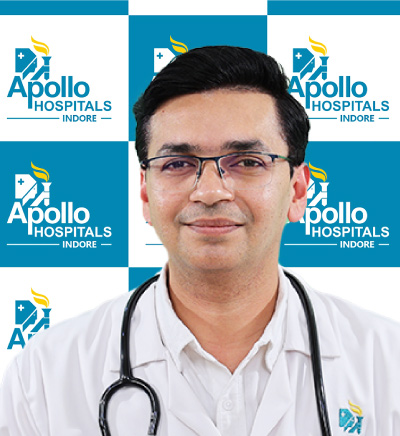
Kauka Ankit Mathur
Kauka Ankit Mathur
ʻEpekema Neuro: ʻokiʻoki Neuro
ʻIke: 9+ Makahiki
Hoʻonaʻauao: MBBS, MS, MC
ikona
English
ikona
11: 00 - 13: 00 Pōʻakahi - Pōʻaono
Palapala Kūlana
Moiwahine
E koho i ka lā
Ke hoʻouka nei i nā lā i loaʻa...
Loaʻa nā Slots
×
About Kauka Ankit Mathur

In the precision-driven world of neurosurgery, a single millimeter can be the difference between a life-changing recovery and a permanent functional deficit. Dr. Ankit Mathur is a highly specialized neurosurgeon in Indore who has dedicated his career to navigating these high-stakes boundaries. Currently a Consultant in the Department of Neurosciences at Apollo Hospitals, Indore, Dr. Ankit Mathur brings nearly two decades of clinical experience to Central India, specializing in the brain, complex spine, and skull base.

His surgical approach is rooted in functional preservation. This philosophy ensures that while a tumor or pathology is aggressively addressed, the patient’s motor skills, speech, and personality remain fully protected. For patients and families in Indore, Dr. Ankit Mathur is recognized not just for his surgical hands, but for his ability to translate complex diagnoses into clear, patient-centered recovery plans.

Academic Foundation and Global Training

Technical mastery in neurosurgery requires training at the highest level. Dr. Ankit Mathur’s academic journey is anchored in India's most prestigious medical institutions:

  • MBBS: Rani Durgavati Vishwavidyalaya, Jabalpur.
  • MS (Ke ʻoki nui): University College of Medical Sciences & GTB Hospital, New Delhi.
  • MCh (Neurosurgery): G.B. Pant Hospital / Maulana Azad Medical College (MAMC), New Delhi one of India’s most rigorous neurosurgical training grounds.
  • International Fellowship: A specialized fellowship in Endovascular and Cerebrovascular Neurosurgery from the World Federation of Neurosurgical Societies at the Medical Centre, East Tokyo, Japan.

This international exposure to Japanese neurosurgical protocols allows Dr. Ankit Mathur offers endovascular and micro-neurosurgical techniques that are standard in global medical hubs, right here in Indore.

Technical Edge: The Awake Craniotomy

Perhaps the most significant clinical differentiator in Dr. Ankit Mathur’s practice is his expertise in Awake Craniotomy. This procedure is a masterclass in neurosurgical coordination, used specifically when a brain tumor invades eloquent areas of the regions responsible for speech, limb movement, and cognitive processing.

The Real-Time Mapping Advantage

In a traditional surgery, a patient is under general anesthesia, making it impossible for the surgeon to check brain function during the resection. During an Awake Craniotomy, Dr. Ankit Mathur keeps the patient conscious but pain-free. As he resects the tumor, he communicates with the patient to map brain function in real-time. This immediate feedback loop allows him to remove the tumor as aggressively as possible while stopping the moment a functional pathway is at risk. This precision is why he is frequently cited as the best neurosurgeon in Indore for complex neuro-oncology.

heluhelu mai o More ikona
ka hoao ana
WFNS International Fellow ma Endovascular a me Cerebrovascular Neurosurgery ma TWMU Medical Center, East Tokyo, Iapana, ʻOkakopa 2018–Ianuali 2019
Luna Hoʻoponopono Neurosurgery, Halemai ʻo Shalby, Indore, MP, ʻOkakopa 2018–Iune 2019
Luna Kūkākūkā Hoa, Madanta Super Speciality Hospital, Indore, MP, Malaki 2016–2017

Special hoihoi

Dr. Ankit Mathur’s clinical focus extends across the four pillars of modern neurosurgery:
The era of large, traumatic back incisions is over. Dr.Ankit  Mathur specializes in Minimally Invasive Spine Surgery (MISS). By using specialized tubes, microscopes, and keyhole incisions, he treats conditions like spinal canal stenosis, disc prolapse, and spinal cord injuries. These techniques lead to significantly less muscle damage, minimal blood loss, and a much faster return to daily activity.
Managing the blood vessels of the brain requires extreme delicacy. Dr. Ankit Mathur is an expert in Cerebral Aneurysm Clipping, a micro-surgical intervention to prevent life-threatening hemorrhages. He also manages Arteriovenous Malformations (AVMs) and performs brain dural arteriovenous fistula embolization, utilizing his specialized training from Japan.
Skull base tumors are notoriously difficult to reach. Dr. Ankit Mathur uses advanced Navigation-Guided Surgery (essentially GPS for the brain) to reach these deep-seated tumors with minimal brain retraction. He also provides dedicated care for pediatric patients, treating conditions like hydrocephalus and craniosynostosis with a focus on the unique developmental needs of children.
As a consultant at Apollo Hospitals, Dr. Ankit Mathur is at the forefront of emergency neurosurgery. He provides life-saving interventions for traumatic brain injuries (TBI) and spinal fractures, where immediate decompression of the brain or spine is critical for long-term survival and function.
Dr. Ankit Mathur’s surgical expertise is enhanced by the cutting-edge technology available at Apollo Hospitals, Indore:
StealthStation S8 Neuronavigation: This system allows Dr. Ankit Mathur to track his surgical instruments in a 3D digital map of the patient’s brain, ensuring sub-millimeter accuracy.
Intraoperative Fluorescence (5-ALA): Dr.Ankit Mathur was recognized for his work using 5-ALA, a special dye that makes malignant tumor cells glow under a specific light, allowing for more thorough tumor removal.
Laminar Flow Operation Theaters: Ultra-sterile environments designed to reduce the risk of surgical site infections to nearly zero.
24/7 Neuro ICU: A dedicated intensive care unit staffed by neuro-intensivists and nurses specialized in neurological monitoring.

wale nô

uhi-paheʻe-lālā
Ke komo nei i ke kōkua a me ka hana kūʻokoʻa ma mua o 1,500 mau hihia neurosurgery maʻamau a me nā hihia pilikia.
uhi-paheʻe-lālā
Ua kōkua a hana kūʻokoʻa ma mua o 100 mau hihia Diagnostic a me Therapeutic Interventional Neuroradiology

Nā Makana & e piʻi like

ʻO ka Makana Pepa Maikaʻi Loa no ka Hōʻike ʻana i ka Pepa i kapa ʻia ʻo "Usefulness Of Intraoperative Fluorescence Using 5-Aminolevulinic Acid For Radical Excision Of Malignant Glioma In Neurosurgery," Surgeon Society Of India Annual Meet, Jaipur 2013
ikona-makana

noiʻi & Publications

01
Ua komo i ka hana noiʻi ma ke ʻoki ʻana o ka Glioma
Hoʻoponopono a me nā kaʻina hana kaumaha
nānā i More hoʻouka hou aku

FAQs

Q: Who is the best neurosurgeon in Indore for complex brain surgeries?
Dr. Ankit Mathur is a leading choice for complex intracranial cases. His specialized training in Japan and his experience with Awake Craniotomy at Apollo Hospitals provide a level of precision that is essential for high-risk tumor and vascular surgeries.
Q: What conditions are treated by a neurosurgeon in Indore?
Neurosurgeons manage a wide array of disorders, including brain tumors, spinal disc prolapse (sciatica), cerebral aneurysms, hydrocephalus, and traumatic injuries to the head or spine. They also specialize in nerve-related issues like carpal tunnel syndrome and trigeminal neuralgia.
Q: When should I consult a neurosurgeon?
Consultation is recommended if you experience persistent symptoms such as chronic morning headaches, new-onset seizures, sudden loss of vision, or weakness in the limbs. If back pain is accompanied by numbness or difficulty walking, a spine neurosurgeon should be consulted immediately.
Q: Is Apollo Hospitals Indore equipped for complex brain surgeries?
Yes. Apollo Hospitals is a quaternary-care center equipped with advanced imaging (3T MRI, 128-slice CT), neuronavigation systems, and specialized neuro-operation theaters, making it one of the safest environments for complex brain and spine procedures.
Q: What are the signs that a brain tumor may need surgery?
Surgery is usually required if a tumor causes increased pressure in the skull (headaches and vomiting) or if it starts to interfere with motor or speech functions. A neurosurgeon will use scans to determine if the tumor is malignant or putting vital structures at risk.
Q: How is traumatic brain injury treated surgically?
The primary goal is to relieve pressure on the brain. This may involve removing blood clots (hematomas) or performing a craniectomy, temporarily removing a piece of the skull to give the swelling brain room to expand without damage.
Q: What is cerebral aneurysm clipping and when is it needed?
Aneurysm clipping involves placing a tiny metal clip at the base of a bulging vessel to stop it from bursting. It is a critical, life-saving procedure needed when an aneurysm is found to be at high risk of rupturing and causing a stroke.
Q: What are the symptoms of hydrocephalus and how is it treated?
Symptoms include a shuffling gait, blurred vision, and cognitive confusion. Treatment usually involves a VP shunt to drain fluid or a neuro-endoscopic procedure that creates a natural bypass within the brain's ventricles.
Q: What is minimally invasive neurosurgery and what are its benefits?
This approach uses small incisions and cameras to perform brain or spine surgery. Patients benefit from significantly less post-operative pain, lower infection rates, and a much faster return to their normal work and family life.
Q: Can skull base tumors be removed safely through surgery?
Yes. Using advanced endoscopes (going through the nose) or navigation-guided keyhole approaches, Dr. Mathur can reach tumors at the bottom of the skull without disturbing the healthy parts of the brain, making these surgeries far safer than they were in the past.
E nānā i ke KULA
ikona
E nīnau i kāu nīnau
kiʻi kiʻi
E noi iā Callback
Noi i kahea hou
Ke ʻano noi