


Jawaban langsung
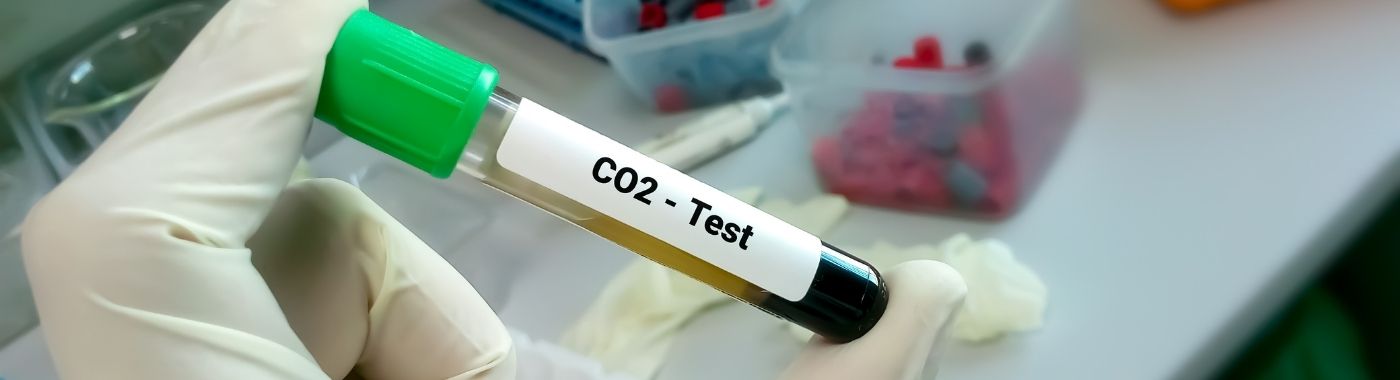
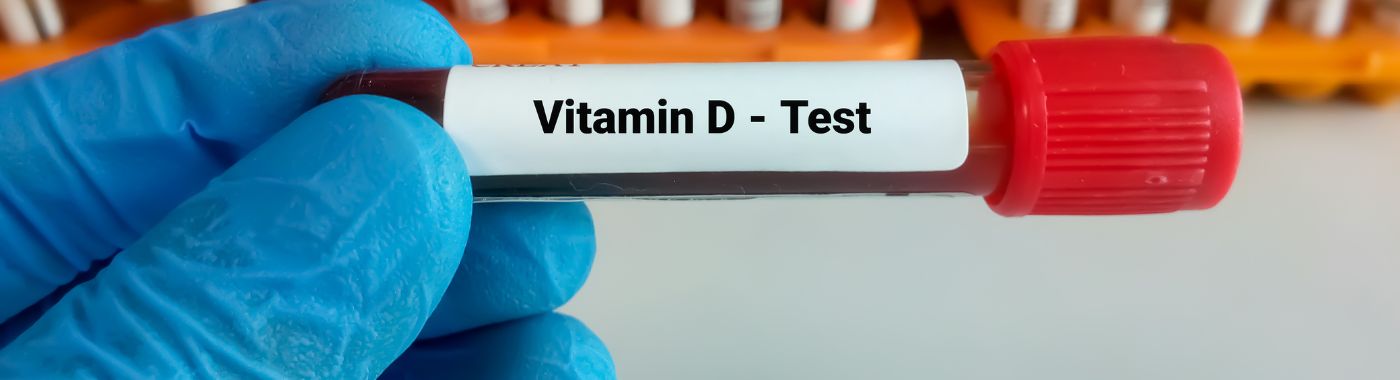
The CO2 blood test measures total carbon dioxide in a venous blood sample, which is mostly bicarbonate (HCO3-). The CO2 blood test helps doctors assess acid-base and metabolic balance, usually as part of a kidney function or electrolyte panel. The CO2 blood test alone cannot diagnose a specific disease or replace an arterial blood gas.
Panyawat konci
- Mostly bicarbonate: The serum CO2 value reflects bicarbonate, not the oxygen or carbon dioxide gas levels in your lungs.
- Never read alone: The CO2 result is interpreted with sodium, potassium, chloride, creatinine, glucose and often an arterial or venous blood gas.
- Not a lung test: A normal serum CO2 does not exclude a respiratory problem, and an abnormal value does not confirm one.
- Common in panels: In India the CO2 blood test is usually bundled into an electrolyte panel or comprehensive metabolic panel rather than ordered by itself.
- Context decides urgency: A mildly abnormal value in a stable person and the same value in a breathless, drowsy or dehydrated person mean very different things.
Sakolébat
| hal nu husus | kawincikan nepi ka bubuk leutikna |
|---|---|
| Naon anu diukur | Total CO2 in serum or plasma, predominantly bicarbonate (HCO3-) |
| conto | Getih véna, biasana tina véna dina panangan |
| puasa | Usually not needed for CO2 itself; fasting may be asked for other tests in the same panel |
| Waktuna nyandak getih | Typically 2-5 minutes; the needle is in the vein for well under a minute |
| Total time at the collection centre | Commonly 15-30 minutes including registration and waiting |
| Biasana dipesen sareng | Sodium, potassium, chloride, urea, creatinine, glucose, calcium; sometimes blood gas and lactate |
| Teu meunteun | Blood pH, oxygenation, lung mechanics, cause of any abnormality |
Ogé katelah
- Serum bicarbonate test; HCO3 test; "bicarb"
- Total CO2; TCO2; CO2 content
- Part of an "electrolyte test" or "kidney function test (KFT)" panel in many Indian labs
- Commonly asked for at the counter as "CO2 blood test" or "bicarbonate blood test"
What the CO2 blood test is
Carbon dioxide is carried in blood in three linked forms: bicarbonate (the large majority), carbon dioxide physically dissolved in plasma, and a very small amount of carbonic acid. The laboratory CO2 blood test reports the total of these, so in practice the number behaves as a bicarbonate measurement.
Bicarbonate is the body's main buffer. The kidneys reclaim and generate bicarbonate; the lungs adjust how much carbon dioxide is exhaled. The CO2 blood test looks at one arm of that system, at one moment in time.
Why the CO2 blood test is done
- Screening within a panel: To pick up an unexpected acid-base or electrolyte disturbance during assessment of kidney function.
- Assessing a suspected acidosis or alkalosis: For example in uncontrolled diabetes, severe diarrhoea, prolonged vomiting, sepsis or poisoning.
- Chronic kidney disease follow-up: Reduced bicarbonate is common as kidney function declines and is monitored over time.
- Calculating the anion gap: With sodium and chloride, the CO2 value helps narrow down the type of metabolic acidosis.
- Perawatan monitoring: Tracking response to fluids, insulin, dialysis or bicarbonate therapy when a clinician has prescribed it.
- Pre-operative and pre-procedure assessment: Where the anaesthetist or surgeon wants baseline electrolyte and acid-base information.
Saha anu kedah ngalakukeun tés ieu
The CO2 blood test is not a general wellness test to book on your own. A clinician typically requests it for:
- People with known or suspected chronic kidney disease, or on dialysis
- People with diabetes who are unwell, vomiting, breathing deeply and rapidly, or with very high sugars
- Prolonged vomiting, diarrhoea or dehydration, including in children and older adults
- Breathlessness or known chronic lung disease, alongside a blood gas where indicated
- Unexplained drowsiness, confusion, weakness or rapid breathing
- Suspected poisoning or overdose, including alcohol-related illness
- People on long-term diuretics, laxatives, antacids, acetazolamide, topiramate or steroids, where a clinician wants monitoring
- Anyone admitted acutely unwell, where an electrolyte panel is standard
What the CO2 blood test cannot detect or exclude
- It does not measure blood pH. A serum CO2 in the usual range can coexist with a significant acid-base disorder, because a respiratory and a metabolic problem can pull the value in opposite directions and cancel out.
- It is not a substitute for arterial blood gas. Only a blood gas gives pH, pCO2 and pO2 together. A normal serum CO2 does not exclude respiratory failure or carbon dioxide retention.
- It does not measure oxygen. The CO2 blood test says nothing about oxygen saturation and does not replace pulse oximetry.
- It does not identify a cause. A low or high value tells you a direction, not a diagnosis. Diabetic ketoacidosis, lactic acidosis, diarrhoeal bicarbonate loss and renal tubular acidosis can all lower it.
- It does not stage kidney disease. Creatinine, eGFR and urine albumin are needed for that.
- It does not assess lung function. Spirometry, imaging and blood gas do different jobs.
- A normal result is not the same as "excluded". A value reported as normal describes that sample at that moment. If symptoms such as breathlessness, drowsiness, vomiting or rapid breathing continue despite a normal CO2 result, go back to your doctor.
Ujian anu aya patalina tapi béda
These tests are often confused with the CO2 blood test. They answer different questions and are not interchangeable.
| ujian | Patarosan eta ngajawab | Key difference from CO2 blood test |
|---|---|---|
| Serum CO2 (total CO2 / bicarbonate) | Is the metabolic buffer high, low or in range? | Venous sample; no pH, no oxygen data |
| Gas getih artéri (ABG) | What is the pH, pCO2, pO2 and true bicarbonate? | Arterial puncture; more uncomfortable; defines the acid-base disorder |
| Gas getih véna (VBG) | Rapid pH and bicarbonate estimate | Useful for trends; unreliable for oxygenation |
| End-tidal CO2 (capnography) | How much CO2 is being exhaled right now? | Breath monitoring, not a blood test |
| Oksimetri denyut (SpO2) | How saturated is haemoglobin with oxygen? | Oxygen only; gives no CO2 or acid-base information |
| Anion gap | What type of metabolic acidosis is this? | Calculated from sodium, chloride and CO2, not measured directly |
| Urine pH / urine anion gap | Is the kidney handling acid normally? | Urine test, used mainly for suspected renal tubular acidosis |
| Kidney function test (KFT) | How well are the kidneys filtering? | Creatinine and urea based; CO2 is often one component of the panel |
Which test comes first depends on the clinical problem. For a breathless, drowsy or shocked patient, a blood gas is generally the more informative first step. For stable outpatient monitoring of chronic kidney disease, a venous panel including CO2 is usually enough. No single test is universally superior.
Kumaha nyiapkeun
Preparation is operational and varies between laboratories and collection centres. Your unit's written instructions take precedence over anything on this page.
- puasa: Not usually required for CO2 alone. If lipids or fasting glucose are on the same requisition, the lab may ask for an overnight fast.
- Ubar sareng suplemén: List everything, including diuretics, antacids, sodium bicarbonate, laxatives, steroids, acetazolamide, topiramate, and any AYUSH, herbal or gym supplements. Do not stop or change any prescribed medicine to prepare for this test, speak to the prescriber first.
- Cairan: Drink normally unless your doctor has restricted fluids. Do not load up on water before the test.
- timing: The sample should reach the lab promptly, as delays and an unsealed tube can change the result.
Upami anjeun ngalaman gagal jantung, panyakit ginjal lanjut, atanapi pangwatesan cairan
Do not increase your fluid intake for this test. Stay within the daily limit your treating team has set, and ask them before changing anything.
Upami anjeun ngagaduhan diabetes anu nuju dirawat pikeun nurunkeun glukosa
If the lab asks you to fast for other tests in the panel, tell them you are on insulin or tablets and ask your prescriber how to manage the dose and timing. Carry a fast-acting sugar source. Do not skip meals for long periods without advice.
reuneuh
The CO2 blood test can be done in pregnancy. Bicarbonate is often slightly lower in normal pregnancy because of physiological changes in breathing, so results need interpretation against pregnancy-appropriate expectations by your obstetric team.
barudak
Expected values differ in newborns and young children. Paediatric collection uses smaller volumes and a trained paediatric phlebotomist where available. Do not fast a young child unless specifically instructed.
sawawa heubeul
Multiple medicines, reduced kidney reserve and dehydration are common, so abnormal values are more frequent and need review in the context of the full medicine list.
What happens during the CO2 blood test
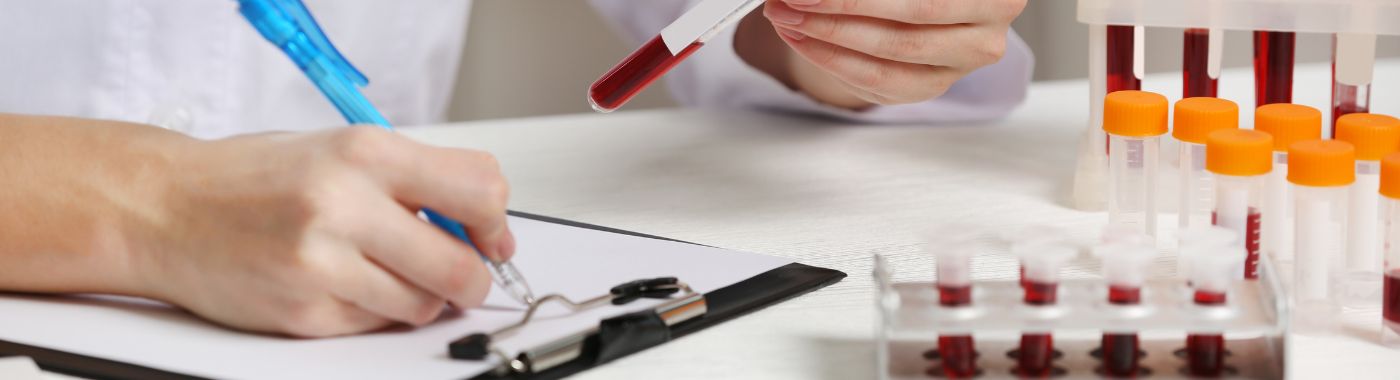
The CO2 blood test is a routine venous blood draw:
- The phlebotomist confirms your identity and the tests requested.
- A tourniquet is applied and the skin over a vein, usually in the inner elbow or forearm, is cleaned.
- Blood is collected into the appropriate tube, which is filled to the mark and capped promptly.
- The needle is withdrawn and pressure is applied with a swab. A small dressing is placed.
Most people feel a brief sting. You can usually return to normal activity straight away. Avoid heavy lifting with that arm for a short while, and keep pressure on the site if you bruise easily or take blood thinners.
Sabaraha lami prosésna
The blood draw itself commonly takes 2-5 minutes. Expect roughly 15-30 minutes at the collection centre including paperwork and waiting. Reporting time depends on the laboratory and on whether the sample is urgent or routine, so ask your collection centre for their current reporting schedule.
Ngartos laporan anjeun
Serum CO2 is reported in mEq/L or mmol/L. Reference intervals differ between laboratories, analysers and age groups, and your report will print the interval that applies to your sample. Compare your number only with the range printed on your own report, not with a range from any website.
If the CO2 value is lower than your lab's range
A low bicarbonate points towards either metabolic acidosis or compensation for a respiratory alkalosis. Contexts include diabetic ketoacidosis, lactic acidosis, severe or prolonged diarrhoea, chronic kidney disease, renal tubular acidosis, certain medicines, alcohol-related illness and some poisonings. Rapid deep breathing, drowsiness, vomiting and weakness may accompany a significant acidosis.
If the CO2 value is higher than your lab's range
A high bicarbonate points towards either metabolic alkalosis or renal compensation for chronic carbon dioxide retention. Contexts include prolonged vomiting or nasogastric losses, diuretic use, potassium depletion, excess alkali intake including regular soda-bicarbonate antacid use, and long-standing chronic lung disease.
A borderline value
Small deviations are common and often reflect sample handling, hydration or a transient state rather than disease. Your doctor may simply repeat the panel. Results vary depending on individual clinical circumstances, and no CO2 number diagnoses a condition on its own, interpretation belongs with the doctor who requested the test.
When CO2 results can be misleading
Hasil anu dikirangan sacara palsu
- Delay before analysis or an open tube: Carbon dioxide escapes from the specimen, so total CO2 reads low. This is the single most common pre-analytical error.
- Underfilled tube with a large air space: Encourages the same loss of CO2.
- Prolonged tourniquet time or a fist-clenching, strained draw: Local changes at the sampling site can shift the value.
Falsely raised or falsely reassuring results
- Mixed disorders: A metabolic acidosis together with a metabolic alkalosis can produce a value inside the reference range while both problems are present.
- santunan: A high bicarbonate may be an appropriate kidney response to chronic lung disease rather than a primary problem, so the number can look abnormal when physiology is doing its job.
- Recent alkali or antacid intake: Regular sodium bicarbonate can raise the value independent of disease.
- Haemolysed or contaminated samples: The laboratory may comment on sample quality; a repeat draw may be needed.
Because of these effects, a serum CO2 that conflicts with how the patient looks should prompt a repeat sample or a blood gas rather than being accepted at face value.
Résiko sareng kaamanan
Pengambilan getih vena rutin
Risks are small but real: a brief sting, bruising, a small haematoma, light-headedness or fainting, and rarely local infection or irritation of a nearby nerve. Bruising is more likely on anticoagulants or antiplatelets, or with bleeding disorders. Tell the phlebotomist beforehand.
Arterial blood gas, where a blood gas is needed instead
An arterial puncture is a different procedure with a different risk profile, it is generally more painful and carries a small risk of bleeding, bruising, arterial spasm and, rarely, vascular injury. The safety statement for a venous draw does not apply to it.
Paediatric and heel-prick collection
Smaller sample volumes and different techniques are used; repeat attempts are sometimes necessary, which is distressing but not dangerous. Ask for a trained paediatric phlebotomist.
Gendéra beureum
Darurat ayeuna
- Deep, rapid, laboured breathing with drowsiness or confusion
- Severe breathlessness, blue lips, or inability to speak in full sentences
- Very high blood sugar with vomiting, abdominal pain and fruity-smelling breath, possible diabetic ketoacidosis
- Unresponsiveness, seizure, or collapse
- Suspected poisoning or overdose
- Signs of severe dehydration with almost no urine output, cold clammy skin or a racing pulse
Dinten anu sami
- Persistent vomiting or diarrhoea, especially in a child, an older adult or someone with diabetes or kidney disease
- New muscle weakness, cramps, tingling or palpitations with a known electrolyte abnormality
- Markedly abnormal CO2 result reported while you feel unwell
- Reduced urine output with swelling or breathlessness
Janjian rutin
- A mildly abnormal or borderline CO2 value with no symptoms
- Long-term antacid, diuretic or laxative use you want reviewed
- Stable chronic kidney disease or lung disease requiring monitoring
- A result you do not understand and want explained
kaayaan husus
panyakit ginjal kronis
Lower bicarbonate becomes more common as kidney function falls. Nephrologists monitor it over time and decide whether treatment, including alkali therapy, is appropriate. Never start bicarbonate or soda-bicarb on your own, sodium load can worsen fluid overload and blood pressure.
gagalna jantung
Diuretics can raise bicarbonate and shift potassium and chloride. Any change in diuretic dose must come from your treating clinician, not from a single test result.
Diabetes dina terapi nurunkeun glukosa
A falling bicarbonate in someone with diabetes who is unwell needs urgent assessment for ketoacidosis. Some glucose-lowering medicines are associated with ketoacidosis even when sugars are not very high, so tell the treating team every medicine you take.
Kasakit paru kronis
In long-standing carbon dioxide retention, a raised bicarbonate often reflects kidney compensation. Interpretation requires a blood gas alongside the serum value.
Pregnancy and children
Expected values differ from non-pregnant adult ranges and from adult ranges in infants. Use the age- and pregnancy-appropriate interval your laboratory and clinician apply.
The CO2 blood test in the Indian context
- Usually bundled: Most Indian laboratories report CO2 or bicarbonate within an electrolyte panel, KFT or comprehensive metabolic panel rather than as a standalone test, so you may see it on a report you did not specifically request.
- Diarrhoeal illness matters: Acute gastroenteritis remains a frequent reason for bicarbonate loss and metabolic acidosis, particularly in children and older adults, and often in hot months with dehydration.
- Self-medication with alkali: Soda-bicarbonate powders and antacids are widely available without prescription and can raise bicarbonate. Mention any such use.
- Suplemén herbal, AYUSH sareng gim: These are common and can contribute to kidney or liver injury that indirectly affects acid-base balance. Bring the actual packs to your appointment.
- Kidney disease burden: Chronic kidney disease, including cases without diabetes or hypertension, is a significant reason bicarbonate is tracked in Indian outpatient practice.
- Sample transport: Where blood is collected at a home visit or a small centre and transported, CO2 is particularly vulnerable to falling because of the time and the exposure. If a low value seems inconsistent with how you feel, ask whether a repeat is warranted.
- Privasi data: Reports shared through apps and portals are personal health data handled under the Digital Personal Data Protection Act, 2023.
Biaya sareng asuransi di India
Prices vary widely and change, so ask the laboratory for a current quote before collection rather than relying on a published figure.
- Bundling: CO2 is cheaper as part of an electrolyte or metabolic panel than as a separate test, and many labs will not sell it alone.
- Jenis fasilitas: Government hospitals, standalone diagnostic chains, and corporate hospital labs price differently. NABL-accredited labs may cost more.
- Kacepetan: Urgent or after-hours processing usually carries a surcharge.
- Koleksi bumi: Often adds a visit fee.
- City and location: Metro pricing is generally higher than in smaller towns.
- asuransi: Outpatient investigations are frequently not covered unless your policy includes an OPD or diagnostic benefit. During an admission or day-care procedure, the panel is usually part of the hospital bill and may be reimbursable. Government schemes such as Ayushman Bharat PM-JAY cover investigations within an approved package at empanelled facilities. Confirm with your insurer or the hospital's TPA desk.
Mitos sareng fakta
| carita | kanyataan |
|---|---|
| The CO2 blood test measures how well my lungs work. | The serum CO2 value is essentially bicarbonate from a venous sample. Lung function requires spirometry, imaging or a blood gas. |
| A normal CO2 rules out an acid-base problem. | Mixed disorders can produce a value inside the reference range. A normal result describes the sample, not the absence of disease. |
| Low CO2 means my kidneys have failed. | Low bicarbonate has many causes, including diarrhoea, dehydration, uncontrolled diabetes and medicines. Kidney function is assessed separately. |
| I can fix a low bicarbonate by taking soda-bicarb. | Alkali therapy is a medical decision. Self-dosing adds a sodium load that can worsen blood pressure and fluid overload. |
| High CO2 always means something is wrong. | It can reflect appropriate kidney compensation in chronic lung disease, or simply diuretic use or antacid intake. |
| The CO2 test is the same as an ABG. | They are different tests. An ABG measures pH, pCO2 and pO2 from arterial blood and defines the disorder. |
Remen ditanyakeun
Is the CO2 blood test the same as checking oxygen levels?
No. The CO2 blood test measures bicarbonate in venous blood and gives no information about oxygen. Oxygen saturation is checked with a pulse oximeter, and arterial oxygen tension with an arterial blood gas. A normal CO2 result does not mean your oxygen levels are adequate.
Do I need to fast for a CO2 blood test?
Fasting is usually not required for the CO2 measurement itself. However, tests bundled in the same panel, such as fasting glucose or lipids, may need an overnight fast. Follow the written instructions from your collection centre, as protocols differ between laboratories.
Can dehydration change my CO2 result?
Yes. Dehydration from vomiting, diarrhoea, fever or poor intake can shift bicarbonate in either direction, depending on the cause. This is one reason results are interpreted alongside sodium, chloride, urea and creatinine rather than in isolation.
Why did my report show low CO2 when I feel completely well?
A common explanation is pre-analytical: carbon dioxide escapes if the tube is underfilled, left open or analysed after a delay, so the value reads falsely low. If the result does not match how you feel, ask your doctor whether a repeat sample is appropriate.
Which medicines can affect bicarbonate levels?
Diuretics, laxatives, steroids, antacids and sodium bicarbonate, acetazolamide and topiramate can all shift bicarbonate. Declare everything you take, including herbal and gym supplements. Do not stop or adjust any prescribed medicine before the test, discuss it with the doctor who prescribed it.
Should I book a CO2 blood test for myself as a health check?
The CO2 blood test is rarely useful as a standalone self-booked test. It becomes meaningful when a clinician interprets it with other electrolytes, kidney markers and your symptoms. If you have concerns, arrange a consultation rather than ordering the test alone.
Sabaraha lami waktosna?
The blood draw takes about 2-5 minutes, and most people spend 15-30 minutes at the collection centre overall. Reporting times depend on the laboratory and on whether the request is urgent, so check the current schedule with your collection centre.
My CO2 is slightly outside the printed range. Is that serious?
Not necessarily. Small deviations are common and may reflect hydration, sample handling or a transient state. Significance depends on how far outside it is, the other results in the panel, and how you feel. Your treating doctor decides whether to repeat, investigate or observe.
Can a blood gas replace the CO2 blood test?
A blood gas provides more information, including pH and pCO2, and in acute illness it is often the more useful test. However, an arterial puncture is more uncomfortable and carries additional risks, so it is not used for routine outpatient monitoring where a venous panel is sufficient.
sumber
- Clinical and Laboratory Standards Institute guidance on venous blood collection and pre-analytical handling of specimens
- KDIGO clinical practice guideline for the evaluation and management of chronic kidney disease (metabolic acidosis in CKD)
- National Kidney Foundation patient information on electrolytes and bicarbonate
- Standard clinical chemistry and acid-base physiology references, including Tietz Textbook of Clinical Chemistry and Molecular Diagnostics
- Digital Personal Data Protection Act, 2023 (Government of India) for handling of personal health data










 Rumah Sakit Pangsaéna di Chennai


